



India’s #1 most profitable asset manager with ₹10.1 lakh crore under management and 15.5 million happy investors is finally letting you own a piece of the action.
ICICI Prudential AMC—where your mutual funds probably already sit—is launching a ₹10,602 crore IPO at ₹2,061-₹2,165 per share (minimum investment: ₹12,990).
It’s not a company in growth mode; it’s a money-printing machine already making ₹2,650 crore in annual profit, growing 32% year-over-year.
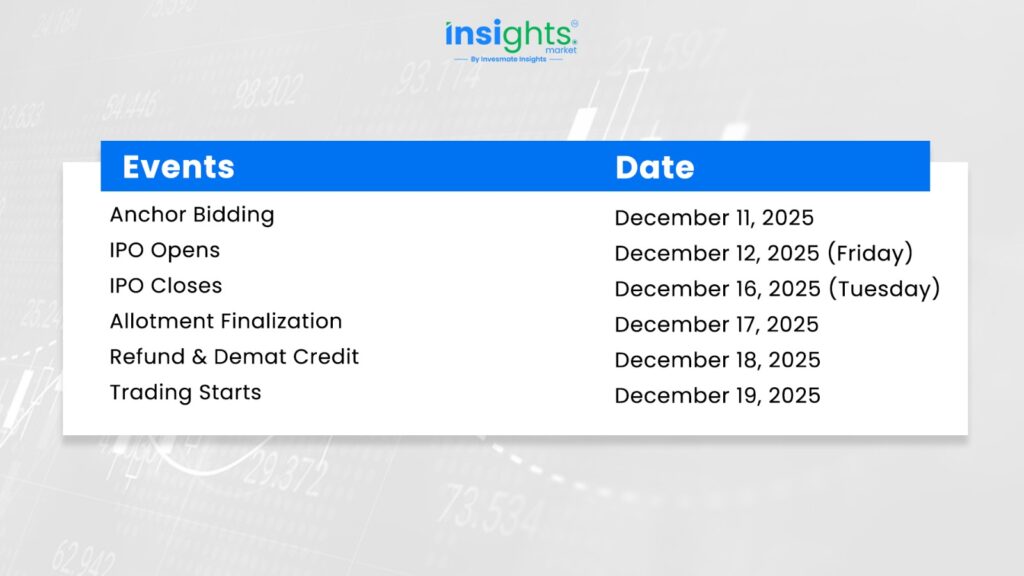
The IPO opens December 12 and closes December 16. If you believe India’s mutual fund story will keep growing (and all data suggests it will), this could be a chance to own India’s mutual fund champion before it dominates even more.
What Is ICICI Prudential AMC?
Imagine thousands of people pooling their money to invest smartly. That’s a mutual fund. Now imagine a company managing hundreds of billions in these pooled investments—that’s ICICI Prudential AMC.
They collect money. Expert teams invest in it. Everyone shares the profits.
Think of it like hiring a professional investment manager on behalf of thousands of people at a fraction of what it would cost individually. ICICI Prudential takes a small fee (usually ₹50 per ₹10,000 invested annually for equity funds), invests the money intelligently across stocks, bonds, or other assets, and keeps the business running.
Here’s what makes them special:
✅ They manage more money than anyone else in India (₹10.1 lakh crore)
✅ They serve 15.5 million people (more than Switzerland’s population)
✅ They’re India’s most profitable AMC by a huge margin
✅ They’re active across every investment category—from beginner-friendly mutual funds to sophisticated portfolio management services for rich investors
If you’ve ever bought a mutual fund in India, there’s a decent chance that ICICI Prudential manages it for you.
Why Is Everyone Talking About This IPO?
Right now, ICICI Prudential AMC has two owners:
- ICICI Bank (51% stake)
- Prudential Corporation (a UK company, 49% stake)
They’re selling 10% of the company to the public through this IPO. That’s ₹10,602 crore worth of shares becoming available to regular people like you.
Why does this matter?
Until now, only those two giant companies have owned this profit-printing machine. Now, you can own a slice too. It’s not about the company raising new money (this is 100% offer for sale—no fresh capital needed). It’s about democratizing access to India’s fund management champion.
Think of it as getting a chance to own a percentage of the company that manages the mutual fund investments of 15.5 million Indians. That’s legitimately powerful.
The Money Talk: How Much Do They Actually Earn?
Here’s where it gets interesting. Let’s look at actual, verified numbers:
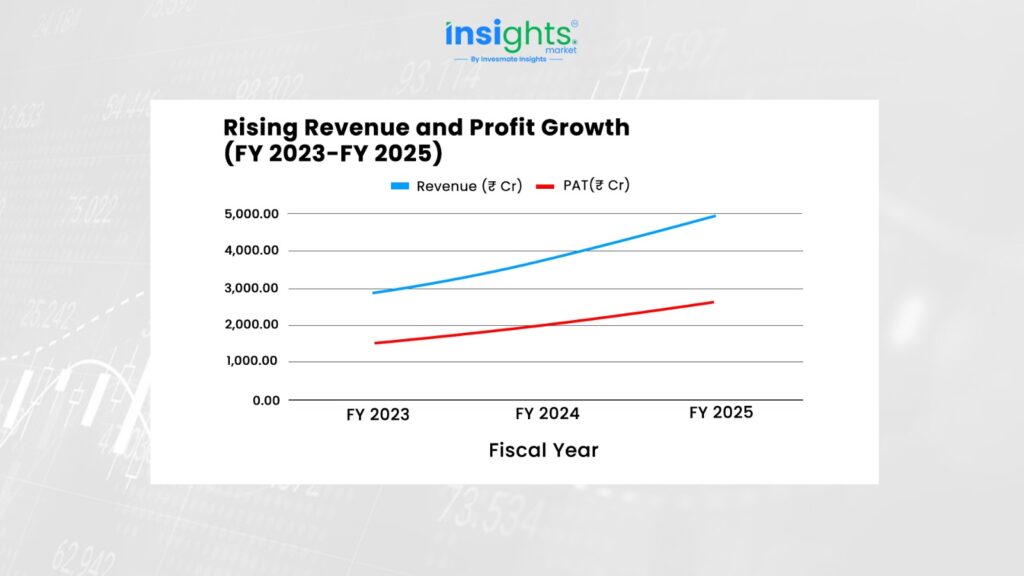
The pattern is unmissable: Every single year, they’re making 32-35% more profit. That’s not accidental. That’s systematic growth from India’s increasing financialization.
The best part? Their profit margin is 53%. That means out of every rupee they earn, they keep 53 paise as profit. Most businesses dream of that. Most businesses can’t achieve it. ICICI Prudential does it consistently.
Peer Comparison

The Competitive Advantage: They're Crushing Everyone
Let’s see how ICICI Prudential stacks up against competitors:
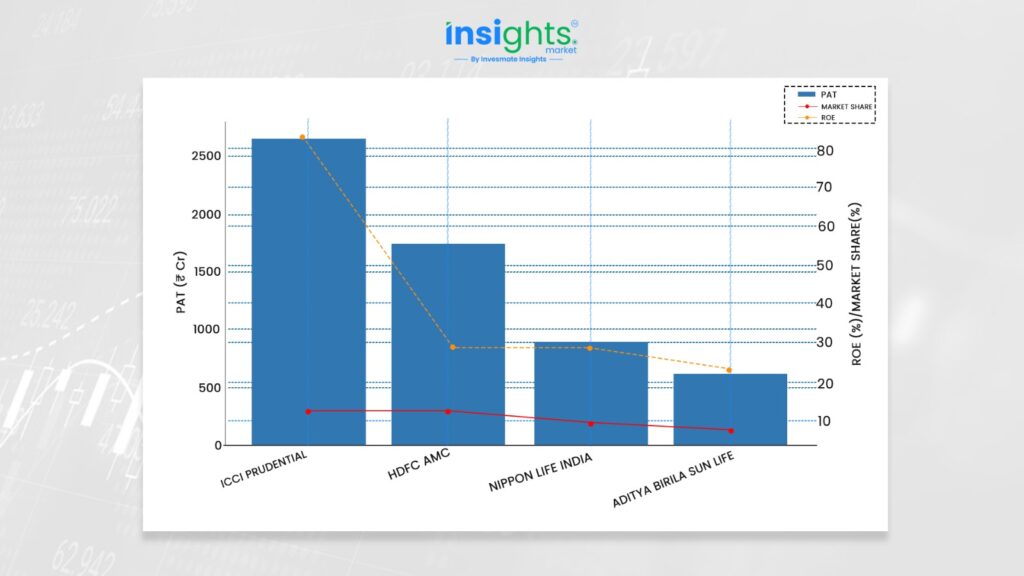
Notice something? ICICI Prudential makes 51% more profit than HDFC AMC (the second-largest competitor) while having nearly the same market share. Their ROE of 82.8% is astronomical—it means they generate ₹82.80 in profit for every ₹100 of shareholder equity. That’s not normal. That’s exceptional.
ICICI Prudential isn’t just the biggest. They’re the most efficient at turning investor money into shareholder profit. That operational excellence is built into their DNA.
The Secret Ingredient: SIPs (Your Monthly Investments)
You’ve probably heard the term SIP (Systematic Investment Plan). Here’s why it matters for ICICI Prudential’s business:
Instead of investing ₹1,00,000 at once, you invest ₹5,000 every month for 20 months. Simple, right?
Here’s the magic: When markets crash, lump-sum investors panic and pull out. But SIP investors? They keep ₹5,000 flowing in automatically, regardless of what the market does. It’s a stable, predictable cash flow.
ICICI Prudential has 14.2 million active SIPs. Three years ago? Only 5.7 million. That’s a 149% increase.
What this means:
- Predictable monthly cash flows from millions of investors
- Recession-resistant revenue since SIP money keeps flowing during crashes
- Stronger customer relationships because people are invested monthly, not just once
Other fund managers watch this metric jealously. ICICI Prudential owns it.
The Digital Story (95% Online, But Offline When You Need Them)
Here’s something that sets ICICI Prudential apart from competitors:
Digital: 95.3% of all investments happen online. They’ve got apps, websites, YouTube channels with 4 million followers, and 1.2 million new customers signed up digitally in just 6 months.
Physical: 272 offices across 23 states, where you can walk in and talk to someone face-to-face.
Most companies are pure digital (fast but impersonal) or pure physical (trusted but slow). ICICI Prudential is both. That’s a rare and powerful advantage for a company going public.
The Assets Under Management (AUM) Breakdown
ICICI Prudential manages ₹10.1 lakh crore. Here’s how it’s divided:
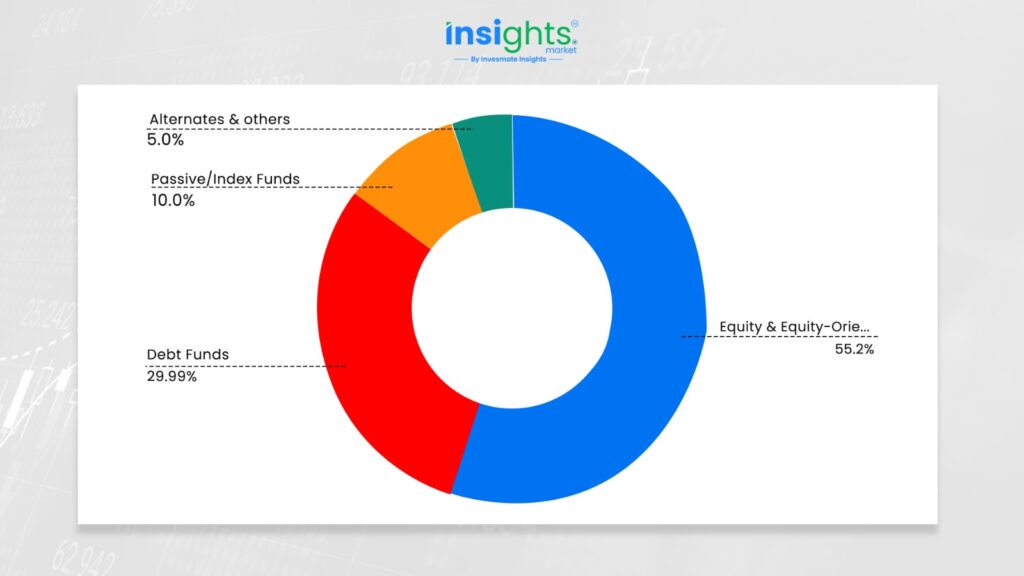
What does this tell us? More than half their assets are in stocks. That’s because India is in a “stock market awakening” moment. More people are investing in equity than ever before. ICICI Prudential captured that wave perfectly.
The growing “Alternates” business (portfolio management services, alternative investment funds) is also crucial. It serves wealthy individuals and institutions and has higher profit margins than regular mutual funds. It’s a bonus profit engine.
The IPO Details: Price, Timeline & How to Apply
Price Band & Lot Size
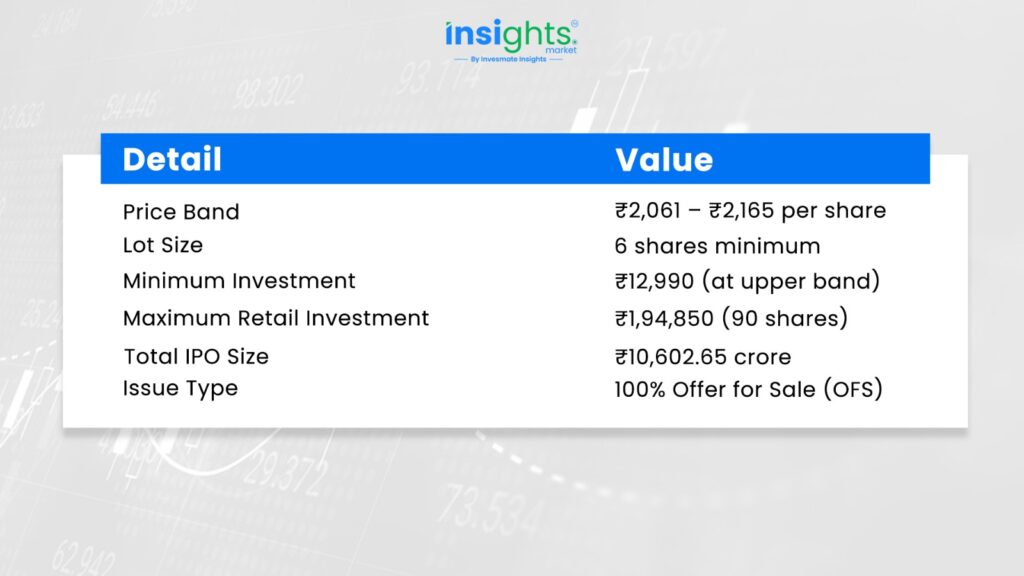
Your IPO Timeline (Mark These Dates)
Investor Categories & How Many Shares Reserved for Each
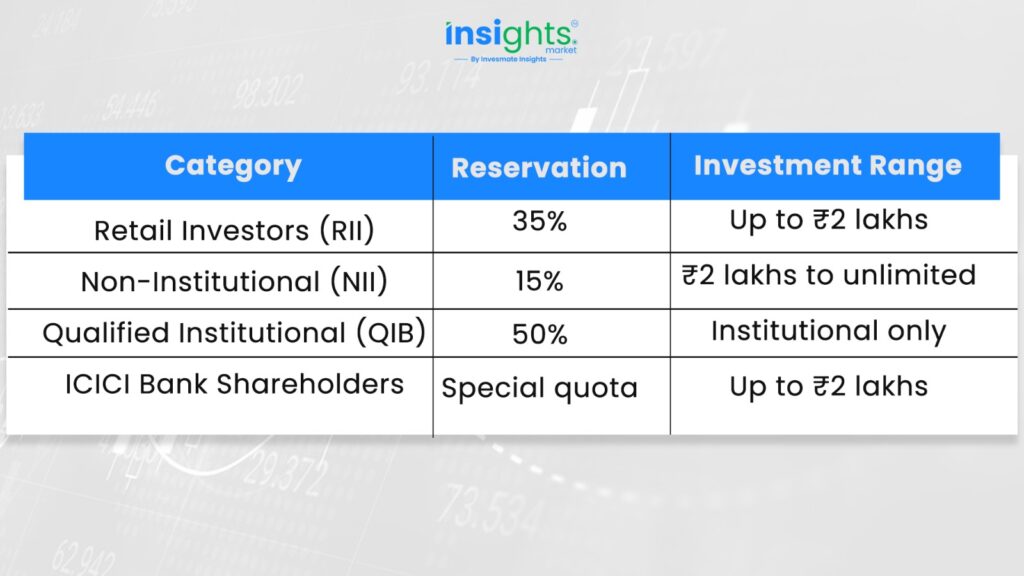
Pro tip: If you hold ICICI Bank shares, you get a special shareholder category with better allotment odds.
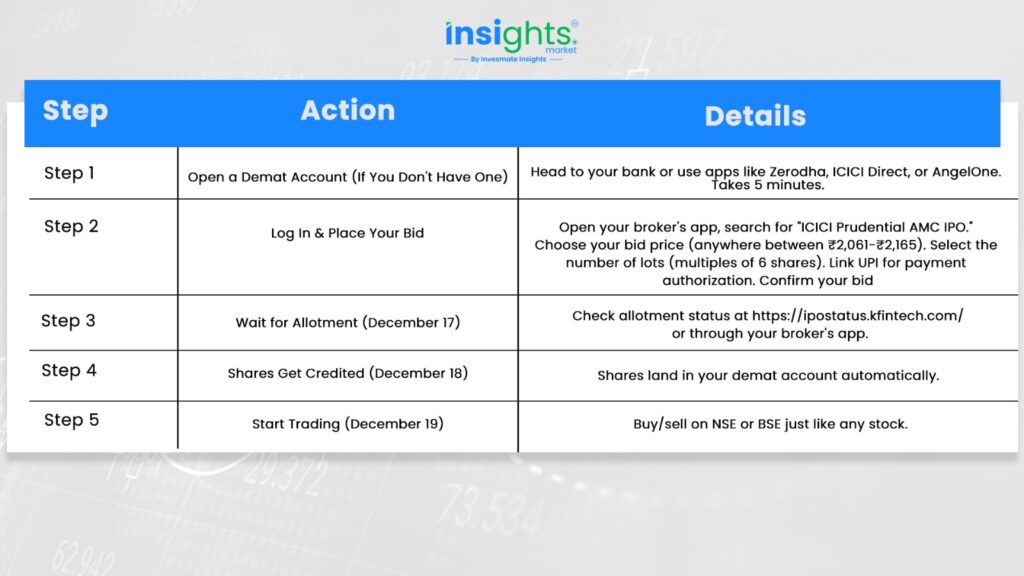
How to Apply in 5 Simple Steps
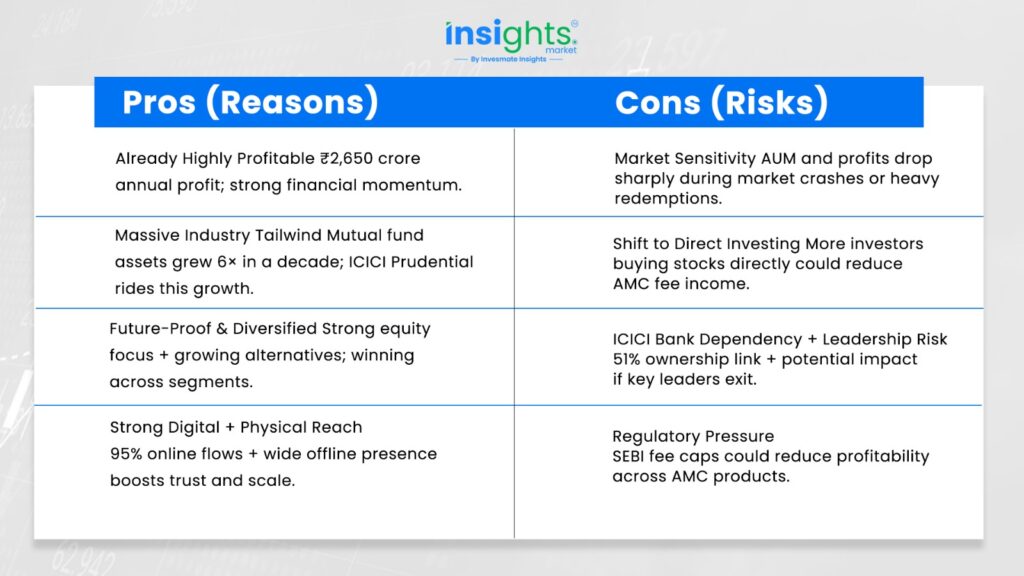
Why This IPO Actually Makes Sense
The Valuation Question: Is It Cheap, Fair, or Expensive?
Nobody can predict stock prices. But here’s what the numbers tell us:
Company Financial Performance
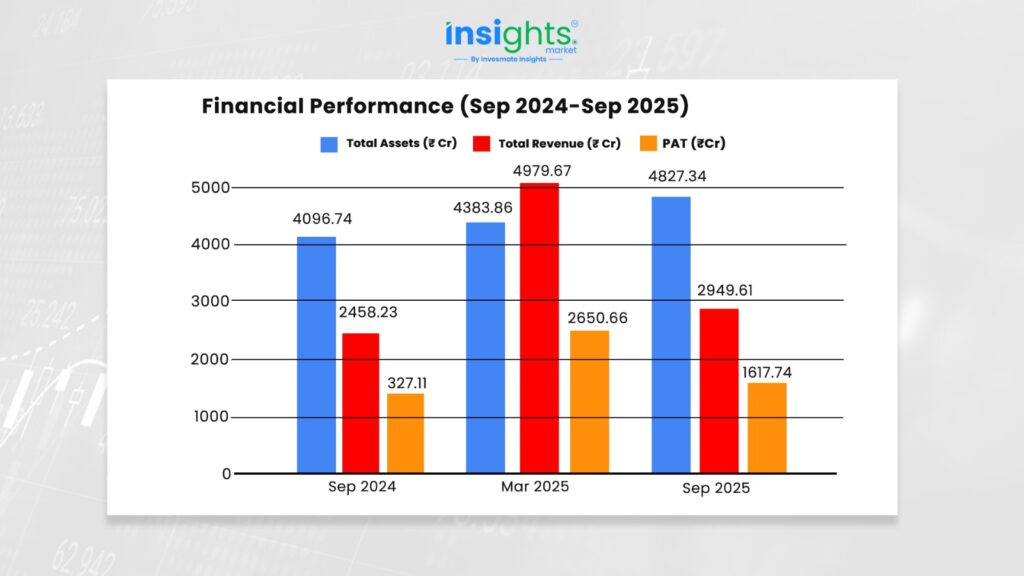
The financial metrics displayed in your chart reveal a critical insight: ICICI Prudential’s business scales efficiently with AUM growth. The dramatic revenue spike from H1 FY26 (₹2,458.23 crore) to full FY25 (₹4,979.67 crore) demonstrates that annual fee revenues nearly double during calendar year periods when comparing interim results. This seasonal pattern is characteristic of asset managers whose fee income fluctuates with quarterly average AUM computations and market performance cycles.Key
Performance Indicators
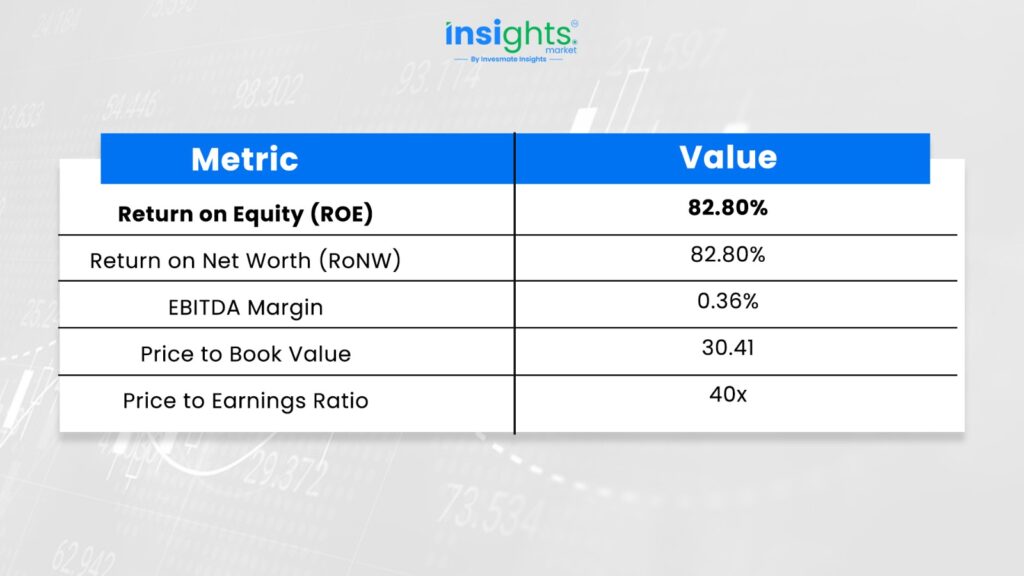
At ₹2,061-₹2,165 per share, the P/E ratio is approximately 40-41x earnings.
Translation: For every rupee of profit, you’re paying ₹40-41. Other fund managers trade at 20-45x P/E. So ICICI Prudential is in the middle of the range.
ICICI Prudential AMC Year-over-Year Revenue and PAT Growth Trends
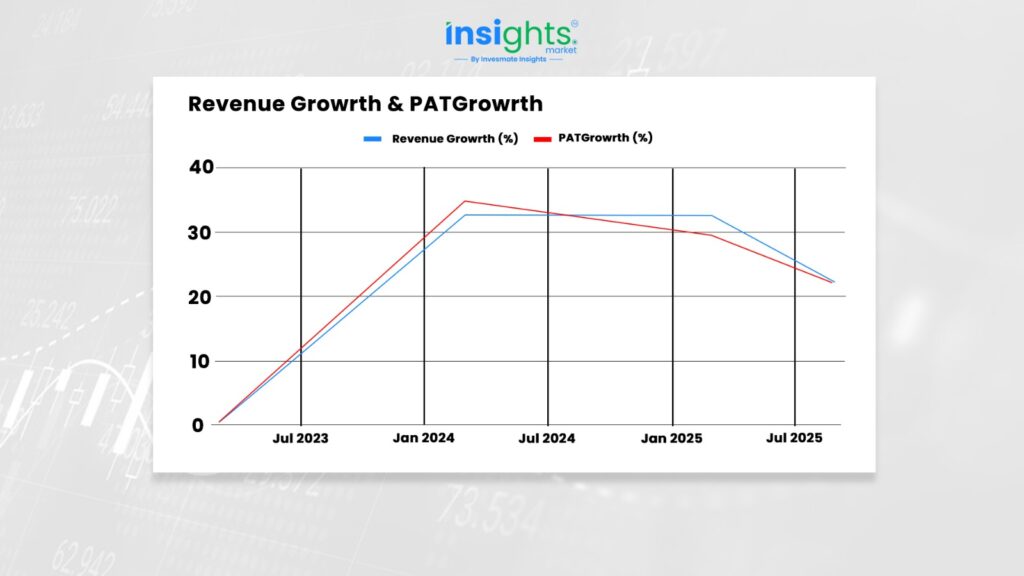
Revenue growth at ICICI Prudential AMC is driven by steady AUM expansion and strong fee realization. Total income rose from ₹2,838 crore in FY23 to ₹3,761 crore in FY24 (32.6% growth) and further to ₹4,979 crore in FY25 (32.4%), maintaining a consistent 32%+ growth trajectory. As of September 2025, the company manages ₹10.15 lakh crore in QAAUM with a 13.3% market share, up from ₹8,794 billion in FY25. Its AUM mix is highly favorable: ₹5,658 billion comes from individual investors, giving it a 13.8% share and ensuring higher and more stable fees, especially since 86.4% of equity AUM is retail-driven.
A major strength is its SIP engine. With 14.2 million active SIPs, ICICI Prudential benefits from predictable monthly inflows that remain steady even during market volatility, offering a resilience that competitors relying on institutional flows often lack.
The Growth Justification
But here’s the catch: ICICI Prudential is growing at 32% annually, while competitors are growing at 20-25%. Faster growth justifies a higher P/E ratio.
The Real Question
Will they maintain 30% annual growth for the next 5 years?
- If YES: This could be a fantastic investment.
- If growth slows to 15%, It might just be average.
That’s the gamble you’re taking.
Grey Market Premium (GMP) - What Investors Are Expecting
Date | IPO Price Band | Grey Market Premium | Estimated Listing Price |
11/12/2025 | ₹2,165 | ₹119 | ₹2,284 (5.50%) |
10/12/2025 | ₹2,165 | ₹119 | ₹2,284 (5.50%) |
09/12/2025 | ₹2,165 | ₹124 | ₹2,289 (5.73%) |
What Should Your Checklist Look Like?
Before you apply, ask yourself:
✅ Do I have ₹12,990-₹2,00,000 I can invest for 3-5 years without panic-selling?
✅ Am I okay with stock prices going down 30-40% in a correction?
✅ Can I resist checking the price every day?
✅ Do I genuinely believe India’s mutual fund industry will keep growing?
✅ Have I read the official prospectus from SEBI?
Score: If you checked 4+ boxes, this might be worth considering.
Who's Already Using ICICI Prudential? (Probably You!)
Here’s something important: ICICI Prudential is already managing your money without you even knowing it.
- 1 in 7 mutual fund investors in India use ICICI Prudential
- If you’ve bought mutual funds through ICICI Bank, you’re already their customer
- They manage money for 15.5 million individual investors
- 14.2 million of those are SIP investors with automatic monthly payments
Check your mutual fund portfolio right now. There’s a good chance they’re in there.
Final Thoughts
India’s mutual fund industry is entering a major growth phase, with rising incomes and financial awareness driving trillions of rupees into managed investments. As the clear market leader, ICICI Prudential AMC is well-positioned to benefit from this long-term shift. The IPO offers investors a chance to participate in that leadership story—provided they approach it with discipline. Read the prospectus, understand the business, invest only what you can comfortably hold through market volatility, and think in terms of years rather than months.
Smart, steady investing—not short-term speculation—is what truly wins here.
Ready to apply? 🚀
Disclaimer: This content is strictly educational and informational in nature. There are NO buy, sell, or hold recommendations of any kind. Always read the official Red Herring Prospectus (RHP) and financial documents from SEBI before making any investment decision. Consult a registered financial advisor for personalized guidance. Stock market investments carry the risk of loss. Past performance is not indicative of future results. Please invest responsibly.
FAQs
Yes. Open one at your bank or apps like Zerodha. Takes 5 minutes.
You might not get shares. Retail allotment is done by random selection when oversubscribed.
Yes, anytime after December 19, 2025, on NSE/BSE. But the price will probably be higher.
Absolutely not. Stock prices go up and down. No IPO guarantees profit.
ICICI Prudential isn’t getting new money. All proceeds go to Prudential Corporation (the selling shareholder). It’s a stake sale, not a capital raise.
UPI limits vary by bank. During IPO applications, check with your bank about IPO-specific limits.
December 19, 2025. You can sell immediately after listing or hold long-term.
The information provided in this reference is for educational purposes only and should not be considered investment advice or a recommendation. As an SEBI-registered organization, our objective is to provide general knowledge and understanding of investment concepts.
It is recommended that you conduct your own research and analysis before making any investment decisions. We believe that investment decisions should be based on personal conviction and not borrowed from external sources. Therefore, we do not assume any liability or responsibility for investment decisions made based on the information provided in this reference.