



We dug through 20 years of data so you don’t have to. The truth is messier — and more interesting — than the headlines.
Every time elections roll around, you hear it — “Buy PSU stocks. The government will spend big. It’s free money.”
Sounds logical, right? Government wants votes → spends on roads, railways, defence → PSU companies get orders → stocks go up. But is that really how it plays out?
Spoiler: It’s complicated. Let’s look at the actual numbers.
THE QUICK VERDICT
PSU stocks do show pre-election momentum, but the real driver is government capex and policy signals — not ballot boxes. When election results surprise the market (like 2024 did), the rally can reverse violently.
What Actually Happened in Each Election
BSE PSU Index — Pre-election peak and post-result moves
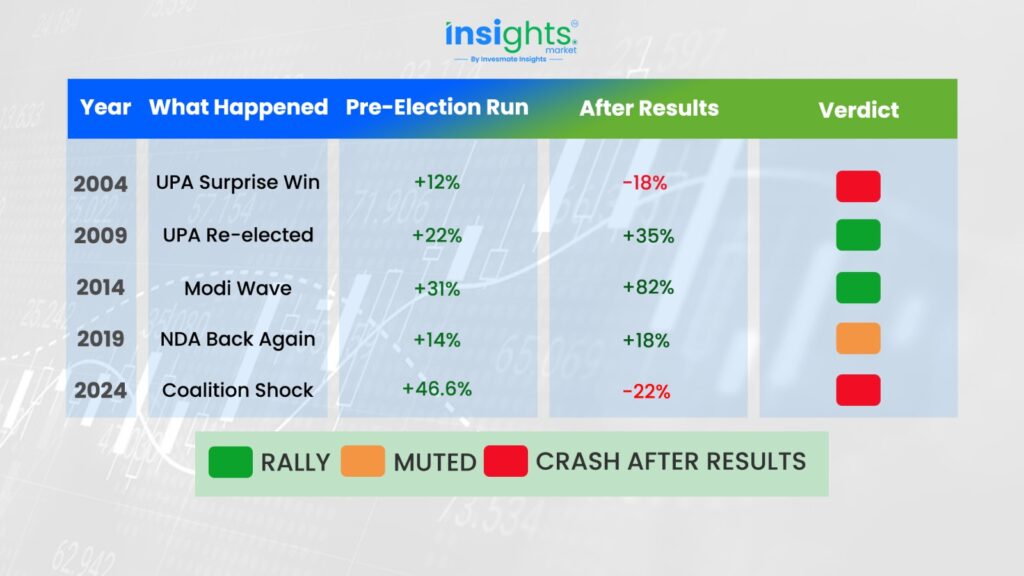
Notice the pattern? In 2014 and 2009, markets got what they expected → big rallies. In 2004 and 2024, results surprised → sharp crashes. It’s not the election. It’s whether the result matches expectations.
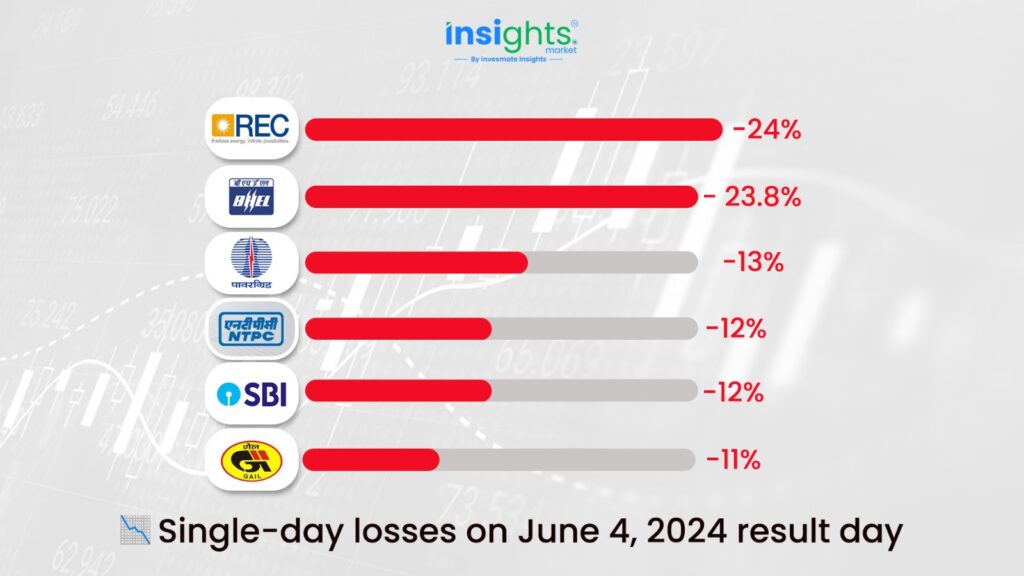
June 4, 2024: The Day the Rally Died
NDA was expected to win 350+ seats. They got ~293. Markets panicked. PSU stocks — which had already surged 46.6% that year — collapsed in a single day:
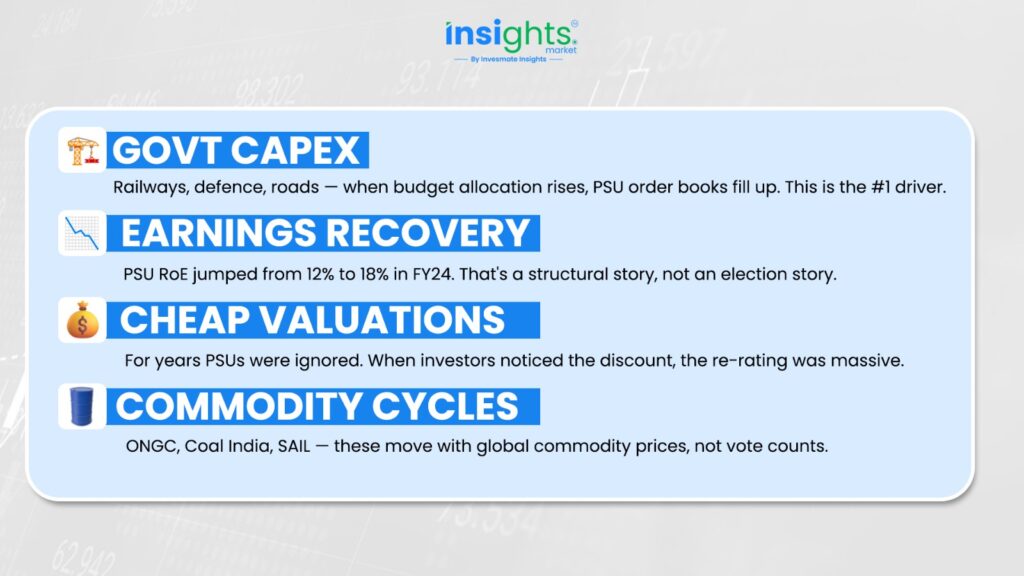
So What Actually Drives PSU Stocks?
Fun fact: The BSE PSU Index’s best year in recent memory was 2023 (+55.3%) — a year with no general elections at all. It was purely driven by post-COVID capex spending and earnings recovery. Still think it’s about elections?
What Should You Do as an Investor?
Stop trying to “trade the election.” Instead, track these signals which are far more reliable:
Union Budget capex allocation each February
Ministry of Railways / Defence order announcements
Quarterly earnings and order book growth of specific PSUs
Valuation vs historical average — are PSUs cheap or stretched?
“Elections are catalysts, not guarantees. PSU stocks rally when results boost confidence in future policy — and crash when they don’t.”
— The real lesson from 20 years of data
FAQs
Not always, but there’s usually a pre-election rally driven by government spending and policy expectations. In 2024, PSU stocks surged 46.6% before the results — then crashed hard on June 4. So yes, the trend exists, but it can reverse fast.
Rail Vikas Nigam (RVNL) gave a jaw-dropping 1,116% return, followed by Cochin Shipyard (765%) and HAL (589%). These were driven by defence and infrastructure spending — not elections.
Markets expected NDA to win 350+ seats. They won ~293. The disappointment caused one of the worst single-day crashes for PSUs — REC fell 24%, BHEL 23.8%, and India VIX spiked 44%. Over ₹20 lakh crore in market cap vanished in hours.
Fundamentals look decent — overall PSU earnings growth is estimated at +11% for FY26, with defence and railways leading. But with no major elections until 2029, returns will come from capex execution and earnings quality, not political cycles.
Government capex is the #1 driver. When the Centre spends big on infrastructure, PSU order books fill up. Earnings recovery, valuation re-rating, and commodity cycles also play a big role. Elections are just a short-term catalyst.
Probably not. The ‘election rally’ narrative is partly true but risky. Instead, track the Union Budget capex numbers, Ministry of Railways/Defence order data, and quarterly earnings. Those are far more reliable than election calendars.
This article is for educational and informational purposes only. It is not investment advice or a stock recommendation. Investors should conduct their own research or consult a qualified financial advisor before making investment decisions.