

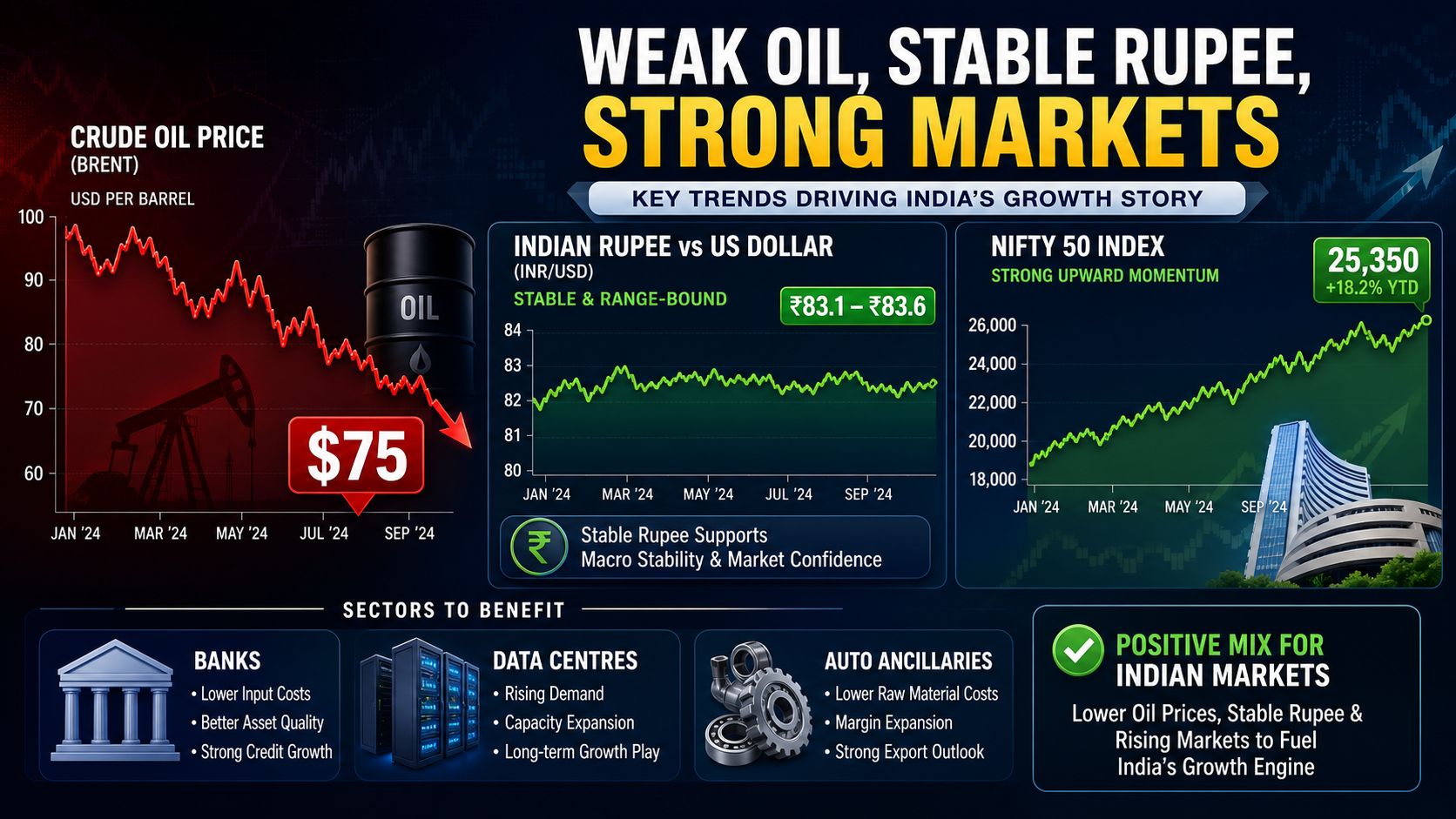

Intro: Indian markets may be at an inflection point after a notable correction in global crude oil prices. Lower oil can ease inflationary pressures and stabilise the rupee — a shift that could reshape sector leadership and investor sentiment heading into the new fiscal year.
What Happened
Crude oil prices have retreated toward the $70–$75 range. That move has helped ease concerns about rising consumer prices and currency depreciation. At the same time, bond yields have softened and some policy measures to support foreign currency inflows have reduced near-term pressure on the macro picture. Analysts see this reversal as the key trigger changing the market narrative.
Why It Matters for Indian Market
Lower oil improves the inflation outlook and supports the rupee, which together reduce cost pressures for companies and the economy. Although near-term corporate earnings could be dented by inventory and input-cost effects in the first half, the expectation is for margins and growth to normalise in the second half as firms work through higher-cost stock.
Impact on Investors
- Financials: Banks and NBFCs could lead a market rebound given strong credit growth and improving asset quality, though a full valuation rerating may depend on foreign flows.
- Sectors to watch: Themes such as data centres, hospitals, niche engineering IT and select auto ancillaries may find fresh interest as macro risks ease.
- Foreign flows: Overseas investors may stay selective while other markets benefit from AI-related capex; a slowdown in selling could still support prices even without big inflows.
- Earnings: Expect a temporary earnings dip early in the year, followed by normalisation later as inventory effects fade.
Conclusion
The crude correction is a meaningful macro pivot for India. If oil holds at lower levels, inflation and currency pressures should ease, supporting a healthier market backdrop. This creates opportunities across financials and several structural themes, though broader re-rating may need steady foreign participation.
This article is for educational purposes only. It is not investment advice or a buy/sell recommendation. Please consult a qualified financial advisor before making investment decisions.