


India’s auto industry has kicked off FY27 with one of its strongest quarterly performances in recent years. Passenger vehicles, two-wheelers and commercial vehicles all reported healthy growth, while exports reached new highs and electric vehicle (EV) adoption continued to accelerate. More importantly, the quarter highlighted a structural shift in the industry. Growth is no longer being driven by domestic demand alone. Companies with strong export businesses, diversified powertrain portfolios and competitive EV strategies are beginning to pull ahead.
In this article, we’ll decode the biggest trends from Q1 FY27 business updates, compare how leading automakers performed, and explore what these numbers could mean for the industry’s next phase of growth.
Q1 FY27 At A Glance
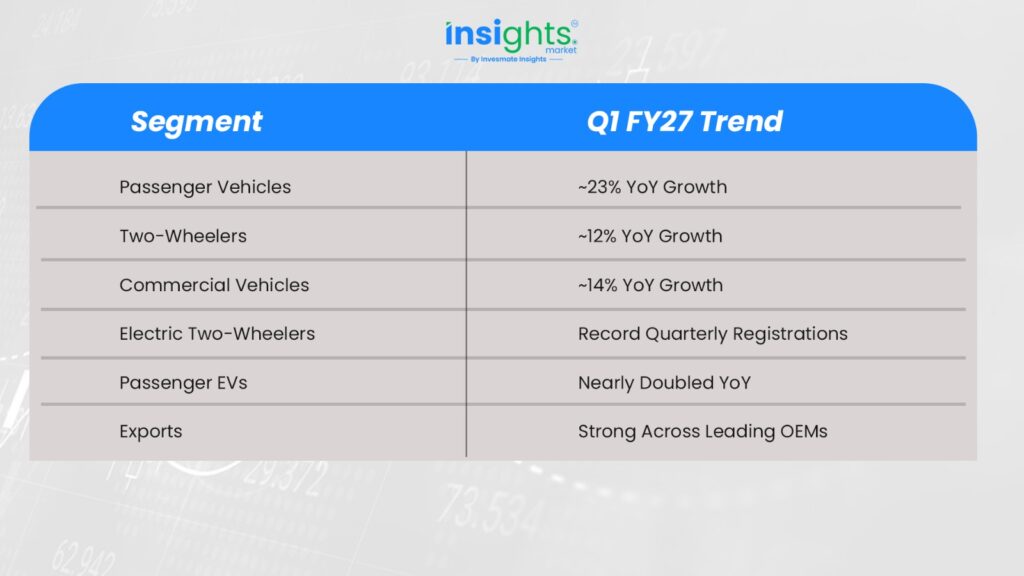
The June quarter delivered broad-based growth across India’s automobile industry. Passenger vehicles led the recovery, while two-wheelers and commercial vehicles also posted healthy double-digit growth. Industry experts believe that although the low base of last year supported growth, strong consumer demand, healthy retail sales, and improving inventory levels indicate that momentum remains intact.
Company Scorecard – Who Stood Out In Q1 FY27?
While the industry performed well overall, each manufacturer had a different growth story.
EV Adoption Is Becoming A Structural Growth Driver
One of the biggest highlights of Q1 FY27 was the rapid acceleration in EV adoption across India. While improving battery technology and a wider range of products have played an important role, several structural factors are now encouraging consumers to switch to electric mobility. Rising petrol and diesel prices have increased the running cost of conventional vehicles, making EVs a more economical choice for many buyers. At the same time, concerns around the gradual rollout of E20 fuel, which requires compatible engines for optimal performance, have also encouraged some customers to explore electric alternatives. Government policies are providing another strong tailwind. For example, Delhi’s new EV policy proposes that only electric two-wheelers will be newly registered from April 2028, along with purchase incentives to further boost adoption.
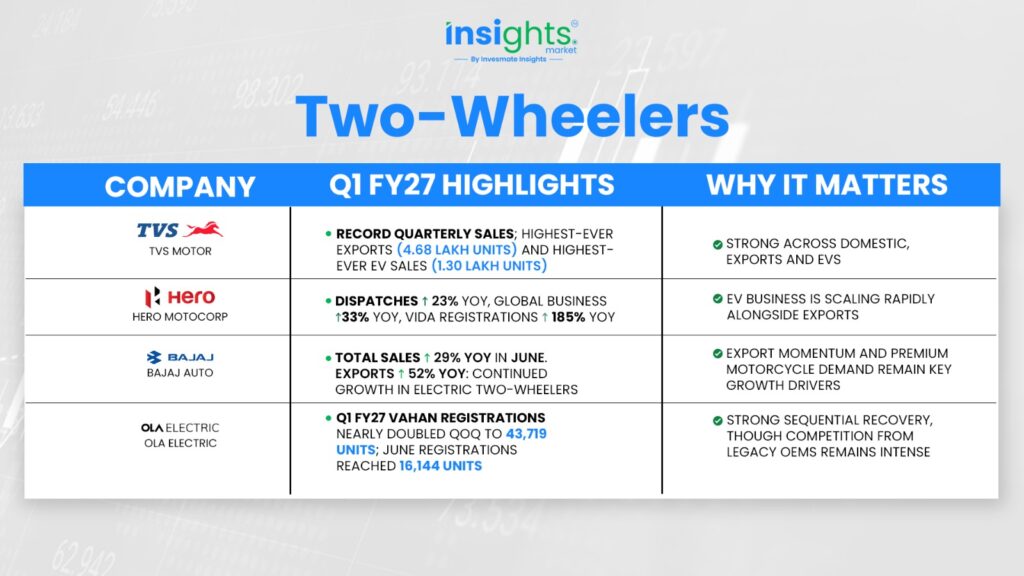
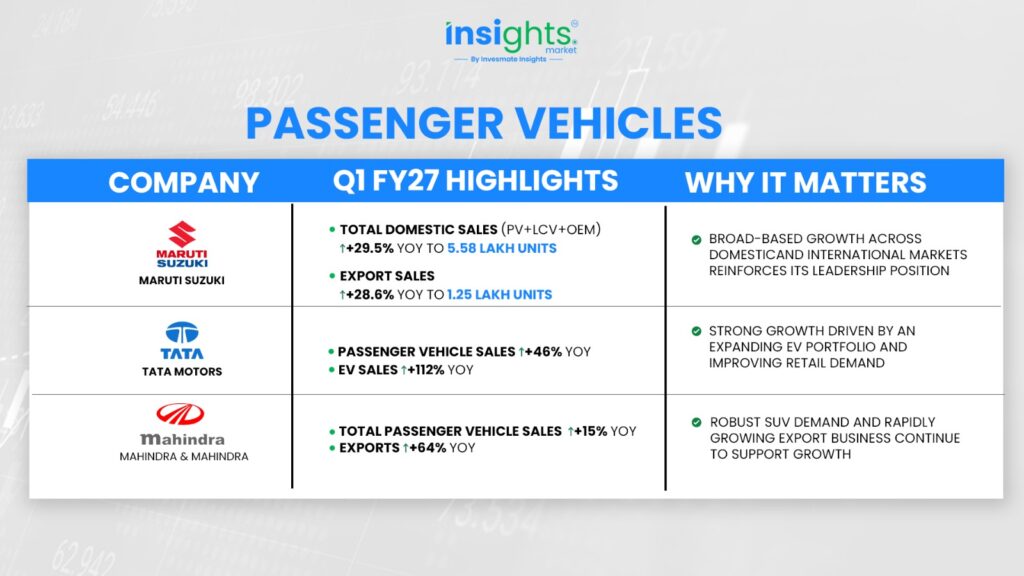
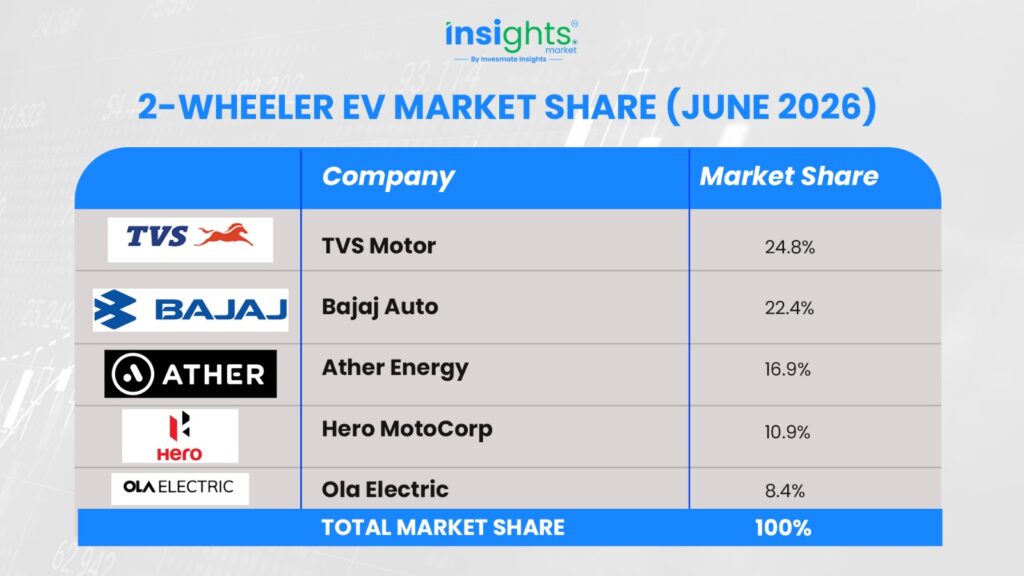
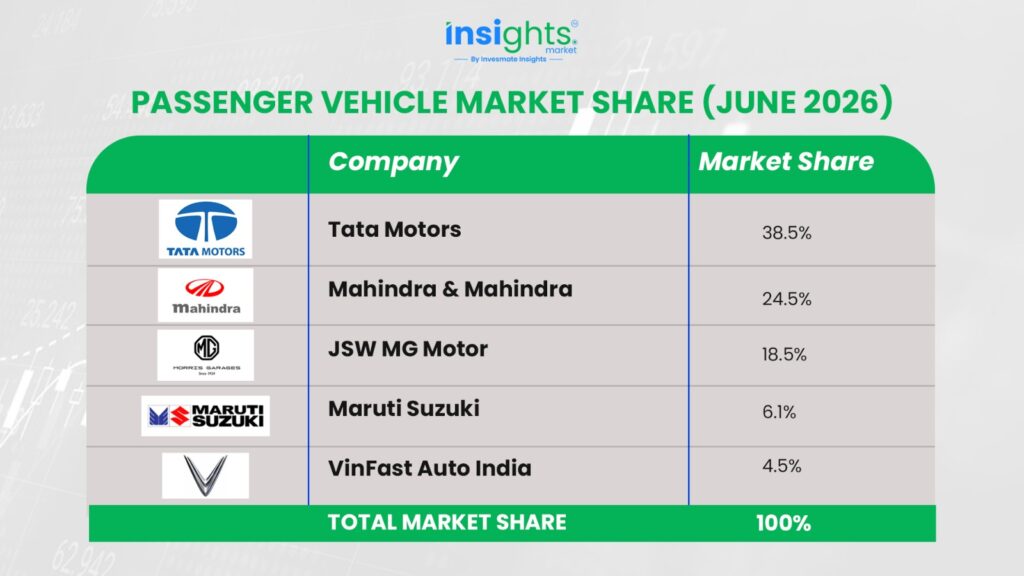
The numbers reflect this momentum. India’s electric two-wheeler market crossed five lakh quarterly registrations for the first time, while EV penetration in June moved into double digits. Traditional manufacturers such as TVS Motor, Bajaj Auto and Hero MotoCorp continued strengthening their market positions, while the passenger EV segment witnessed intense competition as Tata Motors defended its leadership against challengers like Mahindra, Maruti Suzuki and VinFast
Exports Are Emerging As A Key Growth Driver
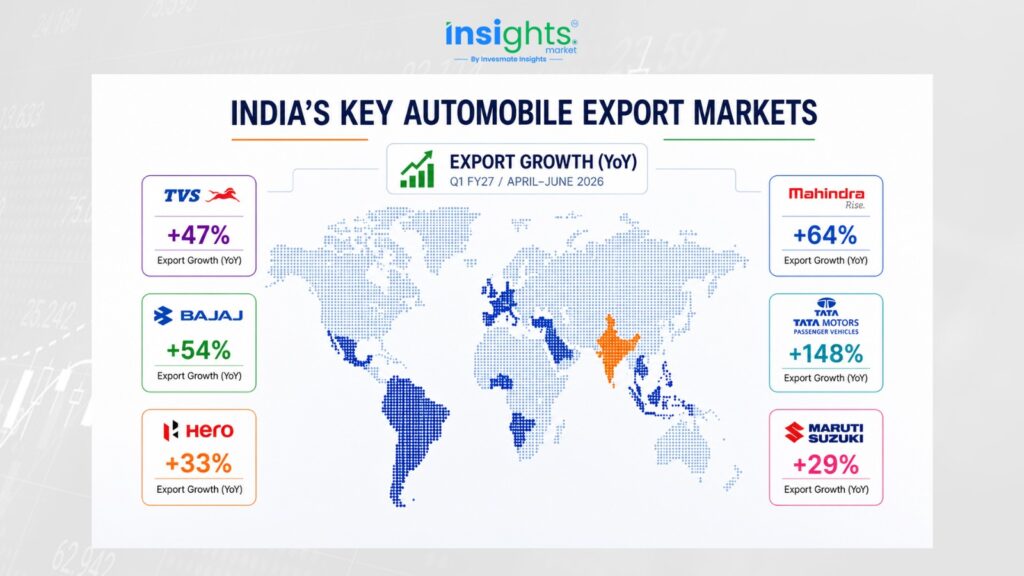
While domestic demand remained healthy, exports became one of the biggest growth drivers for several automakers in Q1 FY27. TVS Motor reported its highest-ever quarterly international sales of 4.68 lakh units, with June international business growing 47% YoY. Hero MotoCorp’s global business also maintained strong momentum, recording 33% YoY growth, while Maruti Suzuki’s exports rose nearly 29%, supported by growing demand across global markets.
The strong export performance highlights the increasing global competitiveness of Indian manufacturers. As companies expand their international footprint and diversify beyond the domestic market, exports are becoming an important pillar of long-term growth, helping improve capacity utilisation and reduce dependence on local demand.
Challenges Still Remain
Despite the impressive quarter, several risks could influence industry performance going forward. Commodity costs, particularly steel and rare-earth materials, remain volatile. Supply chain disruptions, higher logistics expenses, rupee depreciation and geopolitical uncertainty continue to pressure manufacturers. At the same time, interest-rate movements and monsoon-driven rural demand could influence vehicle purchases in the coming quarters.
What Should Investors Watch In Q2 FY27?
The industry’s outlook remains positive as it enters the festive season. New product launches, improving export demand, healthy inventory levels and continued infrastructure spending are expected to support growth across passenger vehicles, two-wheelers and commercial vehicles. However, as the comparison base becomes stronger in the second half of the year, companies will need to rely more on product execution, market share gains and profitability rather than simply benefiting from favourable year-on-year comparisons.
Final Takeaway
Q1 FY27 was more than just a quarter of strong sales—it highlighted the changing dynamics of India’s auto industry. Exports, electrification, premiumisation and alternative fuels are becoming increasingly important, while companies with diversified product portfolios and strong execution continue to outperform. As FY27 progresses, headline sales numbers will remain important, but the real indicators to watch will be export momentum, EV adoption, product innovation and margin performance. These factors are likely to determine which automakers can sustain their growth and strengthen their competitive position over the long term.
FAQs
The industry benefited from strong domestic demand, improving exports, rising EV adoption, healthy retail sales, and new product launches across multiple vehicle segments.
Passenger vehicles led the industry with the strongest growth, followed by commercial vehicles and two-wheelers. EV sales also recorded significant year-on-year growth.
Exports help companies diversify revenue, improve factory utilization, reduce dependence on domestic demand, and strengthen their global presence.
Rising fuel prices, improving charging infrastructure, better battery technology, supportive government policies, and a wider range of EV models are encouraging more consumers to switch to electric vehicles.
TVS Motor, Tata Motors, Maruti Suzuki, Hero MotoCorp, Mahindra & Mahindra, and Bajaj Auto reported strong business updates driven by domestic demand, exports, and EV growth.
Higher raw material costs, supply chain disruptions, rare-earth material availability, geopolitical uncertainty, currency fluctuations, and interest rate movements remain key challenges.
EVs are becoming a major long-term growth driver. As technology improves and government support continues, electric vehicles are expected to account for a larger share of future vehicle sales.
Investors should monitor festive season demand, export momentum, EV sales growth, new product launches, market share trends, and profit margins in the coming quarters.
This article is for educational and informational purposes only. It is not investment advice or a stock recommendation. Investors should conduct their own research or consult a qualified financial advisor before making investment decisions.