

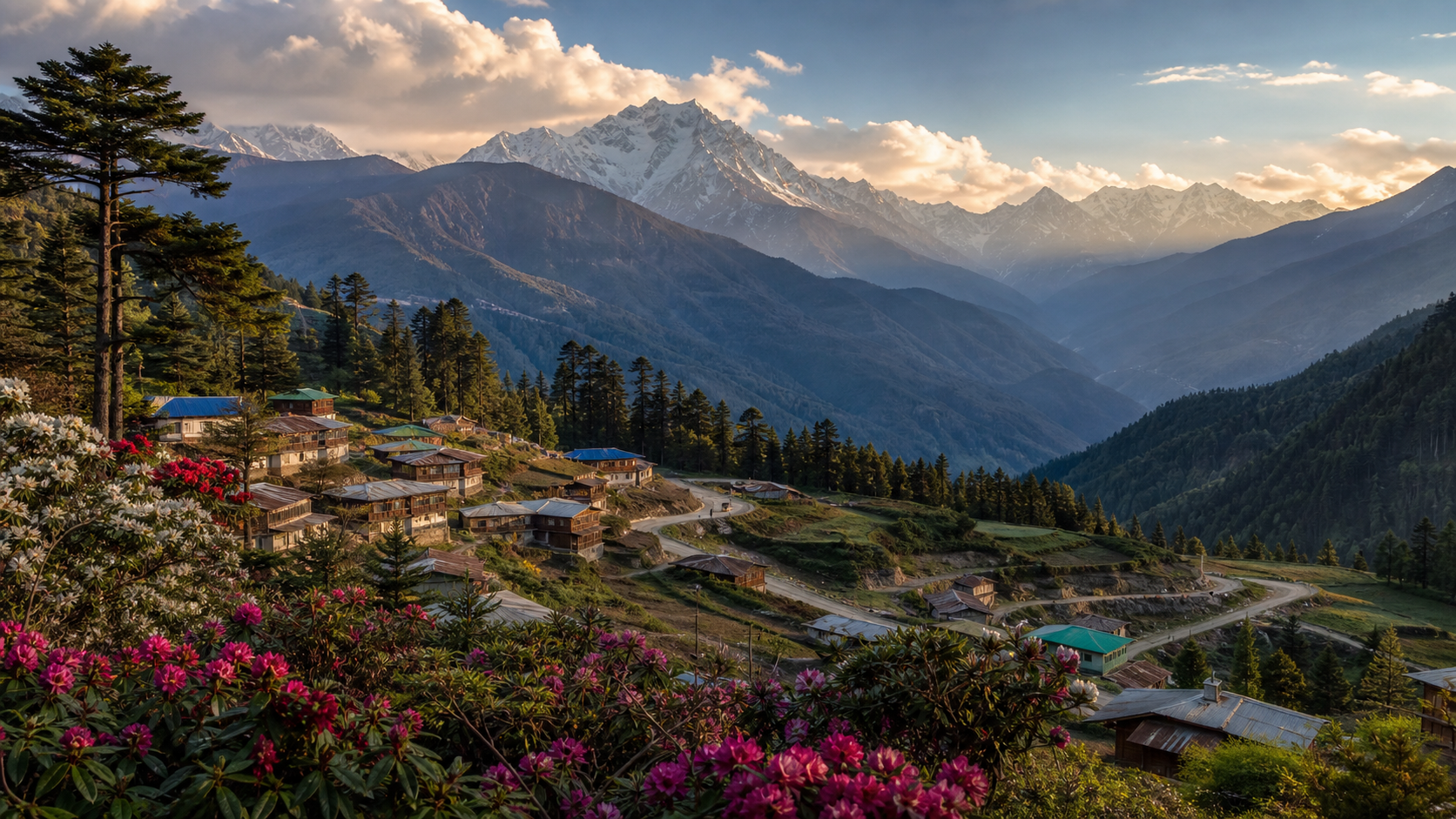

There is a special kind of travel pull that Arunachal Pradesh exerts: the feeling that you are stepping into a place where the map almost runs out and life is still measured by rivers, mountains and festivals. Many Indian travellers dream of that first Himalayan sunrise over a remote valley, or of sitting beside a friendly host in a village homestay, listening to stories that are centuries old. Arunachal manages to feel both vast and intimate — wild landscapes and warm local hospitality in one journey.
If you are weighing options for your next Northeast India trip in 2026, Arunachal deserves serious consideration. It combines dramatic high-altitude passes and snow-fed lakes, dense rainforests full of biodiversity, living tribal cultures with colourful festivals, and a quieter kind of tourism infrastructure that still rewards curiosity and careful planning. This guide is written for Indian travellers who want an achievable, well-planned experience rather than a rushed checklist.
Why Arunachal Pradesh matters for Indian travellers
Arunachal is not simply another destination; it’s an invitation to slow down and encounter India’s eastern frontier. For travellers from other parts of India it offers:
- Geographic variety: High Himalayan landscapes in the north, subtropical valleys and rich river plains in the south, and dense evergreen forests with unique wildlife in the east.
- Distinct tribal cultures: Home to many tribes — each with its own language, crafts and festivals — the state gives a window into cultural diversity not often seen elsewhere on the subcontinent.
- Less crowded tourism: Compared with mainstream Himalayan hotspots, major sites here retain a quieter, more authentic atmosphere.
- Accessible adventure: Treks, river valleys, and high passes allow for both gentle exploration and challenging itineraries depending on the traveller’s appetite.
Best time to visit
Choosing when to travel depends on what you want to see:
- October to early December: Clear skies, crisp days and excellent visibility for mountain views. A favourite window for most travellers to combine cultural visits with sightseeing.
- March to May: Spring brings wildflowers and pleasant temperatures in many valleys; useful for avoiding high-winter cold while still catching good weather.
- Monsoon (June–September): Heavy rains affect roads and increase landslide risk in parts of the state, though the forests are lush and some eastern rainforests are spectacular in this season.
- Winter (December–February): High-altitude zones like Tawang and Sela Pass can see significant snow and low temperatures; excellent for snow landscapes but expect colder conditions and occasional road disruptions.
Main planning sections
Top experiences and suggested highlights
- Tawang and the monastery circuit: Tawang Gompa is a major draw; the town’s monastery, mountain backdrop and nearby high passes offer dramatic scenery and cultural insight.
- Ziro Valley: Known for its green paddy terraces, pine forests and the annual music festival, Ziro is also a good base for experiencing Apatani culture and village homestays.
- Bomdila and hilltop views: Offers panoramic vistas, monasteries and a calmer hill-station vibe en route to higher destinations.
- Mechuka, Pasighat and remote valleys: Offbeat towns with striking landscapes and strong tribal identities — ideal for travellers seeking solitude and local interaction.
- National parks and biodiversity: Lowland and foothill zones are rich in flora and fauna; guided nature walks and birdwatching can be rewarding in the right season.
Sample 10-day itinerary (balanced, moderate pace)
Day 1: Arrival and acclimatisation — Itanagar or nearest entry town
Arrive via the most convenient entry point and use the day to settle, collect permits if needed, and explore local markets and the state’s capital area.
Day 2–3: Ziro Valley
Drive to Ziro, enjoy the landscape of paddy fields and pine groves, visit nearby villages and opt for a homestay to experience Apatani hospitality. If your visit coincides with the local music festival, consider booking early.
Day 4: Bomdila
Travel to Bomdila, visit hilltop viewpoints and local monasteries, and sample regional cuisine in small eateries or guesthouses.
Day 5–7: Tawang and surrounding highlands
Continue to Tawang, taking in mountain passes and high-altitude lakes. Explore Tawang Monastery and nearby viewpoints. Allow time for gradual acclimatisation.
Day 8: Local exploration — markets and monasteries
Slow day to meet local artisans, visit lesser-known monasteries and interact with residents to learn about daily life and traditions.
Day 9: A remote valley or river town (choice)
Choose a quieter spot such as Mechuka or Pasighat to experience a different landscape and tribal culture away from the main circuit.
Day 10: Return journey
Make your way back to your entry point and prepare for departure. Keep some buffer time for road delays or sightseeing on the return.
Transport — how to move around
- Major entry options: Domestic flights to nearby airports or rail/bus to neighbouring Assam and then road transfer are common. The final leg is often a long, scenic drive.
- Road travel: Mountain roads vary from well-maintained stretches to narrow, winding sections. Hiring an experienced local driver or a private vehicle for multi-day travel is a practical choice for comfort and flexibility.
- Local transport: Shared taxis and limited bus services operate on major routes, but timings can be irregular — plan arrivals and departures with flexibility.
Budget and cost guidance
Costs in Arunachal vary widely depending on style and remoteness. Expect basic guesthouses and homestays to be the most economical; comfortable hotels in larger towns will cost more. Driving long mountain routes, hiring local drivers, and paying for permits are additional budget items to plan for. Because remote areas have limited services, allow some financial buffer for fuel, meals, and unforeseen delays.
Visa and permit information
Arunachal Pradesh requires an official permit to enter. Indian citizens need a state permit (often referred to as an Inner Line Permit) to travel within Arunachal. Foreign nationals typically require a Protected Area Permit (PAP) or special clearances for restricted zones. Permits can usually be obtained through the state’s official process — many travellers apply online in advance and carry printed copies during the trip. Always check the latest permit requirements well before departure.
Where to stay
- Major towns: Itanagar, Ziro and Tawang offer hotels and guesthouses with varied comfort levels suitable for families and couples.
- Homestays and village stays: In valleys and tribal areas, homestays are an excellent way to experience local life and support the community economy.
- Remote area options: Basic guesthouses, army-run tourist huts in certain places, and locally run camps exist in more isolated locations; book ahead where possible.
Food and dining
Local food features rice, millets, pork, fish, bamboo shoots and simple, hearty preparations. Thukpa and momos are widely available, and many homestays offer home-cooked tribal meals. If you prefer Indian staples, several hotels and restaurants in larger towns provide familiar dishes, but options narrow in remote villages.
Family, couple, solo and group suitability
- Families: Good for older children who enjoy nature and culture; choose gentler itineraries and shorter driving segments.
- Couples: Excellent for quiet escapes, scenic vistas and cultural immersion; homestays can offer intimate experiences.
- Solo travellers: Feasible with preparation — opt for guided tours, join small groups for remote legs, and notify hosts of your plans.
- Groups: A group or family vehicle simplifies logistics and can be cost-effective for longer routes.
Pro Tip
Allow extra days in your schedule for road delays, acclimatisation if you’re heading to high passes, and unexpected discoveries. The best travel memories in Arunachal often come from unplanned village visits or a sunset over a valley, so keep your itinerary flexible.
Comparison table: entry and travel options
| Entry Point | Best for | Pros | Cons |
|---|---|---|---|
| Guwahati (Assam) | First-time visitors, flexible routes | Frequent flights and rail connections; many onward road options | Longest road sections to reach interior valleys |
| Nearest regional airports (Itanagar/Hollongi, Tezpur, Dibrugarh) | Quicker access to eastern or central Arunachal | Shorter driving distances for some circuits; less overall road time | Limited flight frequency and seasonal variations |
| Railway/road via Assam towns | Budget-conscious travellers | Cost-effective overland travel; scenic drives | Longer travel time; bus schedules can be irregular |
Planning the smart way
- Permits first: Apply for state permits well in advance and carry printed copies; verify whether any zones on your route have additional restrictions.
- Choose the right season: For clear mountain views choose dry months; for lush forests consider post-monsoon months but be cautious about road conditions.
- Hire local support: An experienced local driver or guide can turn a difficult road into a safe and insightful journey and help with language and local customs.
- Pack smart: Warm layers, sturdy shoes, a basic first-aid kit, and medications for motion sickness or altitude adjustment are advisable.
- Respect local customs: Dress modestly in tribal villages, seek permission before photographing people, and consider small purchases or donations that support local artisans.
Final thoughts
Arunachal Pradesh is a destination for travellers who value discovery over convenience: landscapes that sweep from subtropical forests to snow-swept passes, cultures that remain vibrantly alive, and the feeling of travelling to the edge of the map. With sensible planning — especially around permits, seasons and transport — the state offers an unforgettable journey for Indian travellers in 2026.
If you want to turn this into a real trip, take time to plan the permits and route, allow buffers for mountain travel and consider a mix of homestays and comfortable hotels. Travelzia’s destination expertise can help you structure an itinerary that matches your pace and interests while keeping the logistics straightforward.
FAQs
1. Do Indian citizens need a permit to visit Arunachal Pradesh?
Yes. Indian nationals generally require an official state permit (often referred to as an Inner Line Permit) to travel in Arunachal Pradesh. Apply well before you travel and carry the permit during your trip.
2. When is the best time to visit Arunachal Pradesh?
For most travellers, October–December and March–May offer the best balance of clear weather and comfortable temperatures. Monsoon months bring heavy rain that can affect roads.
3. Is Arunachal safe for solo travellers?
Many solo travellers visit safely with sensible precautions: inform family or hosts of your plans, use local guides for remote stretches and be mindful of road and weather conditions.
4. What kind of accommodation can I expect?
Accommodation ranges from simple guesthouses and homestays in rural areas to comfortable hotels in larger towns. Remote regions may have limited options, so book ahead where possible.
5. Are there good options for food and special diets?
Local cuisine features rice, millets, pork, fish and bamboo-shoot dishes. In larger towns, hotels often provide familiar Indian dishes. If you have dietary restrictions, carry essentials when heading to remote areas.
6. How should I travel between destinations within the state?
Most travellers use private hires with local drivers for flexibility. Shared buses and taxis exist but schedules can be irregular; plan with buffer time for journeys.
7. Can I combine Arunachal with other Northeast states?
Yes. Arunachal works well as part of a multi-state Northeast itinerary, often combined with Assam, Nagaland or Mizoram depending on your route and interests. Allow extra travel days for overland transfers.
Travel Information Disclaimer
Travel information is for general planning purposes only. Prices, visa rules, availability, and entry requirements can change. Verify important details with the relevant airline, hotel, embassy, or official authority before booking or travelling.