



India’s healthcare sector is expanding as demand for quality treatment, health insurance coverage, chronic disease care, and advanced medical services continues to rise. At the center of this opportunity is Manipal Health Enterprises Limited (MHEL), which operates India’s largest pan-India multispecialty hospital network by bed capacity.
The company is now entering the public markets through its ₹ 9,275-crore IPO. But beyond the IPO size, the bigger story is its hospital network, acquisition-led expansion, growing patient volumes and future capacity plans. In this article, we look at Manipal Health’s business, industry opportunity, financial performance, competitive strengths, growth strategy, and key risks.

About Manipal Health Enterprises
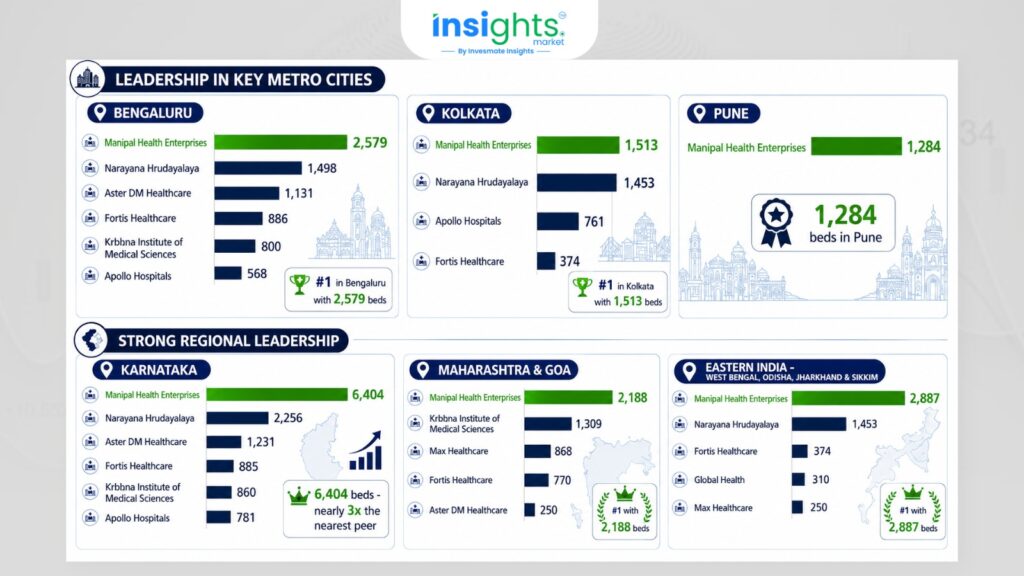
Manipal Health Enterprises is one of India’s leading healthcare providers, offering services ranging from outpatient treatment to complex tertiary and quaternary care. As of March 31, 2026, the company operated 49 hospitals with 13,037 licensed beds across 14 states and Union Territories, making it India’s largest multispecialty hospital group by bed capacity. Its network has a balanced presence, with around 47% of licensed beds in metro cities and 53% outside metros. The company has particularly strong positions in Karnataka, Maharashtra & Goa and Eastern India. It is also the only private hospital chain with leadership positions across Bengaluru, Kolkata, and Pune. Its major specialties include cardiac sciences, oncology, neurosciences, orthopaedics, gastro sciences and renal sciences. The network is supported by advanced infrastructure, including robotic surgery systems, MRI scanners, linear accelerators and catheterisation labs.
Quick IPO Details
Manipal Health Enterprises IPO is a Book Built Offer of ₹9,275.22 crore, comprising a Fresh Issue and an Offer for Sale (OFS).
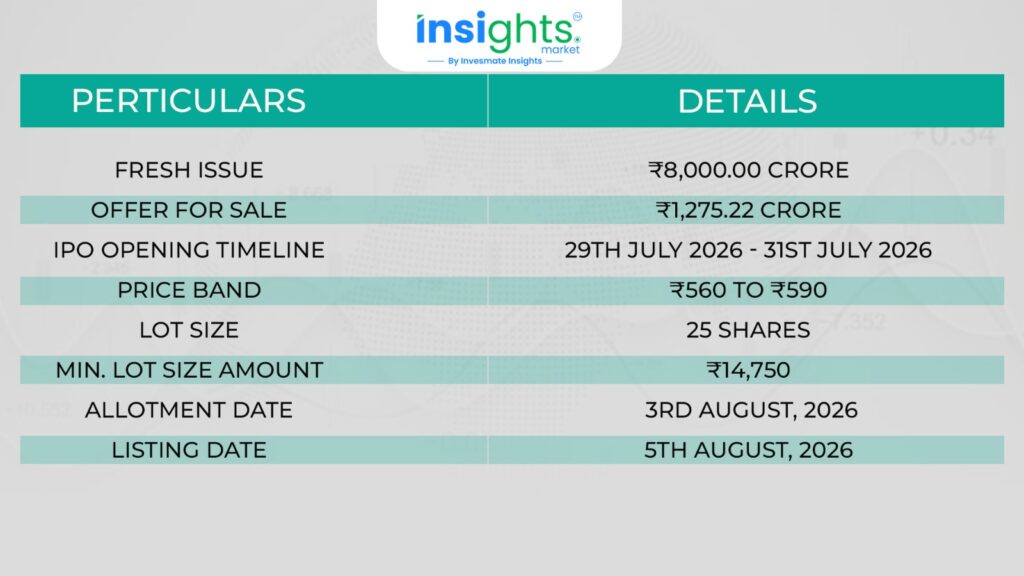
A major portion of the fresh issue proceeds, around ₹5,552.8 crore, is planned for repayment or prepayment of borrowings. Another ₹574 crore is intended for acquiring a minority stake in Sahyadri Hospitals Private Limited, while the remaining amount will support general corporate purposes.
India’s Healthcare Industry Has a Long Growth Runway
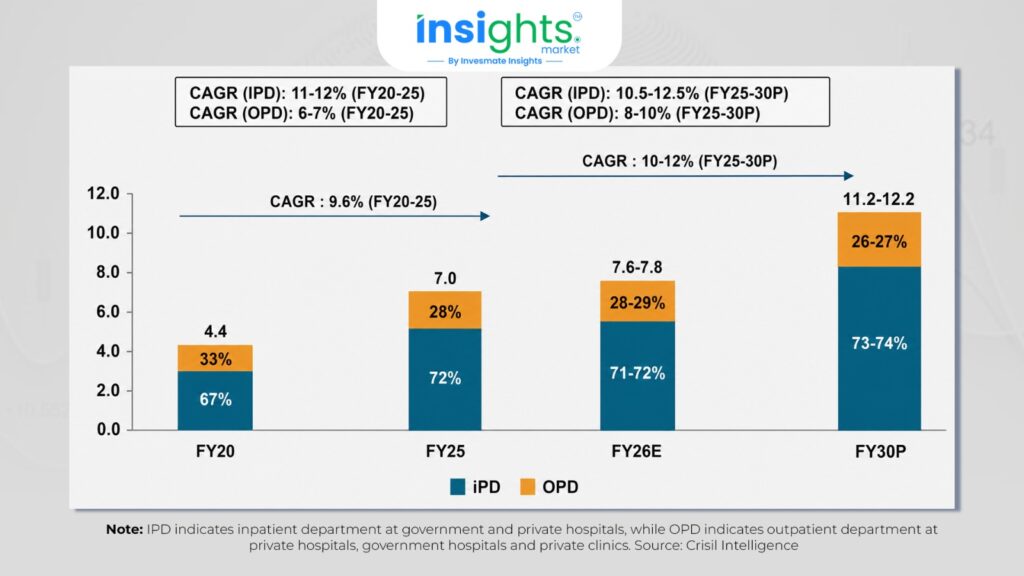
India’s healthcare delivery market was approximately ₹7 trillion in FY25 and is estimated at ₹7.6–7.8 trillion in FY26. It is projected to reach ₹11.2–12.2 trillion by FY30, implying roughly 10–12% CAGR during FY25–FY30. Inpatient care remains the largest part of the market, contributing around 71–72% in FY26. At the same time, demand for high-value specialties such as cardiac care, oncology and orthopaedics continues to grow. The opportunity extends well beyond large cities. Around 75–80% of India’s healthcare delivery market comes from non-metro cities, creating significant room for organised hospital chains to expand deeper into underserved markets. Long-term growth is also supported by an ageing population, rising chronic diseases, higher disposable incomes, increasing insurance coverage, medical tourism and technologies such as telemedicine, AI and robotic surgery. Health insurance penetration increased from 35% in FY19 to 41% in FY25, improving access to organised healthcare.
A Pan-India Network Built Through Expansion and Acquisitions
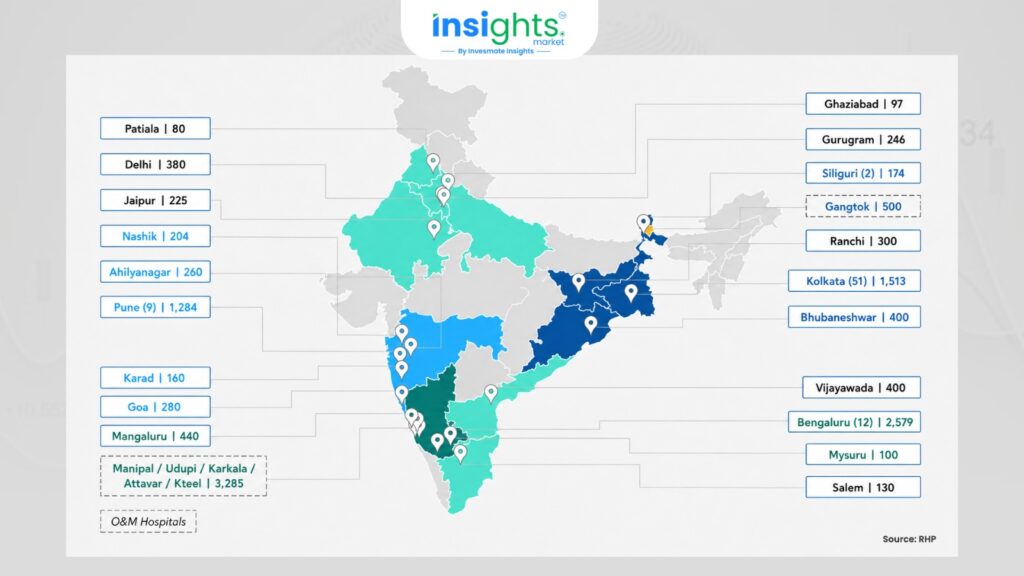
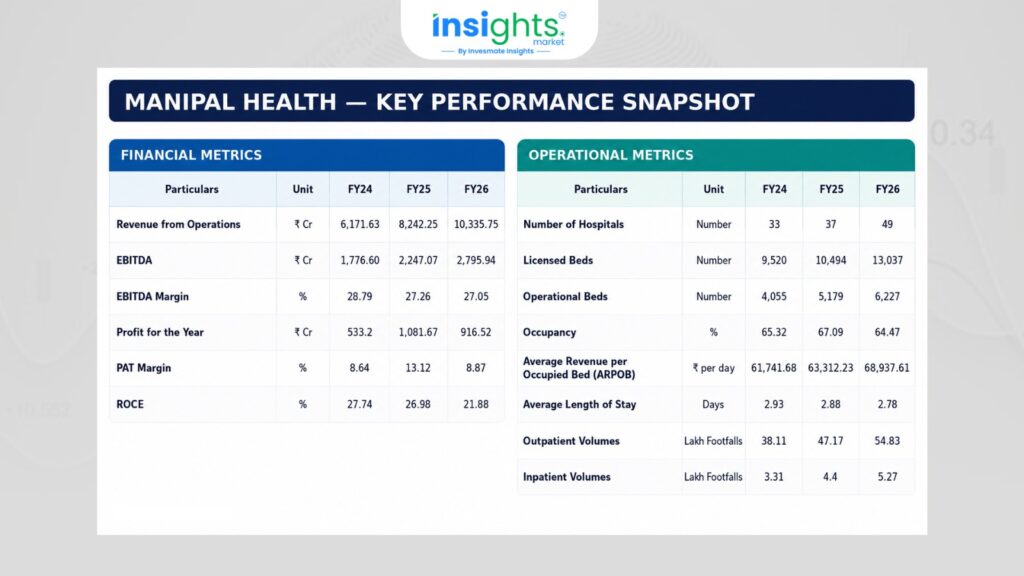
One of Manipal Health’s biggest strengths is the scale of its network. The company expanded from 33 hospitals and 9,520 licensed beds in FY24 to 49 hospitals and 13,037 licensed beds in FY26. Operational beds increased from 4,055 to 6,227 during the same period. Acquisitions have played an important role. Between March 2021 and March 2026, the company added 5,548 beds through acquisitions, including Columbia Asia, Vikram Hospitals, AMRI, Medica Synergie and Sahyadri Group. The geographical network shown on page 4 of the IPO note also highlights its presence across major healthcare markets, from Bengaluru, Pune, and Goa to Kolkata, Ranchi, Delhi-NCR, and other cities.
What Gives Manipal Health an Edge
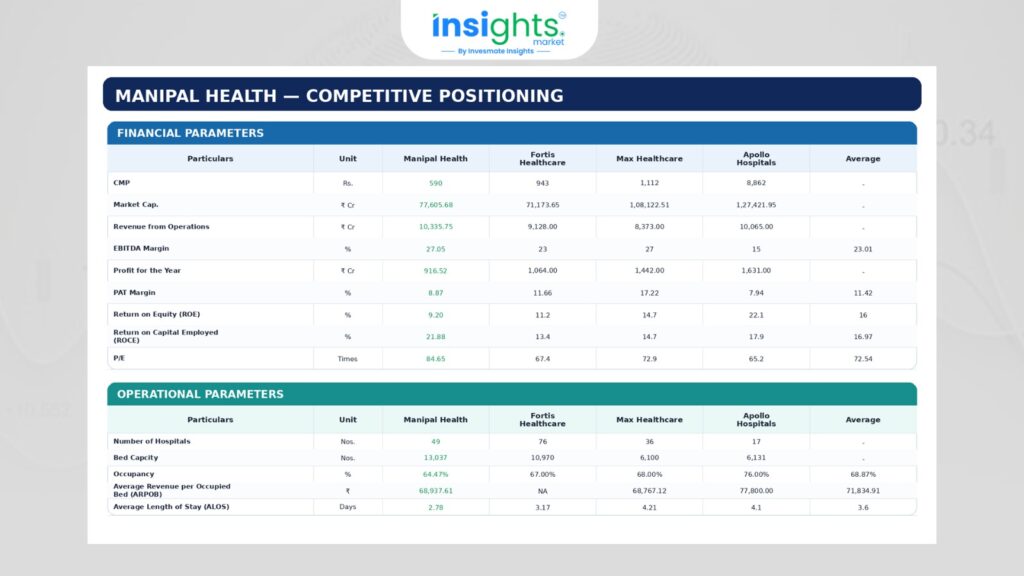
The company’s biggest competitive advantage is its scale. With 13,037 licensed beds, it has a larger bed capacity than major listed peers such as Apollo Hospitals, Fortis Healthcare and Max Healthcare. Other strengths include its leadership across Bengaluru, Kolkata and Pune; balanced metro and non-metro presence; diversified speciality portfolio; and advanced clinical capabilities. Its acquisition track record is another important advantage. Successful integration of acquired hospitals can help Manipal Health enter new markets faster while using its existing brand, clinical expertise and operating platform to improve efficiency.
Financial and Operational Snapshot
Manipal Health has expanded both its financial scale and hospital network over the last three years. Revenue increased strongly between FY24 and FY26, supported by higher patient volumes, expansion in bed capacity, and growth in Average Revenue per Occupied Bed (ARPOB). However, occupancy and return ratios moderated in FY26 as the company continued expanding its network
Competitive Positioning
To better understand Manipal Health’s position in India’s hospital industry, it is useful to compare its scale, operating performance, and valuation with major listed hospital players.
Growth Strategies
Manipal Health plans to continue growing through a combination of organic expansion, acquisitions, and technology.
- Expand existing facilities and add capacity through greenfield and brownfield projects.
- Pursue strategic acquisitions to enter new markets and strengthen existing regional positions.
- Use digital, AI, and technology to improve patient access, clinician experience, and operational efficiency.
- Attract and retain medical talent to support expansion while maintaining quality of care.
- Invest in advanced medical infrastructure and clinical innovation, including AI-assisted diagnostic and treatment platforms.
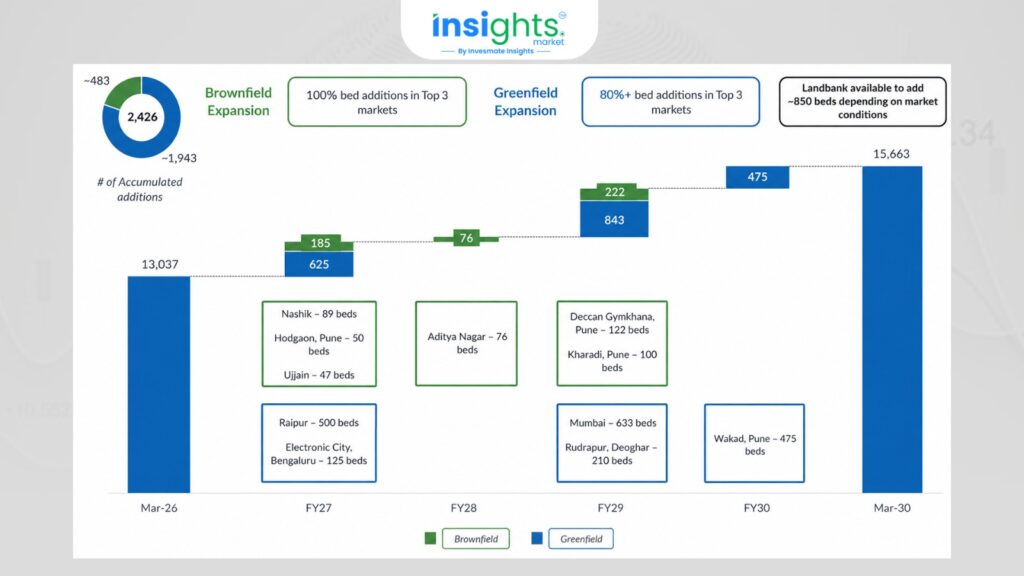
The company plans to add around 2,426 beds during FY26–FY30, including 1,943 through greenfield projects and 483 through brownfield expansion.
Key Risks Investors Should Know
Despite its scale, the business carries several important risks.
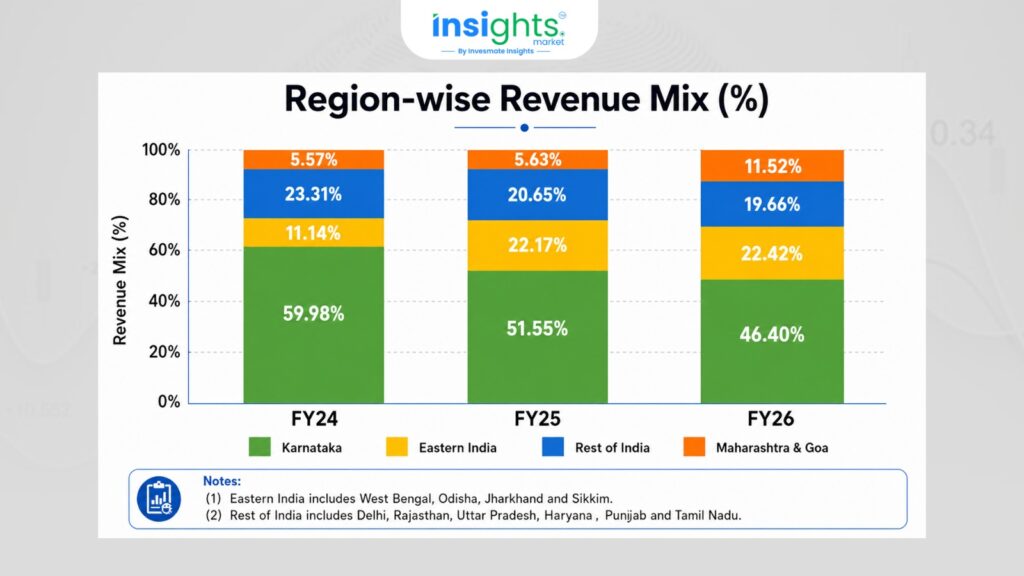
- Geographic Concentration Risk: Karnataka hospitals contributed 46.40% of FY26 revenue, exposing the company to regional operational disruptions, policy changes, and state-specific risks.
- Integration Risk from Acquisitions: Acquisitions have played an important role in MHEL’s expansion. However, integrating acquired hospitals can be challenging, including combining employees, operations, technology, internal controls, and financial reporting systems. Integration difficulties could reduce expected operational efficiencies and divert management attention.
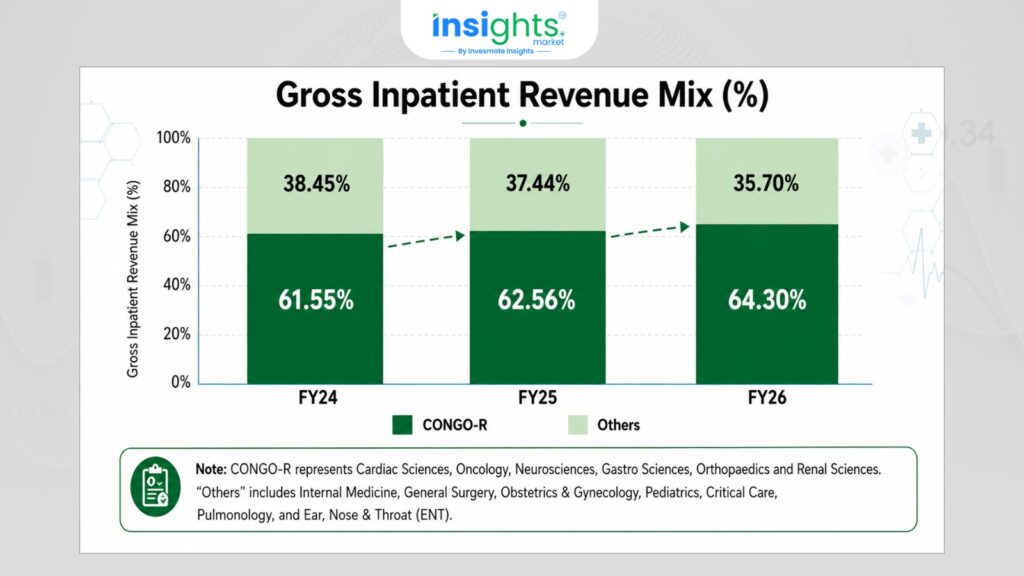
- Specialty Concentration Risk: CONGO-R specialties, including cardiac sciences, oncology, neurosciences, gastro sciences, orthopaedics, and renal sciences, contributed 64.30% of FY26 gross inpatient revenue. Any decline in demand for these key specialties could materially impact revenue and profitability.
- Dependence on Inpatient Care & Occupancy: The company primarily generates revenue from inpatient care, with FY26 occupancy at 64.45%. Any decline in patient admissions or occupancy could impact revenue, margins, and overall profitability.
- Regulatory and Biomedical Waste Compliance Risk: Hospital operations generate biomedical waste and are subject to various pollution control and waste management regulations. Any failure to comply with these requirements could result in penalties, operational disruptions, or reputational damage.
- Government Price Controls: Government and regulatory authorities may impose price caps on medical devices, equipment, medicines, or certain treatments. Such pricing restrictions could limit MHEL’s ability to pass on rising costs and put pressure on hospital margins and profitability.
Conclusion
Manipal Health Enterprises combines India’s largest multispecialty hospital network, strong regional leadership, rising patient volumes and an established acquisition strategy with exposure to India’s growing healthcare market. The IPO proceeds could also strengthen the balance sheet through significant debt repayment, while planned capacity additions provide another growth runway. However, investors should balance these positives against occupancy trends, acquisition integration, geographic concentration and valuation.
Overall, the IPO offers investors exposure to a scaled healthcare platform operating in an industry with strong structural growth potential—but future returns will depend on how effectively Manipal Health converts its large network and upcoming capacity expansion into sustainable earnings growth.
FAQs
Manipal Health Enterprises operates a pan-India network of multispecialty hospitals offering inpatient, outpatient, diagnostic, surgical and advanced specialty healthcare services.
Yes. As of March 31, 2026, Manipal Health was India’s largest pan-India multispecialty hospital group by bed capacity, with 13,037 licensed beds across 49 hospitals.
Its key specialties include Cardiac Sciences, Oncology, Neurosciences, Gastro Sciences, Orthopaedics and Renal Sciences, collectively referred to as CONGO-R.
The company has strong positions in Karnataka, Maharashtra & Goa and Eastern India, with leadership in major cities such as Bengaluru, Kolkata and Pune.
The company plans to grow through greenfield and brownfield expansion, strategic acquisitions, advanced medical technology, digital capabilities, and expansion of its clinical services.
Major risks include dependence on inpatient admissions and occupancy, challenges in integrating acquired hospitals, retention of skilled medical professionals, regulatory compliance and government price controls.
The company has expanded through both organic growth and acquisitions, including hospital platforms such as Columbia Asia, AMRI, Medica Synergie and Sahyadri, helping it build a wider pan-India presence.
Investors should evaluate the company’s financial performance, occupancy and ARPOB trends, capacity expansion, acquisition integration, debt position, competitive advantages, key risks and IPO valuation before making an investment decision.
This article is for educational and informational purposes only. It is not investment advice or a stock recommendation. Investors should conduct their own research or consult a qualified financial advisor before making investment decisions.