

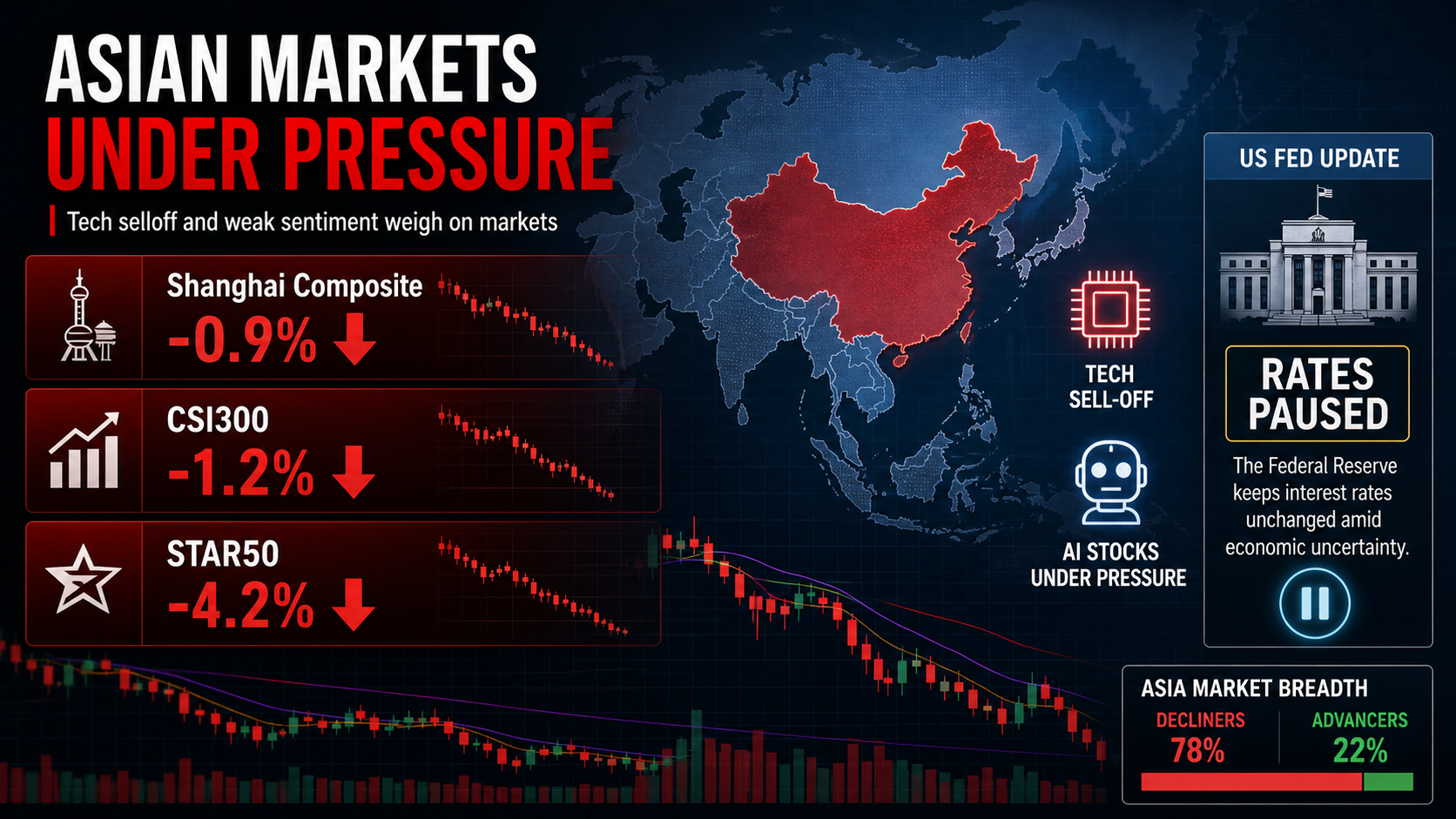

Intro: Chinese equity markets slipped as technology and AI-linked shares extended losses even after the US central bank left interest rates unchanged. The move reflects renewed caution on lofty AI valuations and mixed earnings reactions across the region.
What Happened
Major mainland benchmarks traded lower midday, led by deep declines in technology-focused indexes. Small- and mid-cap tech panels and 5G-related groups posted some of the sharpest drops. Several individual AI hardware and robotics names fell after profit or growth reports disappointed expectations. The US Fed’s pause on rates provided limited relief as investors re-priced near-term earnings prospects for tech and AI players.
Why It Matters for Indian Market
- Sentiment spillover: Weakness in China tech can dent risk appetite across Asian equities and influence flows into India.
- Supply-chain links: Indian suppliers and exporters tied to electronics, components and software services may see demand revisions if Chinese tech capex slows.
- Valuation cues: A re-rating of AI hardware and software names abroad can affect how global investors view comparable names in India.
- Macro context: A Fed pause with persistent inflation keeps markets sensitive to growth vs. inflation trade-offs and equity rotation themes.
Impact on Investors
- Watch earnings and guidance from global tech firms to gauge sustainability of AI-driven spending.
- Monitor foreign institutional flows and currency moves, as regional risk-off can influence liquidity into Indian markets.
- Consider portfolio diversification and position sizing given higher volatility in AI and high-growth segments.
- Keep an eye on valuation gaps; market repricing may create selective opportunities but also higher short-term risk.
Conclusion
The latest selloff in Chinese tech highlights fragile sentiment around AI valuations and the limits of a Fed rate pause to stabilize sentiment. For Indian investors, the immediate priority is to watch earnings momentum, cross-border flows and any signs of broader risk aversion that could touch domestic markets.
Disclaimer: This article is for educational purposes only. It is not investment advice or a buy/sell recommendation. Please consult a qualified financial advisor before making investment decisions.