


The Iran–Israel conflict just erased ₹11 lakh crore from Indian markets. Here’s what it really means for your money.
Imagine this.
You’re filling petrol at ₹106 per litre, checking your Nifty SIP, and suddenly your portfolio is down 4% in just two days. Then the news flashes:
“Iran threatens to close the Strait of Hormuz.”
At first it sounds distant. A narrow sea route somewhere in the Middle East — what does that have to do with your investments?
The answer: almost everything.
Let’s break down what actually happened and why it matters for Indian investors.
What Just Happened
The United States and Israel launched strikes on Iran’s nuclear sites, widely referred to as Operation Epic Fury. The conflict escalated quickly, and Iran’s supreme leader was reportedly killed.
Markets reacted immediately.
Within two trading sessions:
- Sensex dropped more than 1,000 points
- India VIX jumped over 25%
- Nearly ₹11 lakh crore in investor wealth disappeared
Whenever geopolitical tensions rise, markets usually panic first and analyse later.
But the real story isn’t the war itself.
The Real Villain: Oil, Not the War
India isn’t directly involved in the conflict. Yet markets react sharply because wars affect energy prices, and energy prices influence the entire economy.
The chain reaction looks like this:
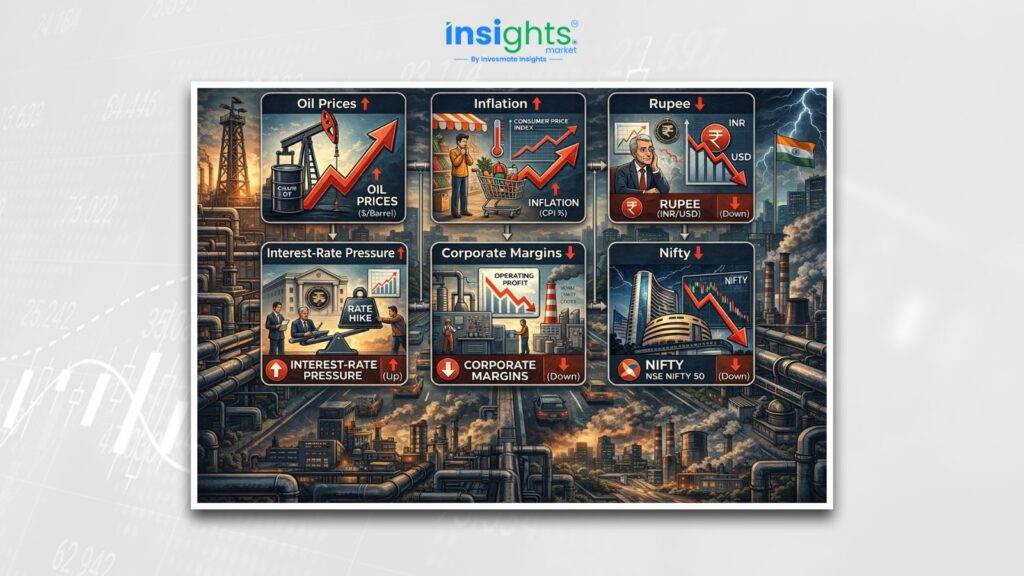
Why Oil Matters So Much for India
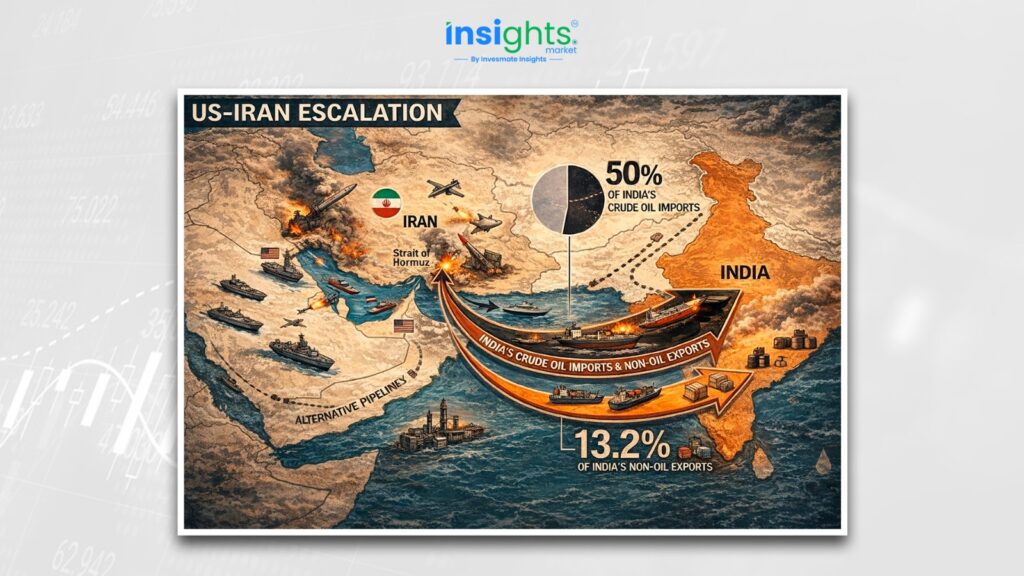
India imports about 88% of its crude oil needs.
Around 45–50% of that oil passes through the Strait of Hormuz, a narrow 33-km-wide shipping route that Iran borders.
If Iran disrupts or blocks this route, the energy supply chain for Asia becomes vulnerable.
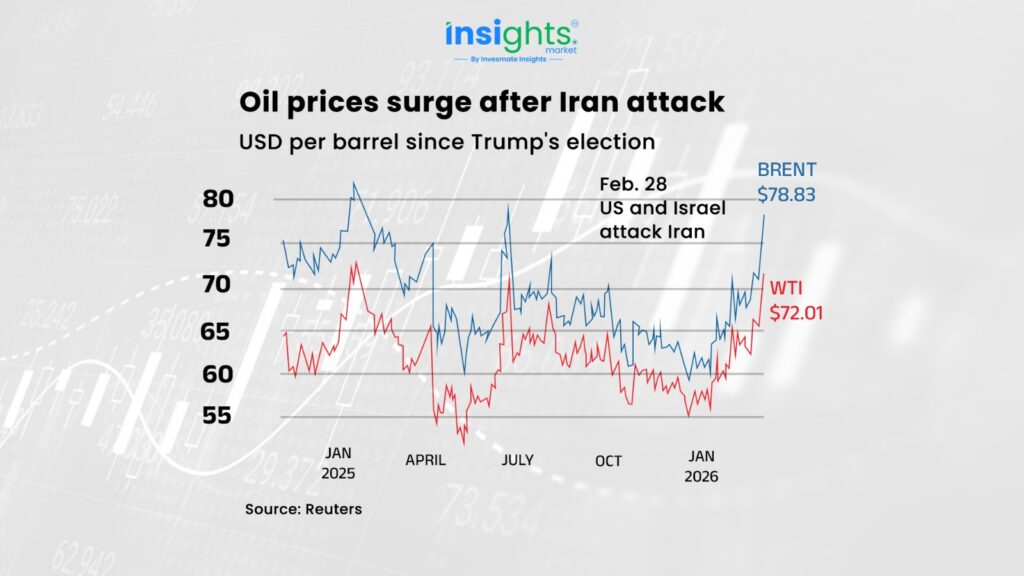
After the strikes, Brent crude jumped more than 15% in just two days.
That spike doesn’t just affect commodity markets. It eventually shows up in:
- Fuel prices
- Transportation costs
- Food inflation
- Electricity bills
- Corporate expenses
In short, everyday costs quietly rise.
The Fiscal Math Behind Rising Oil
Oil shocks quickly affect India’s macro numbers.
For every $10 rise in crude oil sustained for a year, India’s import bill increases by about $13–15 billion.
This matters because the FY27 Union Budget assumed crude prices of around $60–$62 per barrel.
Oil has already moved close to $80.
What Happens to the Nifty if Oil Keeps Rising?
Using historical RBI sensitivity estimates, here is how different oil price scenarios could impact the market.
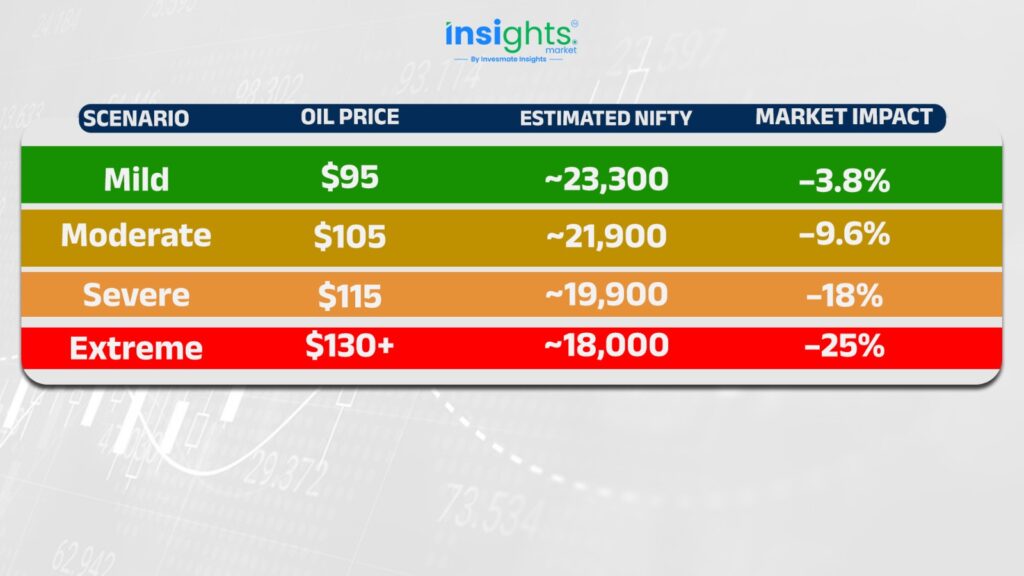
Historically:
- A 10% increase in crude adds about 40 basis points to CPI inflation
- Market valuations compress by 0.5–1x PE
- Nifty EPS growth falls by about 1–2%
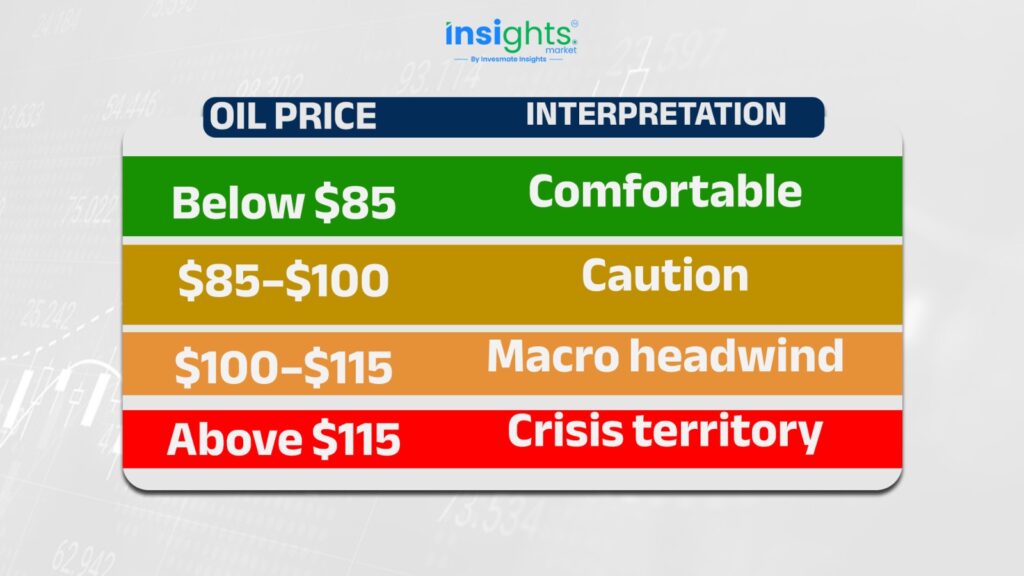
Oil Price Danger Zones for India
What Exactly Happened?
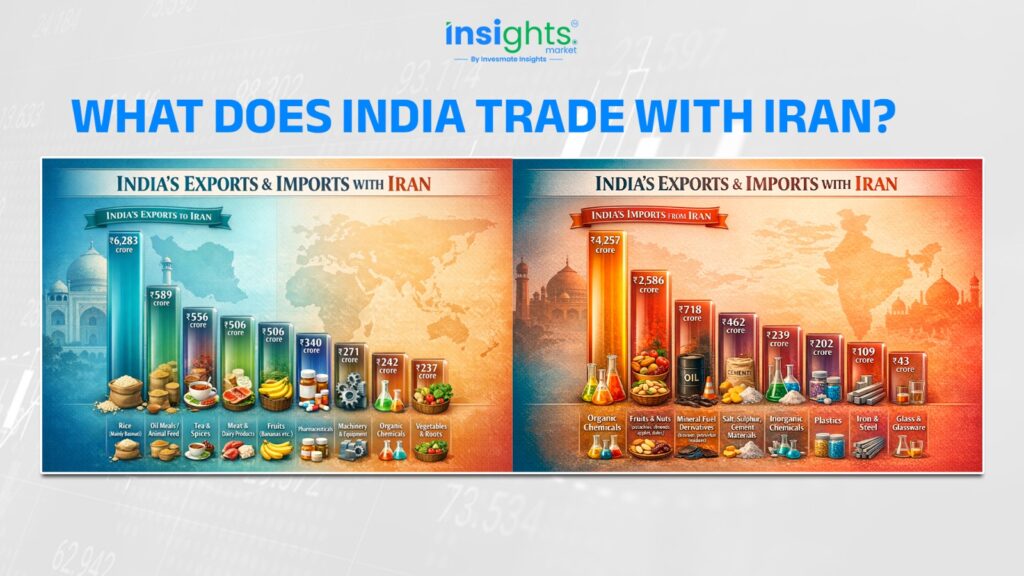
While India’s direct trade with Iran is relatively small, the bigger concern is disruption to key Middle Eastern shipping corridors such as the Strait of Hormuz, Bab-el-Mandeb, and the Suez Canal, through which a large portion of global trade flows.
These routes are particularly important for India because the United States and Europe together account for about 56% of India’s merchandise exports, and many shipments to these markets pass through these sea lanes.
If tensions force vessels to avoid these passages and reroute around the Cape of Good Hope, transit times could increase by 15–20 days. This would likely push up freight and marine insurance costs, tighten container availability, and delay export deliveries.
Such disruptions could affect export-oriented industries including textiles, pharmaceuticals, electronics, auto components, and chemicals, even though India’s direct trade exposure to Iran itself is limited.
The Middle East is also a critical market for Basmati rice, with Saudi Arabia, Iran, Iraq, the UAE, and Yemen together accounting for nearly 50% of India’s exports. Because of rising uncertainty in shipping and insurance costs, exporters have already started avoiding CIF (Cost, Insurance and Freight) contracts.
Additionally, the UAE imported about $4.1 billion worth of Indian electronics between April and December FY26, including around $3.1 billion in smartphones, meaning disruptions in Gulf logistics could slow shipments and increase costs for exporters.
In short, the conflict is not just an oil story — it also threatens the stability of global shipping routes that India’s export economy depends on.
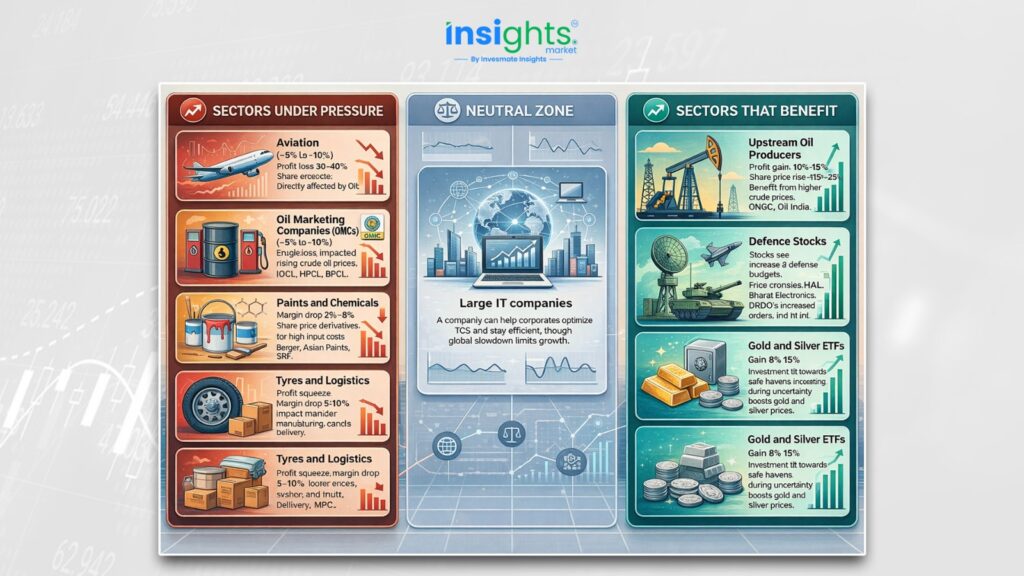
Who Gets Hurt and Who Quietly Benefits
What History Says: Don’t Panic Sell
Geopolitical events often trigger short-term fear, but history offers perspective.
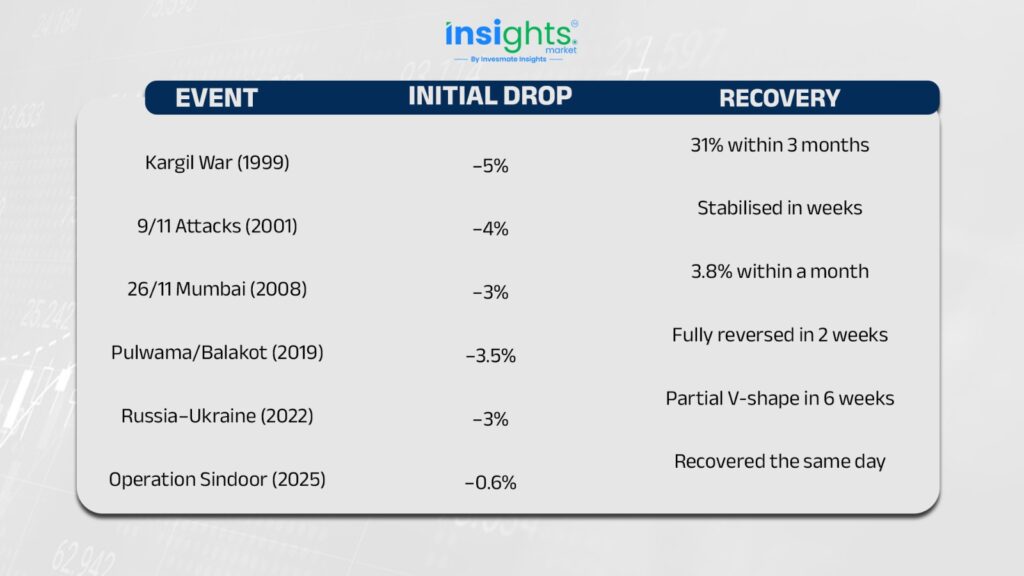
The largest market crashes in India — 1992, 2000, 2008, and 2020 — were caused by financial crises, fraud, or pandemics, not wars.
India’s Energy Cushion
India also maintains buffers against sudden disruptions.
- Strategic crude reserves: about 45 days
- Fuel stocks: around 25 days
So the risk is not an immediate supply shutdown tomorrow.
The real concern is persistent inflation if oil prices stay elevated for months.
What Should Investors Actually Do?
Long-Term SIP Investors
- Continue investing.
- Avoid stopping SIPs because of panic.
Investors Sitting on Cash
- Stagger buying and focus on large caps first.
- Avoid rushing into midcaps immediately.
Investors Heavy in Midcaps
- Consider trimming selectively and booking partial profits.
- Avoid aggressive additions.
Opportunity Seekers
Watch:
- ONGC
- Oil India
- Defence stocks
- Gold investments
Sectors like aviation, paints, and OMCs may remain under pressure for now.
Three Numbers to Watch Every Morning
Instead of tracking every war headline, focus on these indicators.
Brent Crude — ideally below $90
USD/INR — watch if it rises above ₹86
India VIX — market calm usually returns below 14
The Bottom Line
Geopolitical conflicts always feel dramatic.
But markets often recover faster than investors expect.
What matters most is whether oil prices stabilise.
When crude settles, recoveries tend to come quickly.
The real question for investors is simple:
Will you still be invested when that recovery begins — or will panic force you out near the bottom?
FAQs
Even though India is not directly involved in the conflict, the region is crucial for global energy supply. Around 45–50% of India’s crude oil imports pass through the Strait of Hormuz, which Iran borders. Any disruption in this route can push oil prices higher, increasing inflation, transportation costs, and pressure on India’s economy.
Higher oil prices increase fuel and input costs for businesses, which can reduce corporate profit margins. They also push up inflation, weaken the rupee, and delay interest rate cuts. Together, these factors can lead to lower earnings growth and valuation compression in the stock market, causing indices like the Nifty and Sensex to fall.
Sectors that depend heavily on fuel or petroleum-based inputs are most affected. These include aviation, oil marketing companies, paints, chemicals, tyres, and logistics. On the other hand, upstream oil companies like ONGC and Oil India, as well as defence and gold-related investments, may benefit during geopolitical tensions.
Yes. The Strait of Hormuz is one of the world’s most important shipping routes. If tensions escalate and ships avoid the region, they may reroute around the Cape of Good Hope, adding 15–20 days to shipping times. This can increase freight costs and disrupt exports to major markets like the US and Europe, which together account for about 56% of India’s merchandise exports.
Historically, geopolitical conflicts have caused short-term volatility rather than long-term crashes. Events such as the Kargil War, 9/11 attacks, Pulwama-Balakot tensions, and the Russia–Ukraine war triggered temporary declines in markets, but the Nifty and Sensex typically recovered within weeks or months.
Investors should avoid panic selling and focus on long-term strategies. Continuing systematic investment plans (SIPs), maintaining diversification, and watching key indicators like Brent crude prices, USD/INR exchange rates, and India VIX can help investors navigate periods of geopolitical uncertainty.
This article is for educational and informational purposes only. It is not investment advice or a stock recommendation. Investors should conduct their own research or consult a qualified financial advisor before making investment decisions.