



Stock markets are shaky. News headlines are stressful. Your savings are losing value to inflation. And suddenly, gold is looking pretty attractive again.
Gold prices just hit ₹1,50,000 per 10 grams—the highest ever. Everyone’s talking about it. Your parents probably own some. And once again, investors are asking the same timeless question:
“Should I move my money into gold?”
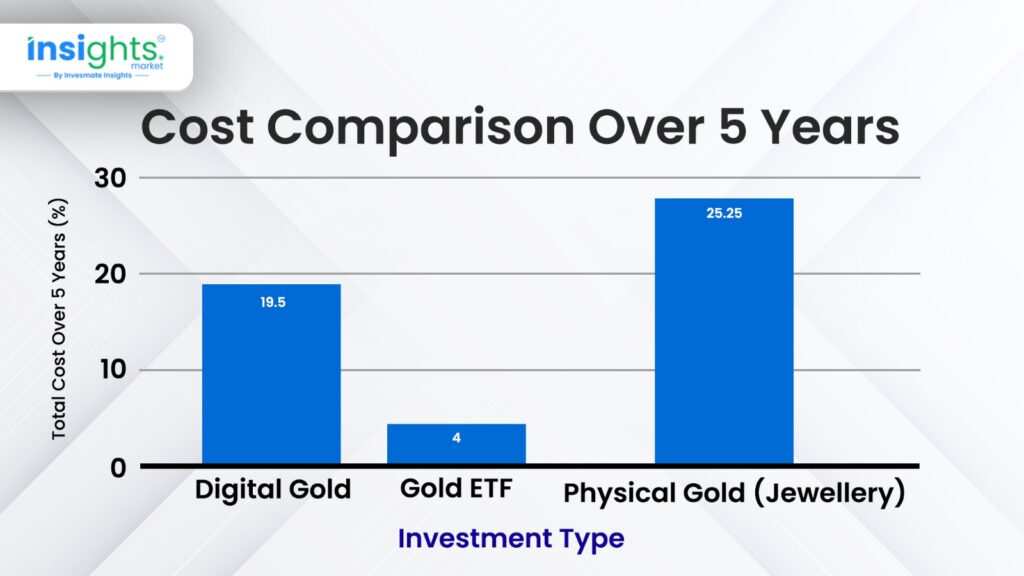
If you are also thinking about investing in gold but feel confused about digital gold, gold ETFs, and physical gold, you are not alone. Most people know gold is “safe,” but don’t know which form of gold is actually right for them. And if you get this wrong, you could end up paying 5-10x more in hidden costs, or worse—lose everything if the platform shuts down.
So let’s simplify this, so you can decide TODAY.
There are Three Ways to Invest in Gold. Let’s break this down one by one.
1. Physical Gold – The Traditional Choice
This is the most familiar option—jewellery, coins, or bars.
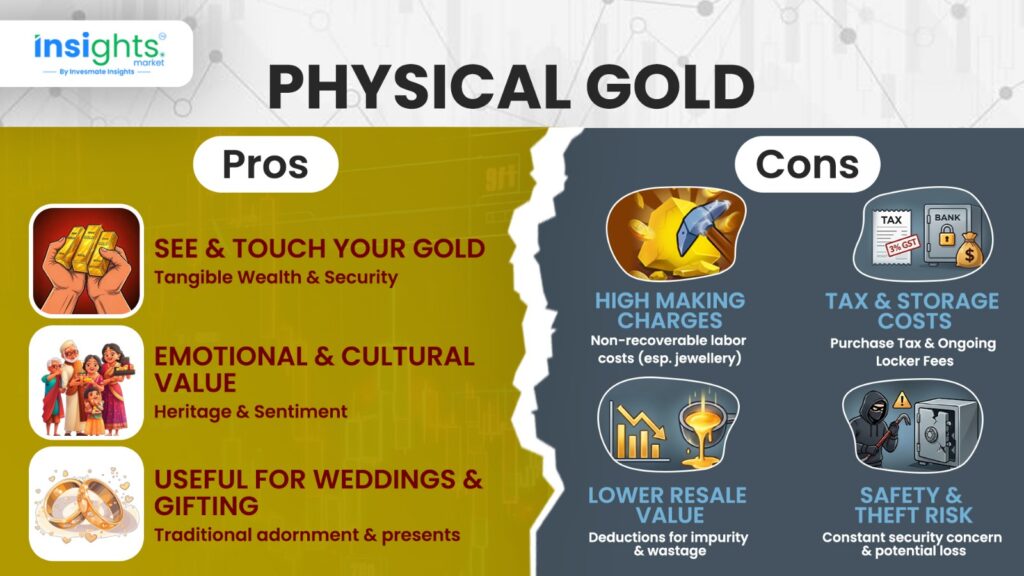
Best suited for
- Long-term holders (10+ years)
- Those buying jewellery for personal use
- Investors who value physical ownership over returns
Physical gold is emotionally comforting—but financially inefficient as a pure investment.
2. Digital Gold – The Convenience Option
Digital gold allows you to buy gold online, starting from as little as ₹1 or ₹100, using UPI.
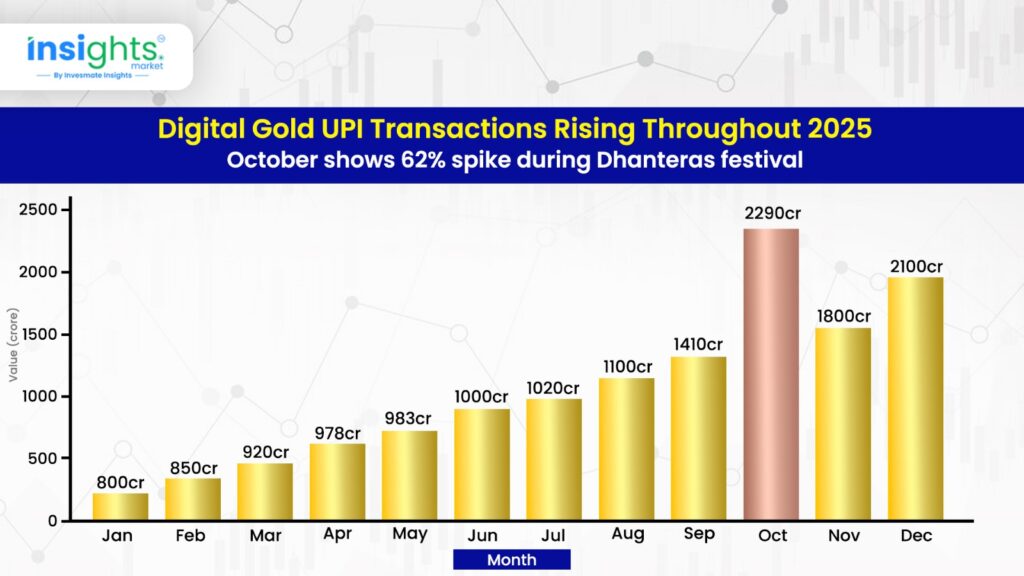
Digital gold has gained popularity due to its convenience, low minimum investment, and seamless UPI integration.
Digital Gold via UPI Is Exploding
Monthly digital gold investments rose 162.5% in 2025 — from ₹800 crore in January to ₹2,100 crore in December. October alone saw a 62% spike to ₹2,290 crore during Dhanteras, highlighting how convenience and cultural behaviour are accelerating adoption.
How it works
- You buy gold in grams or rupees
- The provider stores physical gold in a vault
- You see your balance digitally
- You can sell anytime or redeem physical gold (conditions apply)
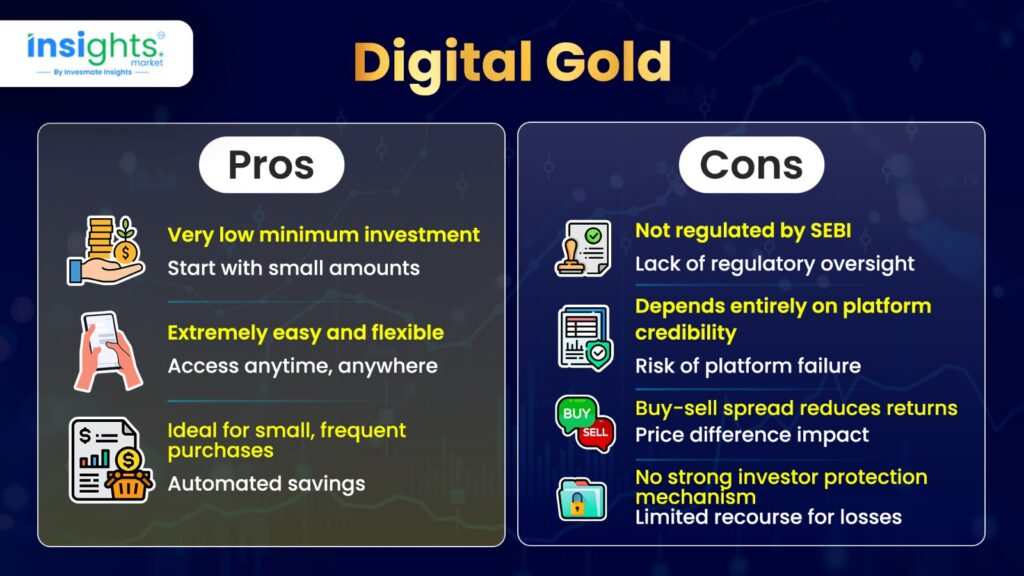
Best suited for
- Beginners’ testing gold investing
- Small, short-term investments
- Convenience-first users
Digital gold is easy—but should not be your main gold investment.
3. Gold ETFs – The Smart Investor’s Choice
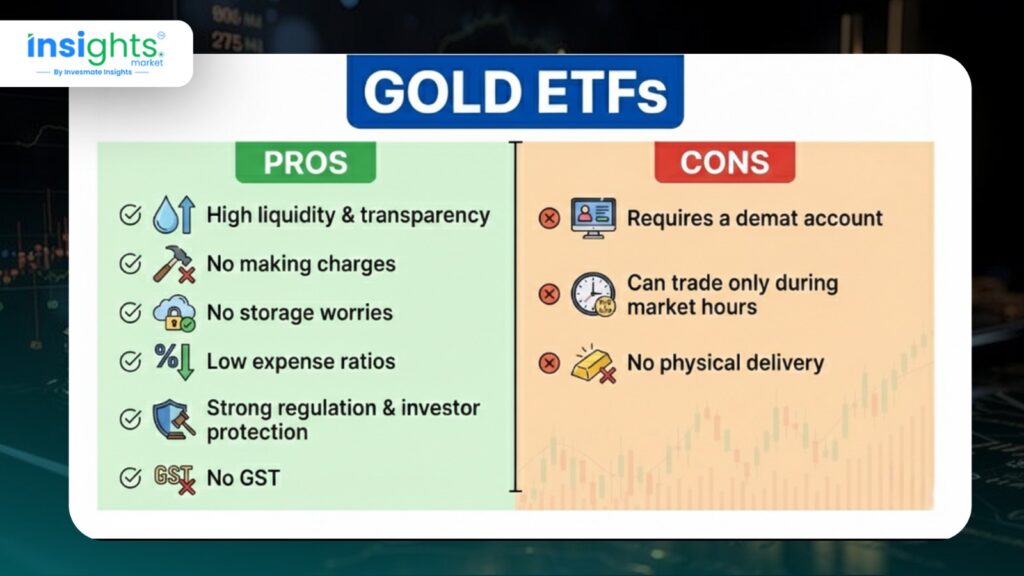
Gold ETFs are exchange-traded funds that track the price of gold and trade like stocks.
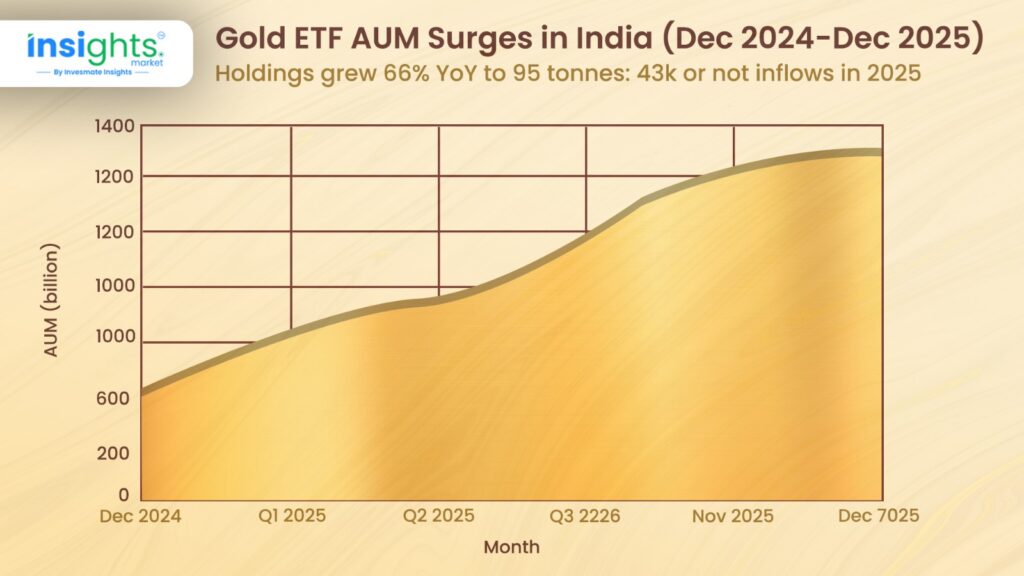
Gold ETFs have emerged as the preferred investment vehicle for serious gold investors seeking regulation, liquidity, and transparency.
Gold ETF Assets Nearly Tripled in 2025
Gold ETF AUM surged from ₹44,600 crore to ₹1,27,900 crore in just 12 months. Holdings jumped 65% to 95 tonnes, while India recorded ₹43,000 crore in net inflows — making it the 3rd largest gold ETF market globally.
How it works
- Each unit represents physical gold held by the fund
- You buy/sell through a demat account
- Prices closely track real gold prices
- Fully regulated by SEBI
Best suited for
- Long-term investors
- Portfolio diversification
- Investors focused on returns & safety
Gold ETFs offer the best balance of safety, cost, liquidity, and regulation.
India’s Shift: Physical Gold → ETFs (2024–2025)
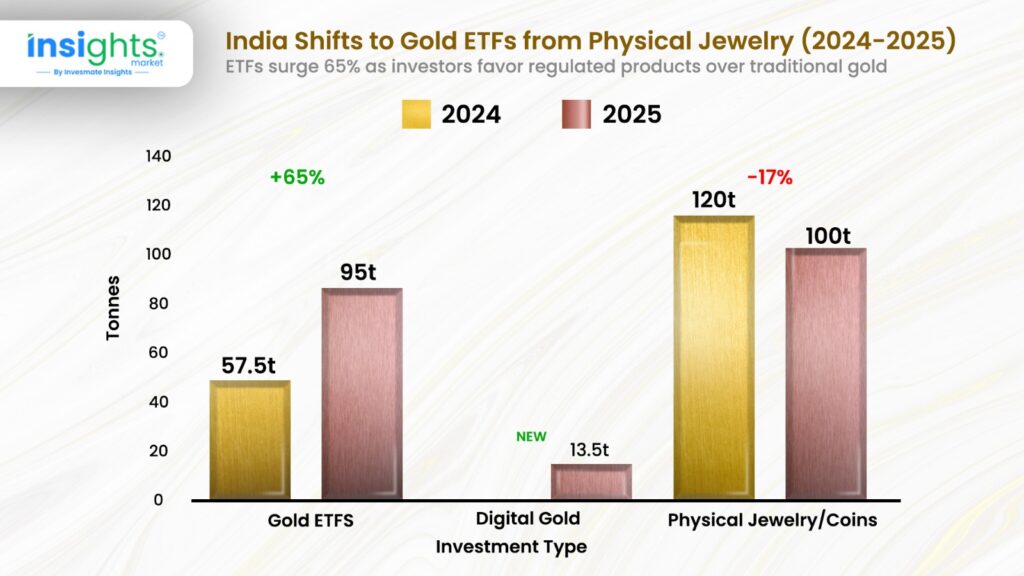
India’s gold market is undergoing a structural shift from consumption-driven purchases to investment-focused products.
Gold ETF holdings jumped 65% YoY to 95 tonnes, while digital gold emerged as a new 13.5-tonne segment. Meanwhile, physical jewellery volumes declined 17%, indicating a clear shift towards regulated and investment-oriented gold products.
Quick Comparison Table
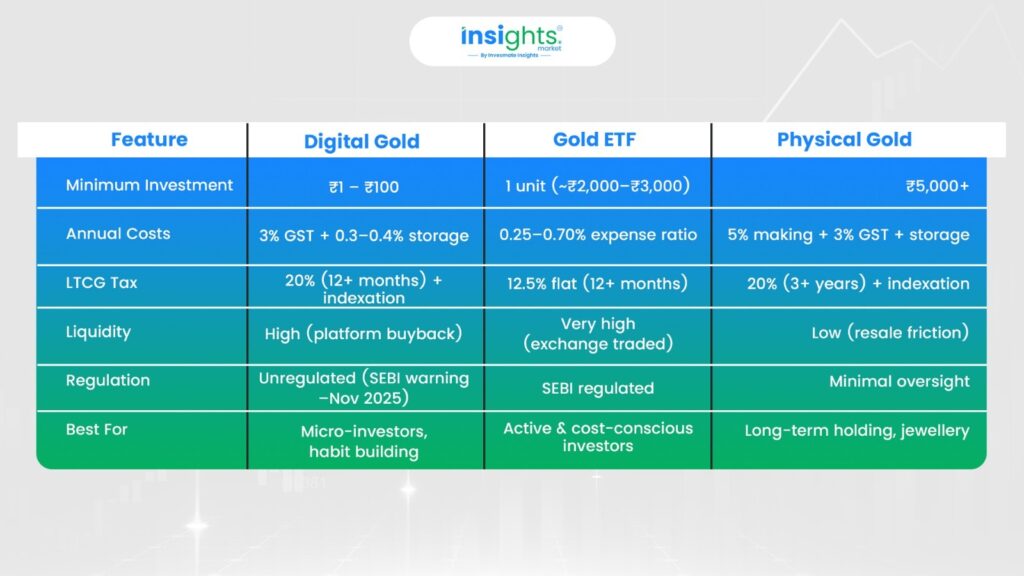
Taxation (Very Important)
Physical & Digital Gold
- Short-term (<24 months): Taxed as per the income slab
- Long-term (>24 months): 12.5% LTCG
Gold ETFs
- Short-term (<12 months): Income slab
- Long-term (>12 months): 12.5% LTCG
Gold ETFs get long-term tax benefits faster.
So… Which One Should You Choose?
Choose Physical Gold if
- You want jewellery or family assets
- You can hold for 10+ years
- Returns are not your top priority
Choose Digital Gold if
- You are just starting out
- You invest small amounts monthly
- You value convenience over regulation
Choose Gold ETFs if
- You want safety + returns
- You are investing for wealth creation
- You want low cost & high liquidity
- You prefer regulated investments
Final Thoughts
Gold is no longer just about tradition; it’s about strategy. In 2026, investors are moving from jewellery to investment-focused gold products. How you invest in gold can greatly affect your returns and peace of mind.
If markets remain volatile, gold will stay relevant. Smart gold investing is always better than emotional gold buying.
Invest smart. Invest in Gold ETFs. Your future self will appreciate it.
What will you choose? Let us know in the comments below!
FAQs
Gold ETFs are better for investment due to lower costs, high liquidity, and SEBI regulation, while physical gold is better for personal use like jewellery.
Digital gold is convenient but not SEBI-regulated, so it is suitable only for small or short-term investments, not for large or long-term allocations.
Most financial experts recommend allocating 5–15% of your portfolio to gold for diversification and risk protection.
Yes. Gold ETFs attract 12.5% long-term capital gains tax if held for more than 12 months; short-term gains are taxed as per your income slab.
Yes. Gold ETFs closely track domestic gold prices, with minor differences due to expense ratios and market trading spreads.
Digital gold may allow physical redemption subject to conditions, while Gold ETFs cannot be converted into physical gold.
The information provided in this reference is for educational purposes only and should not be considered investment advice or a recommendation. As an SEBI-registered organization, our objective is to provide general knowledge and understanding of investment concepts.
It is recommended that you conduct your own research and analysis before making any investment decisions. We believe that investment decisions should be based on personal conviction and not borrowed from external sources. Therefore, we do not assume any liability or responsibility for investment decisions made based on the information provided in this reference.