


Ever felt like the stock market is celebrating without you? You see it everywhere. Your friend’s WhatsApp status: “Got ₹80,000 profit on IPO listing!” A colleague bragged, “Made 25% in one day!” And there you are, wondering why you missed out.
Here’s the truth nobody likes to say out loud: you’re not seeing the full picture. Yes, 91 IPOs debuted on Indian bourses in 2025, and some delivered quick gains. But the average listing-day gain has collapsed from 30.25% in 2024 to just 9.1% in 2025.
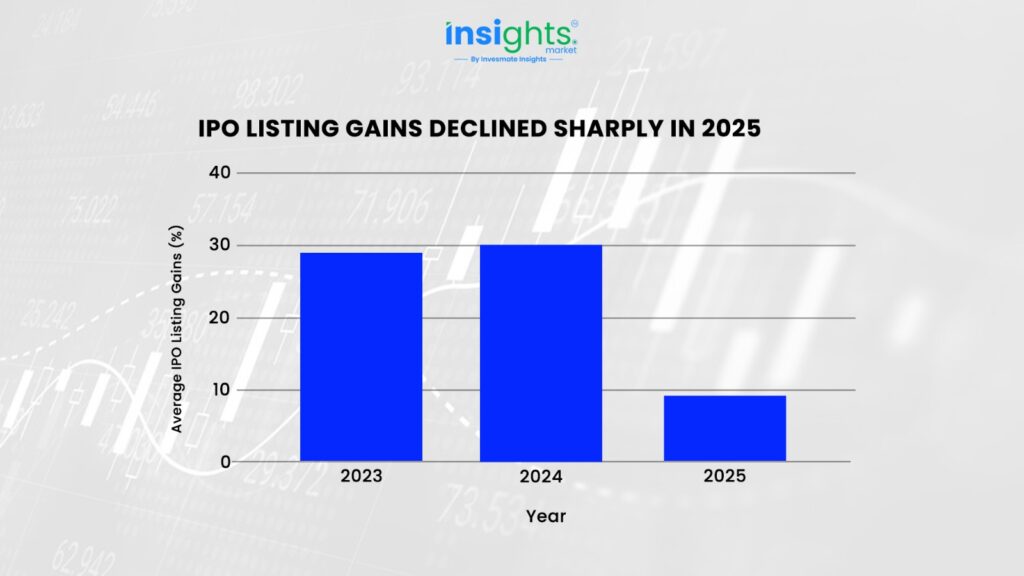
Even more uncomfortable—financial experts are now openly saying that IPO investing doesn’t consistently make money.
It sounds harsh, but it’s reality. And before you chase the next IPO, you need to understand why it may not be the goldmine you think it is.
The Golden Days Are Gone
There was a time when IPOs felt like free money. That phase is over.
Despite ₹1.21 lakh crore being raised in the first nine months of 2025, investor confidence has weakened.
KPMG data shows 80 mainboard IPOs launched in FY2025, raising ₹1,630 billion. Those numbers look impressive, but they hide a critical issue: valuations have drifted far away from fundamentals.
Retail oversubscription remains high at 35x, but that doesn’t signal quality. It reflects herd behaviour.
Chief Economic Advisor V. Anantha Nageswaran has warned that IPOs are now increasingly acting as exit routes for promoters and early investors, rather than vehicles for growth capital.
When insiders who know the business best are selling at peak valuations, it’s worth asking why.
Why Insiders Exit When You Enter

The biggest disadvantage retail investors face is information asymmetry. Insiders simply know more.
Promoters and early backers invest at very low valuations. They understand operational bottlenecks, cash-flow risk, competitive pressure, and regulatory challenges long before these appear in public numbers. When they use the OFS component aggressively, they aren’t funding expansion—they’re exiting at attractive prices.
This means IPO proceeds often go to selling shareholders, not strengthening the business, while newly listed stocks remain highly volatile for retail investors.
The Grey Market Premium Illusion

“GMP is ₹1,500!” is often sold as guaranteed profit. It isn’t.
The grey market reflects short-term sentiment, not long-term value. With no operating history in public markets, IPO prices swing on hype. Many IPOs with strong GMPs have crashed post-listing, showing that GMP offers little insight beyond day one.
Lock-In Expiry: The Silent Shock
IPO investors rarely factor in lock-in periods. Once restrictions end, insider selling can flood the market, pushing prices down regardless of fundamentals. With a large number of IPO shares unlocking in late 2025, this risk is very real for current holders.
The Allocation Problem
In heavily oversubscribed IPOs, retail allotment becomes lottery-based. Institutions and HNIs capture value early, while retail investors often enter later at inflated secondary-market prices. The risk-reward balance deteriorates quickly.
The Three-Year Reality Check
IPOs don’t just disappoint on listing—they underperform long-term. On average, IPO stocks show around 20% lower returns over three years after listing.
Why does this happen?
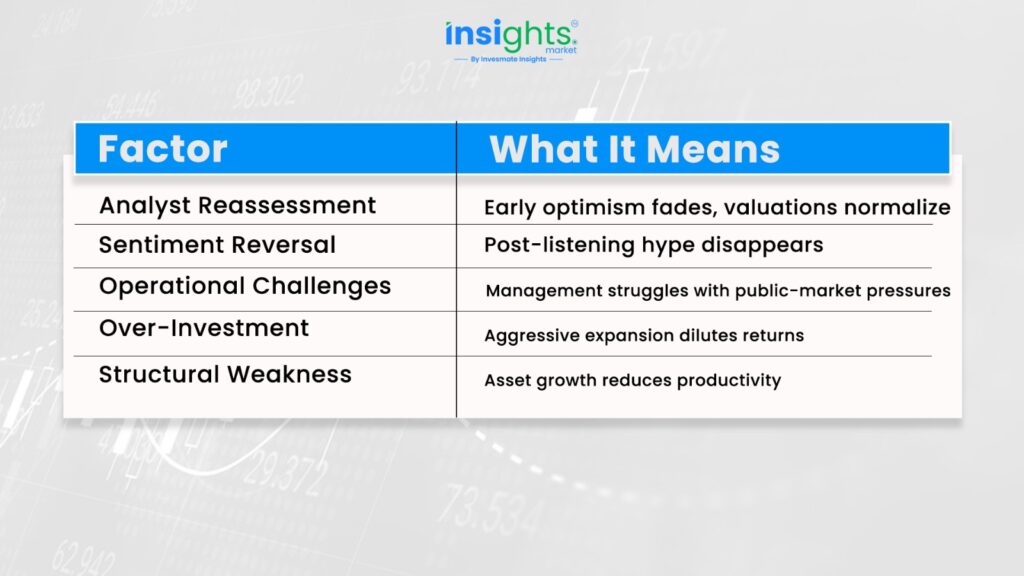
The narrative shifts from “next big thing” to “ordinary business”—and prices follow.
The DRHP Tells You Everything

The Draft Red Herring Prospectus is the most honest document investors get. Most people ignore it.
Red flags include vague fund usage, generic risk factors, dependence on a single product, capital-heavy models with thin margins, and inexperienced management.
Most failed IPOs disclosed these risks clearly—investors just didn’t read them.
Behavioral Biases: The Enemy Inside Your Head
IPO investing activates every emotional bias at once:
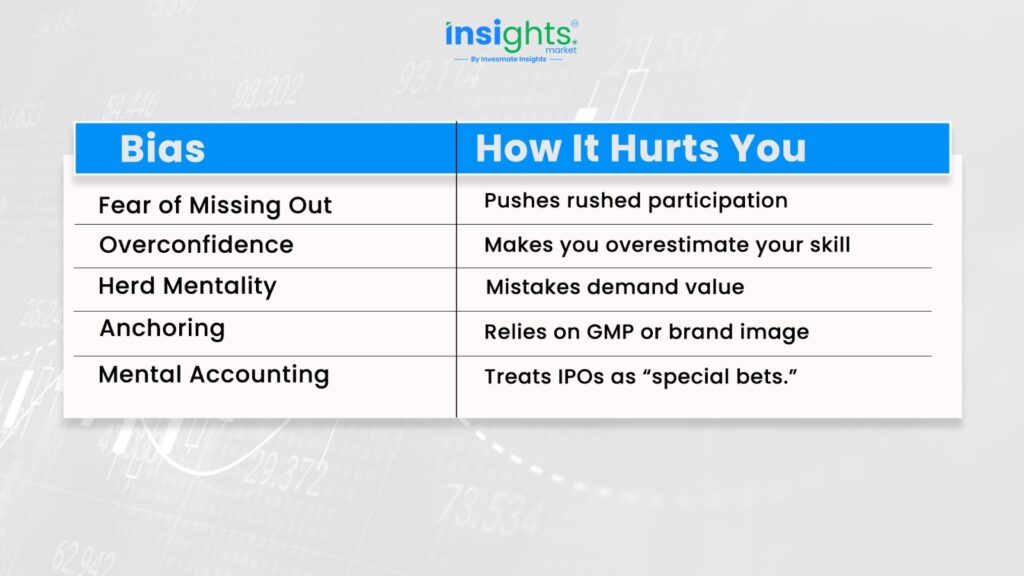
Social media amplifies winners, hides losers, and fuels unrealistic expectations.
What You Should Actually Do
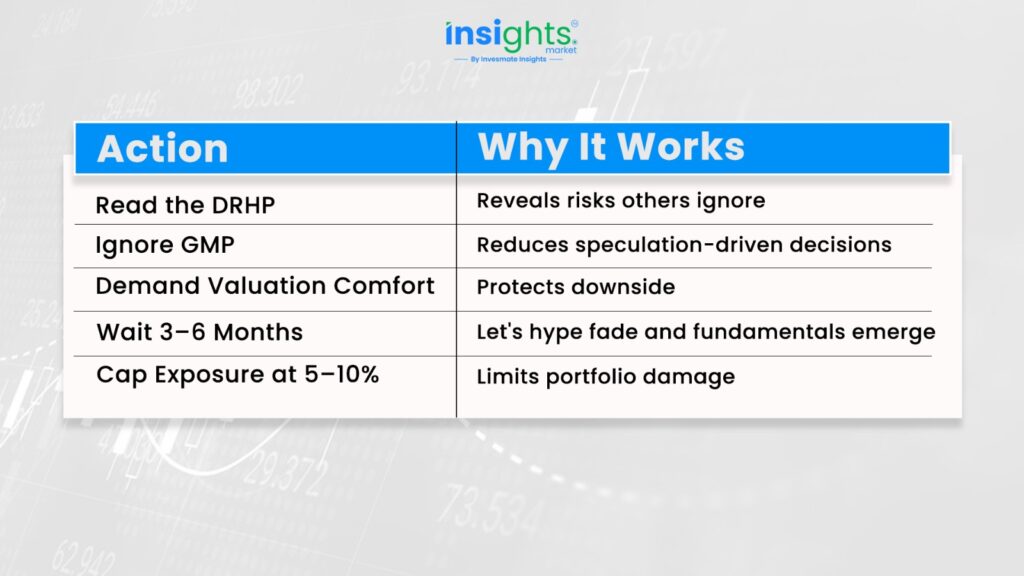
It’s not exciting—but it works.
The Bottom Line
India’s IPO boom looks exciting, but declining listing gains, promoter exits, valuation excesses, and post-listing volatility tell a more uncomfortable story. IPOs may generate attention and headlines—but attention is not the same as returns.
In 2025, the real edge lies not in chasing listings, but in knowing when to question the hype—and when to walk away.
Disclaimer
This content is for informational and educational purposes only and does not constitute investment advice. Investment decisions should be based on individual financial goals, risk tolerance, and independent analysis.
FAQs
No, IPO investing is not risk-free. While it is popular, 2025 data shows a sharp decline in profitability, with average listing gains dropping to just 9.1%. Retail investors face significant risks like overvaluation, information asymmetry, and post-listing volatility. Financial experts warn that without proper research, IPOs often generate losses rather than “quick wealth.”
Listing gains have collapsed from 30.25% in 2024 to 9.1% in 2025 primarily because valuations have become disconnected from company fundamentals. Promoters are listing at peak prices to exit, leaving little “money on the table” for retail investors. Additionally, market sentiment has shifted, and investors are becoming more cautious about high-priced listings.
You should not rely solely on GMP. The Grey Market Premium is an unofficial, unregulated indicator driven by speculation, not company financial health. As highlighted in the blog, high GMP is often a trap; many IPOs with strong premiums have failed to deliver actual gains upon listing or have crashed shortly after.
The lock-up period is a timeframe (usually 6-12 months) where insiders and early investors are banned from selling their shares. The risk arises when this period expires (the “Lock-Up Expiration Shock”). Once these insiders are free to sell, a sudden flood of supply often hits the market, causing the stock price to drop sharply.
Statistics suggest that selling on listing day might be safer for speculative bets. Research indicates that Indian IPOs typically underperform over a 3-year period, with returns often declining by ~20% post-listing due to valuation compression and operational challenges. Unless the company has exceptional fundamentals, holding long-term carries significant downside risk.
The Draft Red Herring Prospectus (DRHP) often reveals risks investors ignore. Major red flags include: aggressive Offer for Sale (OFS) by promoters (cashing out), generic risk factors without data, heavy dependence on a single client, and pending litigation. If the company plans to use proceeds for “general corporate purposes” rather than growth, it is often a warning sign.
The information provided in this reference is for educational purposes only and should not be considered investment advice or a recommendation. As an SEBI-registered organization, our objective is to provide general knowledge and understanding of investment concepts.
It is recommended that you conduct your own research and analysis before making any investment decisions. We believe that investment decisions should be based on personal conviction and not borrowed from external sources. Therefore, we do not assume any liability or responsibility for investment decisions made based on the information provided in this reference.