


Imagine walking into a shop where a metal that cost ₹94,000 per kilogram just 12 months ago is now selling for ₹2,81,000. That’s silver’s incredible story in 2025—a 174% explosion that has left investors asking the same question you might be asking right now: Is this a real opportunity, or a dangerous bubble about to burst?
Let me tell you the whole story in a way that actually makes sense.
The Unbelievable Rally: Numbers That Speak Louder Than Words
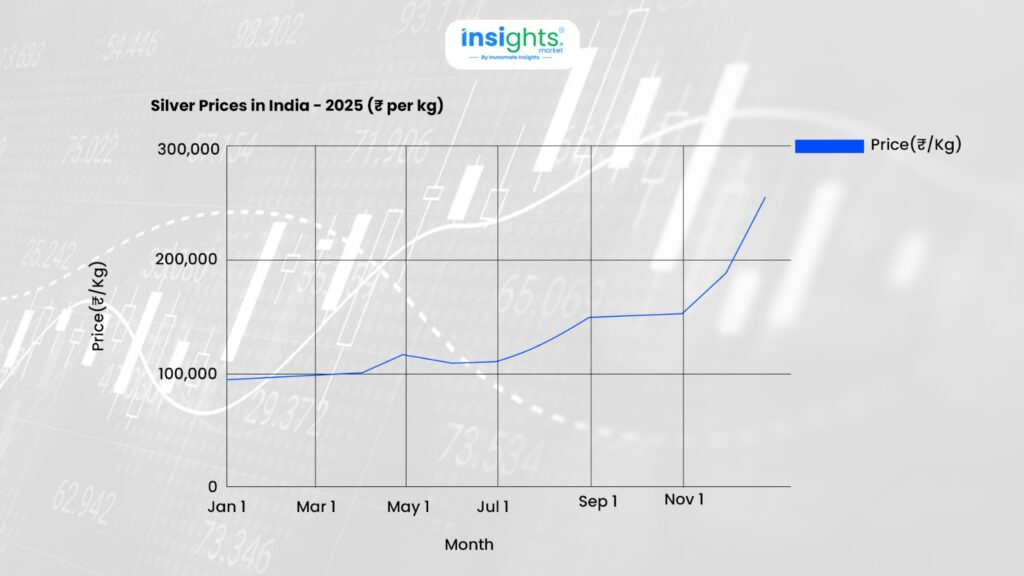
Here’s what actually happened in 2025. Silver started the year at just ₹94,000 per kilogram on January 1st. Fast forward to December 30th, and the same kilogram costs ₹2,81,000. That’s not a small gain—that’s a 174% increase in a single year.
To put this in perspective: in Indian rupee terms, December alone saw silver jump 37.23%. December 27th was the peak day when silver touched ₹2,81,000—the highest price ever recorded in India’s history.
But here’s the thing that makes this story interesting: this didn’t happen by accident. Something real is driving these prices up.
But at the same time, something dangerous might be hiding underneath all this excitement.
The Bull Case: Why Silver SHOULD Be Expensive
Let’s talk about why this rally might actually be justified. Silver isn’t just some random metal that people are buying for fun. It’s needed for things we use every single day.
Silver has a serious problem—supply is running short, and there’s no quick fix.
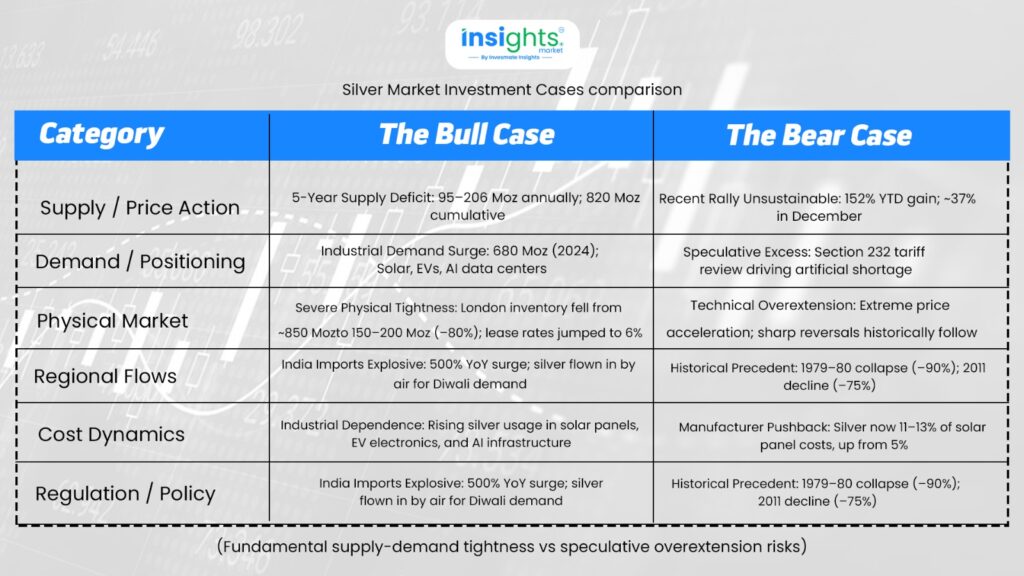
The world has faced a shortage of silver for five years straight. In 2025 alone, the shortage was between 95 to 206 million ounces. Over the last five years combined, the global deficit reached 820 million ounces.
Here’s why it’s so hard to fix: 70% of all silver we produce comes as a side product when mining for copper, gold, zinc, and lead.
Opening a new primary silver mine takes over 10 years and costs billions of dollars. So supply is basically stuck, even as prices go up.
Meanwhile, industrial demand keeps growing.
Solar panels need about 111 milligrams of silver each. Electric vehicles use 25 to 50 grams of silver per vehicle. AI data centers need silver for high-performance electronics. In 2024, industrial demand alone was 680 million ounces—a record.
When you look at the physical market, the shortage becomes impossible to ignore.
London’s silver vault inventories have dropped from around 850 million ounces to just 150–200 million ounces. Silver lease rates jumped from near zero to over 6%. India’s silver imports surged 500% year-on-year in October, with metal even flown in by air to meet Diwali demand.
The Expert Predictions (Bullish Side)
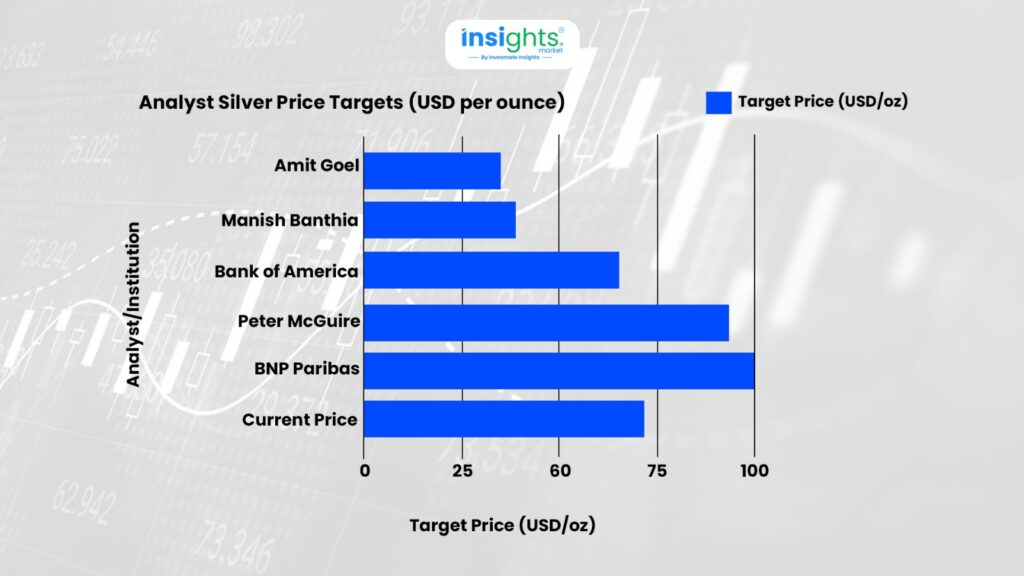
Major institutions have taken notice. BNP Paribas sees silver reaching approximately $100 per ounce by the end of 2026. Peter McGuire projects $92–95 by January 2026 and warns that shorting silver is premature. Bank of America expects prices to stay elevated, with a $65 target and a $56.25 average for 2026.
The Bear Case: Why You Should Be Careful
Now let’s talk about the risks.
Silver has gone up 152% in a single year. December alone saw a 37% jump. That kind of move is extreme.
History isn’t comforting. In 1980, silver crashed more than 90%. In 2011, it dropped 75% after a sharp rally.
Amit Goel from Pace 360 calls the current setup a “classic bubble.”
The gold-to-silver ratio has collapsed from 108 to 54—levels that have historically marked extreme overbought conditions.
There’s also speculation. Much of the rally was driven by fears around potential U.S. Section 232 tariffs. Traders moved silver from London to the U.S., creating an artificial shortage. If the tariff risk fades, that hoarding could unwind quickly.
COMEX raised margin requirements twice in December, increasing the cost of holding leveraged silver positions.
When margins rise, forced selling often follows.
On the industrial side, silver now makes up 11–13% of solar panel manufacturing costs, up from just 5% a year ago. That creates pressure for substitution and demand slowdown.
The Game Changer: China’s Export Restrictions (January 1, 2026)
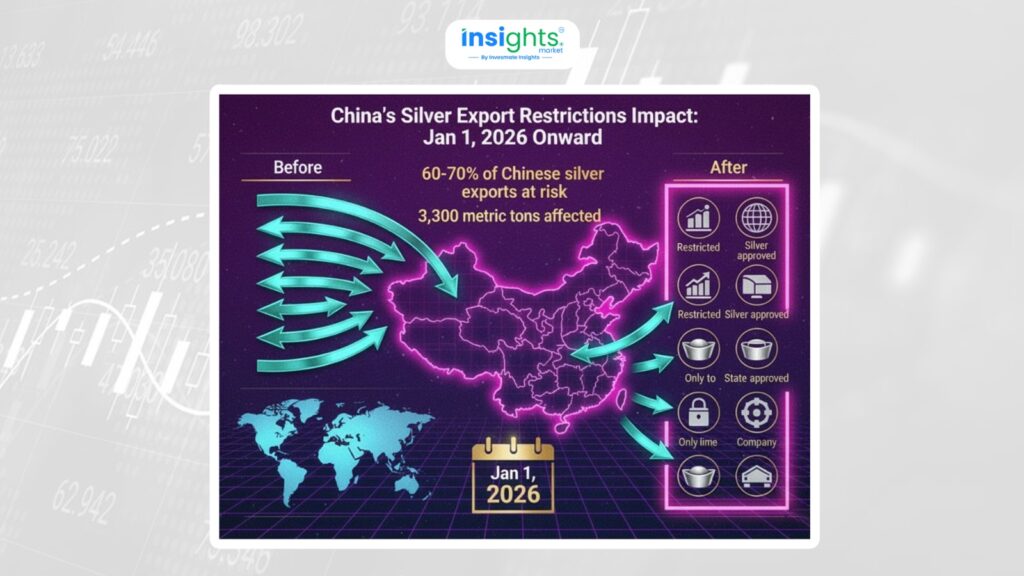
Here’s something that will shape the next chapter of Silver’s story. Starting January 1, 2026, China is restricting silver exports.
China produces 60-70% of all the silver it mines as a byproduct. That’s roughly 3,300 metric tons yearly.
Previously, most of this flowed overseas freely. Now, only large state-approved companies producing at least 80 metric tons annually can export.
This could mean:
- Bullish outcome: Supply gets even tighter, pushing prices to ₹75,000+ ($90+)
- Bearish outcome: It turns out to be unimportant, and we were worried for nothing
Samsung’s Ace Card: The Solid-State Battery
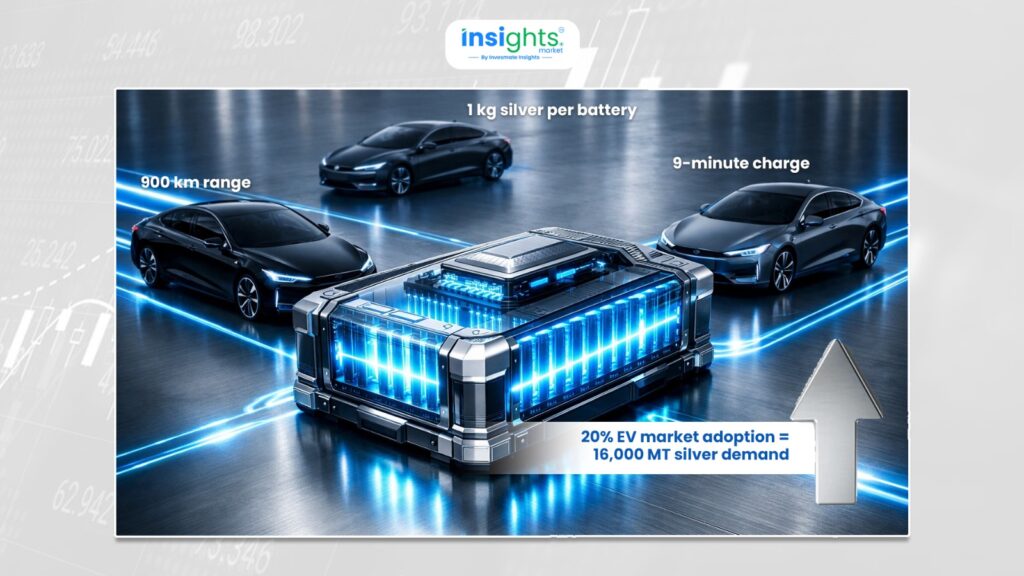
Here’s where silver’s future might get really interesting. Samsung is developing a revolutionary solid-state battery for electric vehicles that charges in 9 minutes and runs 900 kilometers per charge. And it uses 1 kilogram of silver per battery.
If this technology takes just 20% of the EV market, it would consume 16,000 metric tons of silver annually—that’s 64% of current global production in just this one application.
Some reports even say it could consume all the silver ever produced in just one year if fully adopted.
This is so important that Samsung prepaid $7 million to a Canadian silver miner (Silver Storm Mining) just to secure a supply contract.
They literally restarted a silver mine that had been idle since 2019 just to guarantee access to this metal. That’s how serious demand could become.
The Bottom Line
Silver is swinging in double digits because there are real, powerful forces at work: a genuine shortage, incredible industrial demand, and breakthrough technologies like Samsung’s battery. But the recent rally has gotten ahead of itself, and a pullback of 30-50% over the next 12-18 months wouldn’t be shocking.
Silver’s future is bright, but the immediate road might be bumpy.
The metal will likely matter even more in 2026 and beyond as EVs spread, solar grows, and data centers expand.
But patient investors should wait for dips rather than chase the rally right now. The opportunity isn’t going away—supply shortages don’t fix themselves overnight.
Silver’s next chapter is being written right now. Make sure you understand the story before you buy.
Disclaimer: Educational content only. Not investment advice. Do your own homework before buying shiny things.
FAQs
Silver prices surged in 2025 due to five years of supply deficit, rising industrial demand from solar panels, EVs, and AI data centers, and a sharp drop in physical inventories. With 70% of silver produced as a byproduct, supply cannot increase quickly.
It depends. Long-term investors may benefit due to supply shortages and industrial demand. Short-term traders should be cautious, as sharp rallies often see 30–50% corrections. Buying on dips is safer than chasing highs.
Views are divided. Bullish estimates range from ₹75,000–₹82,500 per ounce due to supply tightness. Bearish forecasts see a possible fall to ₹28,750–₹40,950 if speculation unwinds. Fair value is likely ₹45,625–₹61,250.
Physical silver suits long-term holders. Silver ETFs are liquid and convenient for most investors. Mining stocks offer higher upside but come with company-specific risks. A mix of ETFs and stocks works best for most investors.
Silver rose over 150% in a year, driven partly by speculation and tariff fears. Technical indicators show extreme overbought levels, and history shows such rallies often correct sharply.
Yes. Samsung’s battery uses 1 kg of silver per EV. Even partial adoption could consume a large share of global supply, significantly tightening the market if the technology scales.
The information provided in this reference is for educational purposes only and should not be considered investment advice or a recommendation. As an SEBI-registered organization, our objective is to provide general knowledge and understanding of investment concepts.
It is recommended that you conduct your own research and analysis before making any investment decisions. We believe that investment decisions should be based on personal conviction and not borrowed from external sources. Therefore, we do not assume any liability or responsibility for investment decisions made based on the information provided in this reference.