



Budget 2026 is almost here, and Dalal Street is getting ready for one of its most closely watched days of the year. India’s Union Budget will be presented on Sunday, February 1 — an unusual trading day that already sets the stage for heightened market attention. But while budget day grabs the headlines, history tells a different story: the real market opportunity often unfolds after the announcements, not during them.
Over the past 15 years, the Nifty 50’s average return on Budget Day has been just 0.19%. In comparison, the week following the budget has delivered a much stronger average gain of 1.35%. The message for investors is clear — clarity creates opportunity once the policy dust settles.
In this guide, we break down everything investors need to know:
• Special trading arrangements for Sunday
• Settlement and fund availability rules
• Tax and policy expectations (clearly marked as unconfirmed)
• Historical budget performance trends
• Key sectors to track
• Strategy for traders and investors
Finance Minister Nirmala Sitharaman will present her ninth consecutive Union Budget, marking the most budgets presented by any woman Finance Minister in India’s history.
Budget Day 2026: Trading Schedule
Because February 1 falls on a Sunday, exchanges will conduct a special live trading session.
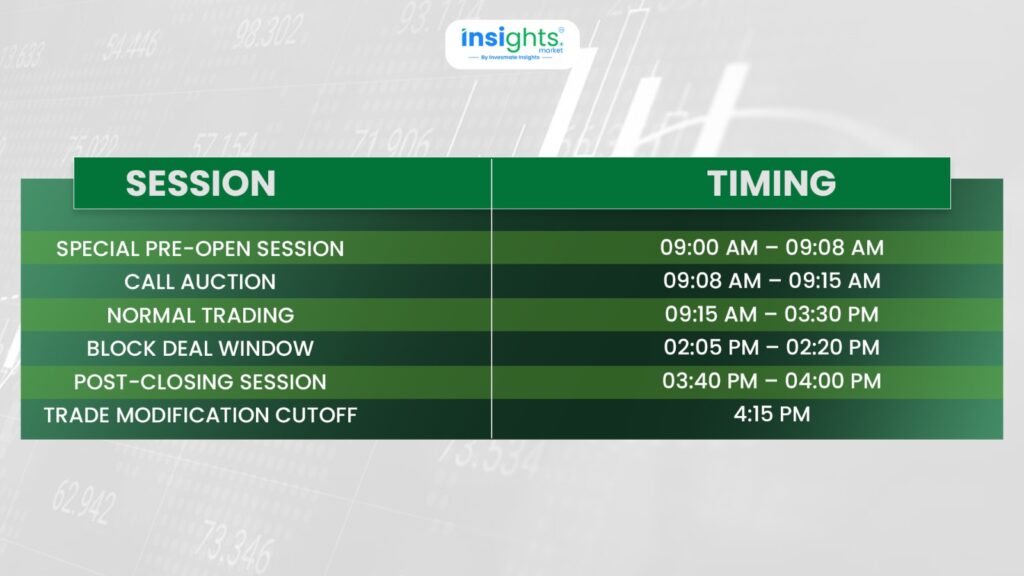
Important: The block deal window lasts only 15 minutes. Institutional traders should rely on official exchange circulars for execution timing.
Settlement & Fund Availability Rules
Sunday trading follows normal settlement cycles, but fund usability is restricted.
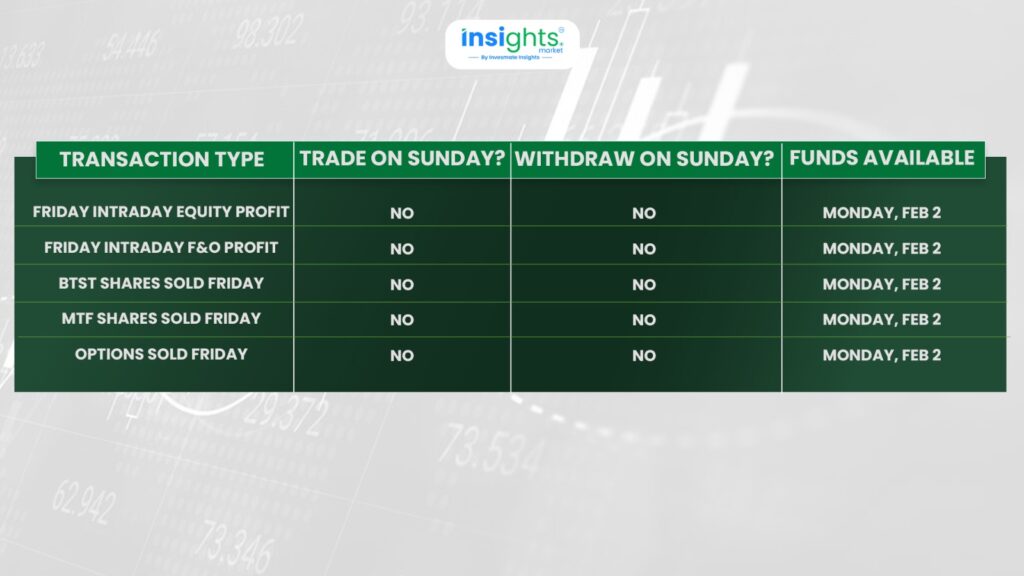
Key Reminders
• Friday trading profits cannot be used on Sunday
• Delivery sale proceeds from earlier settlements may be usable
• Withdrawals are not processed on Sunday
• Funds added Saturday night can be used Sunday
Budget 2026 Expectations: What Investors Should Actually Watch For
Tax Expectations
These are market expectations, not confirmed policy.
STT Relief
Current STT:
• 0.1% on delivery
• 0.025% on intraday
Broker and investor bodies have requested rationalisation, but no confirmation exists.
Capital Gains Changes
- LTCG tax is currently 12.5%
• Exemption limit is ₹1.25 lakh
Expectation: Exemption may rise toward ₹2 lakh — still speculative.
Standard Deduction
- ₹75,000 under new regime
• ₹50,000 under old regime
Expectation: Possible increase to ₹1 lakh. Not confirmed.
Financial Product Tax Parity
Industry hopes include:
• TDS relief for NBFCs
• Simplified capital gains structure
• Parity across mutual funds, ULIPs, and equity
All remain policy discussions, not decisions.
Fiscal Deficit Target (Expected: 4.2% of GDP, down from 4.4%)
Why it matters: A lower fiscal deficit reduces government borrowing, which brings down bond yields and improves credit availability for the private sector. Conversely, any slip to 4.5%+ would disappoint and tighten liquidity.
Stock Impact: Banking stocks (+2% rally potential), NBFC spreads improve by 20-30 bps, and infrastructure capex credibility is enhanced.
Total Capex Allocation (Expected: ₹12.3-12.4 trillion, +10% YoY)
Why it matters: This determines the multiplier effect on GDP and earnings for capex beneficiaries. The composition of capex (defence, infrastructure, power, manufacturing) is more important than the headline number.
Expected breakdown:
- Defence: ₹1.8T → ₹2.16T (+20%)
- Infrastructure: ₹11.21T → ₹12.4T (+10.6%)
- Power/Renewables: ₹0.91T → ₹1.10T (+20.9%)
Sectors to Watch
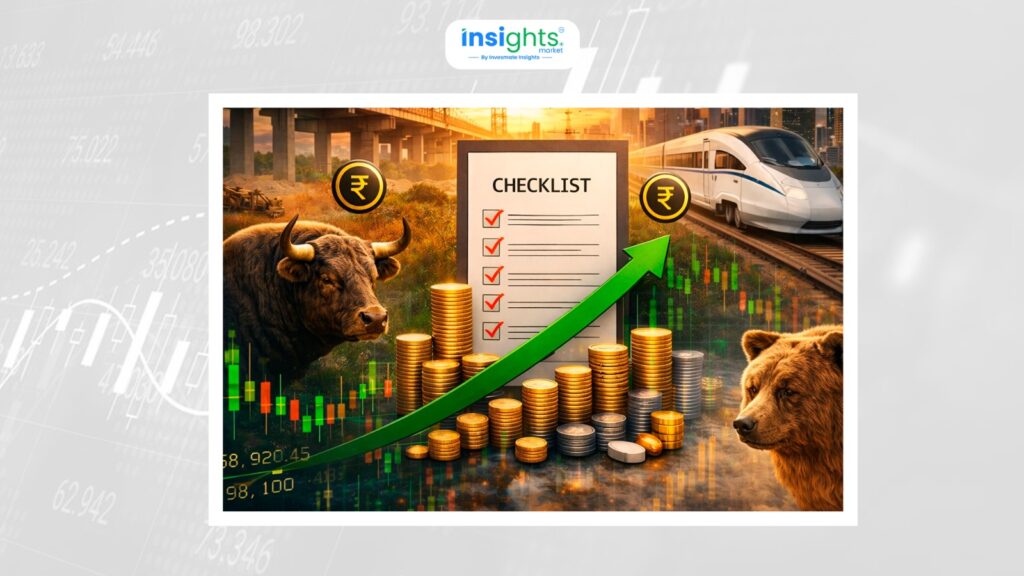
1. Defence — Orders Matter More Than Allocation
India’s defence budget trend remains upward, but execution visibility is key.
Watch for:
• QRSAM order pipeline
• Indigenous aircraft and missile production
• Naval platform modernisation
Stocks: BEL, HAL, Bharat Dynamics, Mazagon Dock
Valuation Note:
HAL trades closer to mid-30s P/E, while BEL is in the 50s range. Upside depends on confirmed order flows, not headlines.
2. Infrastructure — Execution Cycle Continues
Focus is shifting toward completion and monetisation of existing projects.
Areas in focus:
• Railways capex
• Highways and freight corridors
• Urban redevelopment
Stocks: L&T, RVNL, IRCON
Mid-caps with strong order execution may benefit more than large caps.
3. Power & Renewables — Grid is the Real Story
India added record renewable capacity, but transmission and storage are bottlenecks.
Budget focus likely on:
• Transmission corridors
• Grid modernisation
• Battery storage
• Green hydrogen funding clarity
Stocks: Power Grid, NTPC, JSW Energy
This is a multi-year structural theme, not a short-term trade.
4. Electronics & Semiconductors — Long-Term Manufacturing Push
India’s mobile manufacturing has expanded sharply over the past decade.
Policy focus expected:
• PLI expansion
• Semiconductor ecosystem development
• Electronics value chain localisation
Commercial production cycles are long, so this remains a 5–10 year theme.
5. Financial Services — Quiet but Powerful Reforms
This sector could benefit from non-headline policy tweaks.
Watch for:
• NBFC funding reforms
• Faster bad loan recovery mechanisms
• Insurance FDI changes
Stocks: SBI, HDFC Bank, quality NBFCs like Cholamandalam Finance
These reforms often lead to earnings upgrades without dramatic headlines.
How Markets Usually Behave Around Budget
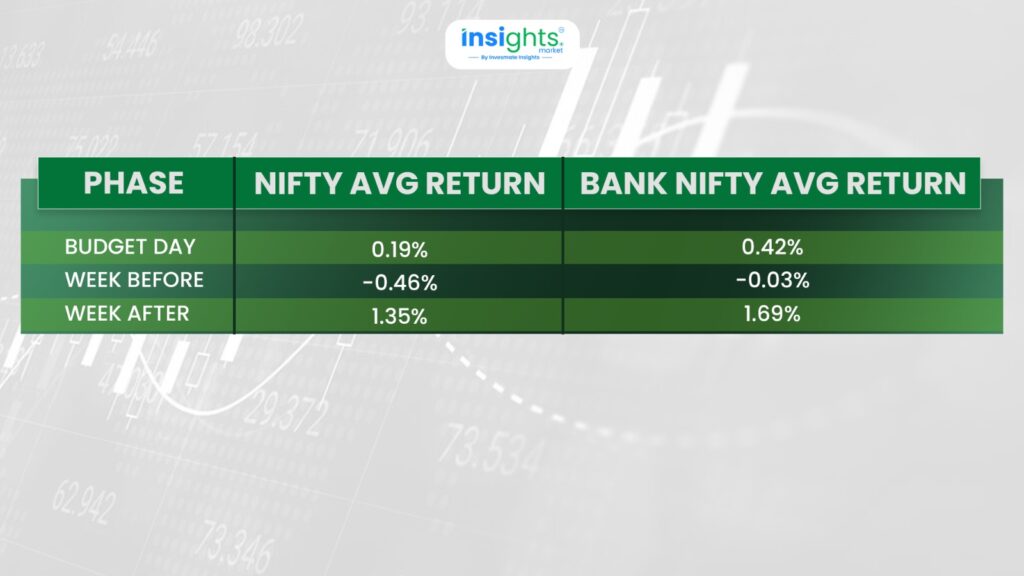
Banks often outperform in the period following the Union Budget. Their performance tends to be closely tied to government borrowing plans, liquidity conditions, and the outlook for credit growth — all of which are heavily influenced by budget announcements.
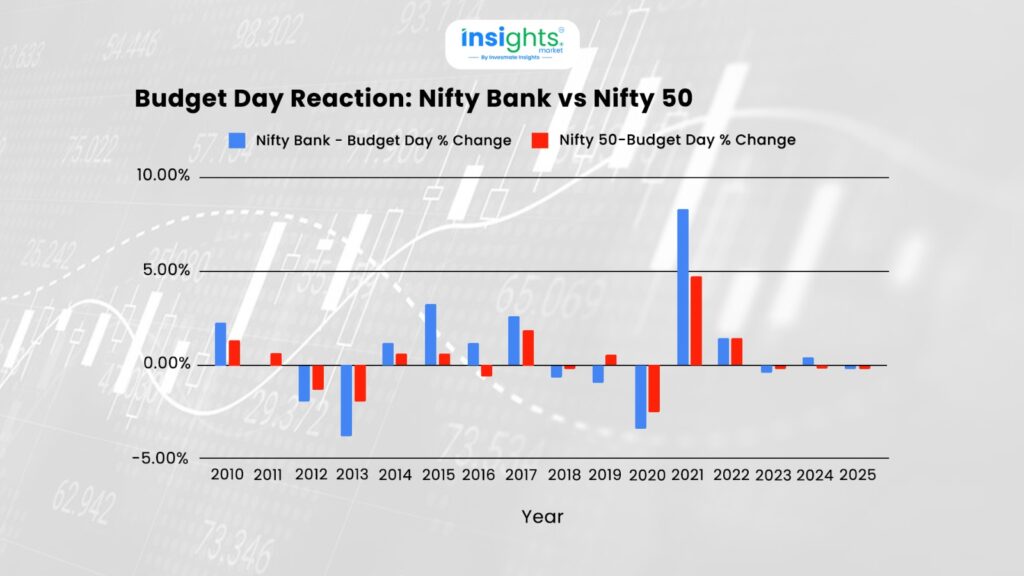
However, on Budget Day itself, Bank Nifty typically reacts more sharply than the Nifty 50, both on gains and declines. Historical trends show that while the broader market usually sees moderate moves, banking stocks tend to amplify the market’s immediate reaction to budget announcements.
This means banks are not necessarily better at predicting market direction — they simply behave like a high-beta segment during major policy events, magnifying both optimism and disappointment.
Strategy Framework
For Traders
Pre-Budget
- Reduce stretched positions
- Hold some cash
- Don’t take heavy short bets
On Budget Day
- Volatility will be high
- Consider buying sharp dips carefully
- Avoid strong directional assumptions
Post-Budget
- Add gradually to strong sectors
- Focus on stock-specific news and triggers
For Investors (3–12 Months)
A balanced approach can include:
- Core infrastructure plays
- Defence stocks on pullbacks
- Quality banks and NBFCs
- Some cash to use during volatility
For SIP & Long-Term Investors
Stick to your plan. Budget-related swings are temporary, and dips after the event have often offered better entry opportunities.
Key Takeaways
- Budget Day is volatile but has a historically low return.
- The week after has offered better opportunities
- Expectations ≠ policy — wait for confirmation
- Execution > Allocation
- Patience historically beats prediction
Bottom Line
Budgets shape direction, but markets reward clarity, not speculation. The smartest strategy is rarely to predict announcements — it is to respond once the details are known.
FAQs
Yes, both NSE and BSE will conduct a special live trading session on Sunday, February 1, 2026. Markets will follow a full trading schedule, allowing investors to react in real time to the Union Budget announcements. Even though it’s a weekend, trading, settlement, and price movements will function like a normal market day.
No, profits from Friday’s intraday equity or F&O trades will not be available for use on Sunday because they settle on Monday under the T+1 cycle. Traders can only use existing cash balances, fresh funds added before Sunday, or proceeds from earlier delivery sales. Planning liquidity in advance is essential for Budget Day trading.
Withdrawals are not processed on Sunday. All trades executed on Budget Day will settle on Monday, February 2, and withdrawal requests can only be placed after settlement is completed. The earliest funds typically reach your bank account is the next business day after the withdrawal request.
Banking, defence, and infrastructure stocks usually attract the most attention on Budget Day because government policy, spending plans, and credit expectations directly impact these sectors. However, immediate reactions can be volatile, and real opportunities often emerge after the market digests the announcements.
Budget Day is known for sharp price swings, which makes it high-risk for intraday traders. While experienced traders may find short-term opportunities, the direction of the market is unpredictable, and volatility can trigger quick stop-losses. Many traders prefer to wait for clarity in the days following the Budget instead of taking aggressive positions on the day itself.
All trades executed on Sunday, February 1, 2026 will follow the T+1 settlement cycle, meaning settlement will be completed on Monday, February 2. Funds and securities will be credited or debited after settlement, and only then can withdrawals or further transactions be processed.
This blog is for educational purposes only and does not constitute investment advice. Market investments are subject to risk. Always conduct your own research or consult a registered financial advisor. Past performance does not guarantee future results.