
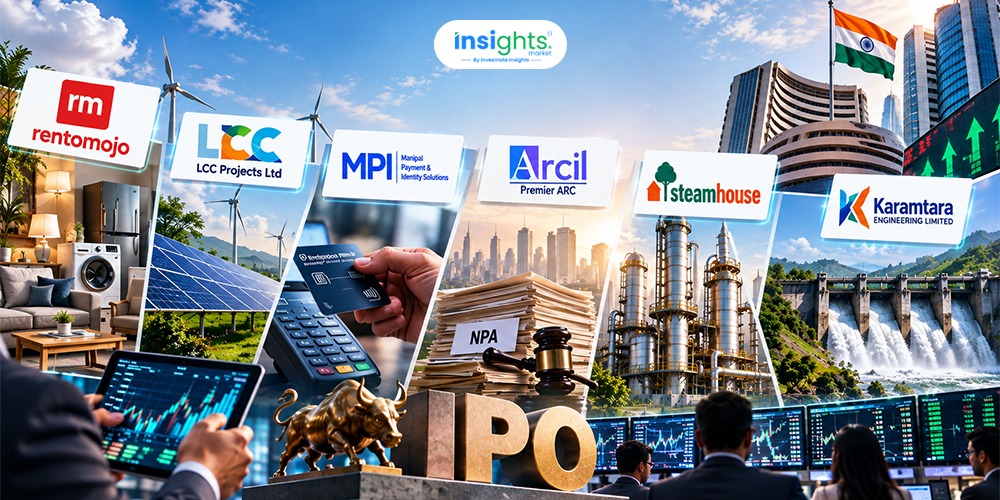

India’s primary market is witnessing a rare event today (9th Sept., 2026), with six IPOs opening for subscription on September 9, 2026—the first such instance in nearly three decades. Together, RentoMojo, Karamtara Engineering, Manipal Payment & Identity Solutions, Asset Reconstruction Company (India), Steamhouse India, and LCC Projects are looking to raise around ₹4,386 crore. The last time six IPOs opened on the same day was October 14, 1996, when the combined fundraising was just around ₹22 crore.
With six companies from very different sectors competing for investor attention and capital, the bigger question is not simply which IPO is generating the most buzz, but which business offers the strongest combination of growth potential and manageable risks. From renewable energy and infrastructure to payments, industrial gases, consumer rentals, and stressed-asset resolution, here’s a closer look at the strengths and weaknesses of all six IPOs opening today.
1. Rentomojo
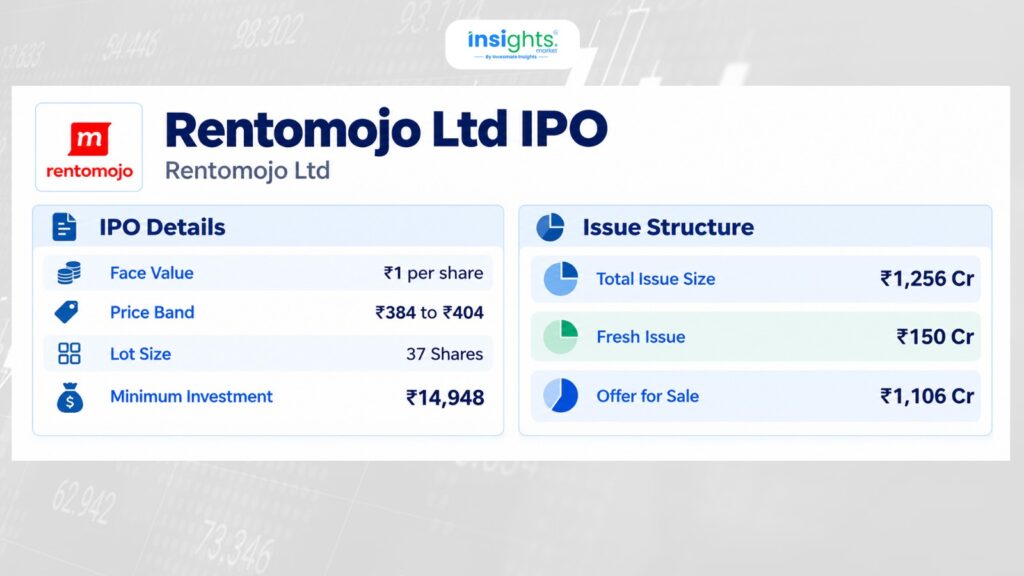
Rentomojo Limited is a technology-driven rental and subscription platform offering furniture and home appliances through flexible plans. As of March 31, 2026, it had 253,825 live subscribers across 29 cities, with 851,184 live products and 82 experience stores.
Strengths
Large and growing customer base: Rentomojo has built a significant subscriber base across major Indian cities, providing scale to its rental and subscription model.
Integrated asset lifecycle: The company manages product design, procurement, refurbishment, servicing, reverse logistics and redeployment, allowing assets to be used across multiple subscription cycles.
Weaknesses: The business remains dependent on vendors and third-party manufacturers for products, creating potential supply and product-quality risks. Customer service and product performance are also important because recurring subscriptions depend heavily on customer retention. The company has exposure to selected major cities, legal proceedings, and outstanding borrowings, which could affect financial flexibility as it expands.
2. Karamtara Engineering
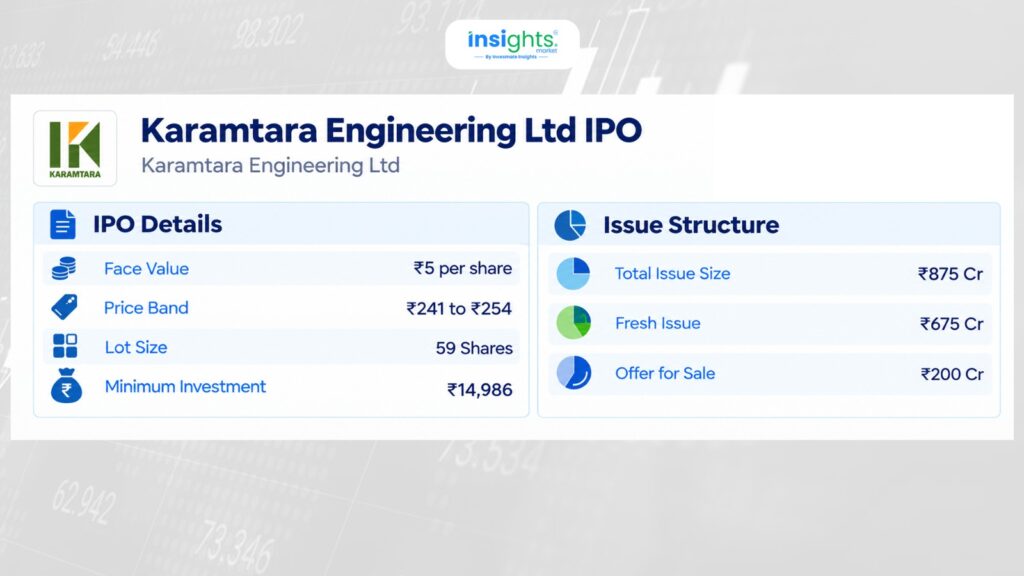
Karamtara Engineering is a backward-integrated manufacturer serving the renewable energy and power transmission sectors. Its products include solar mounting structures, transmission towers, tracker components, fasteners and OHTL hardware, with manufacturing facilities across India and Italy.
Strengths
Integrated manufacturing platform: The company has in-house rolling mills and galvanising facilities, reducing dependence on external suppliers for important manufacturing processes.
Diversified product portfolio: Its products cater to solar, wind and transmission infrastructure, giving it exposure to multiple areas of the energy-transition and power-infrastructure cycle.
Global reach: Karamtara exports to more than 50 countries across North America, Europe, Asia, Africa, Australia and Latin America. It also has 13 manufacturing facilities, supporting its international delivery capabilities.
Weaknesses: A substantial portion of manufacturing operations is concentrated in Maharashtra, creating geographic concentration risk. The company also has customer and supplier concentration, while exports expose it to foreign-exchange movements and international trade tariffs. Capacity expansion, including overseas projects, adds execution risk, while rising borrowings remain another concern.
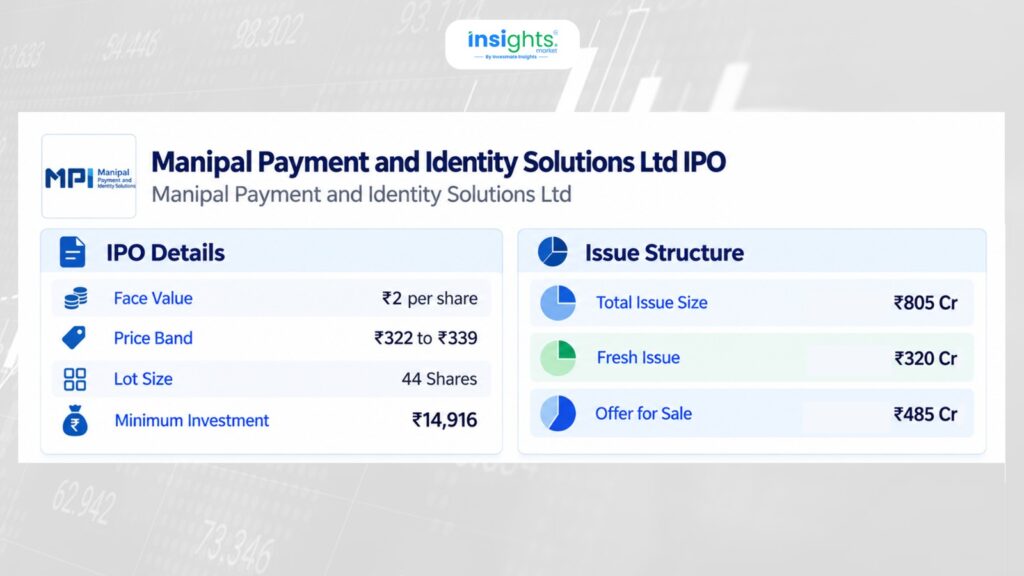
3. Manipal Payment & Identity Solutions
Manipal Payment & Identity Solutions provides payment, identification, secure printing, smart-tagging and IoT solutions to banks, fintechs, NBFCs and governments. Its portfolio covers payment cards, identity documents, RFID solutions, secure logistics and anti-counterfeiting products.
Strengths
Diversified solutions: The company operates across payments, identity, secure products, smart tagging and IoT, reducing dependence on a single product category.
Established relationships: Its customer base includes banks, fintech companies, NBFCs and government institutions, providing access to large institutional demand.
Technology-driven operations: Its solutions include NFC, QR-enabled products, RFID-based tracking, holograms and encrypted QR codes, supporting its position in secure and technology-led applications. The company has also demonstrated revenue growth across recent financial years.
Weaknesses: The business faces customer concentration and dependence on key suppliers. Imported raw materials expose it to currency movements and supply-chain disruptions. Regulatory compliance is particularly important given its work in secure identification and payment-related products. The company also has dependence on relationships within the Manipal Group, facility concentration risks, legal proceedings, and outstanding borrowings.
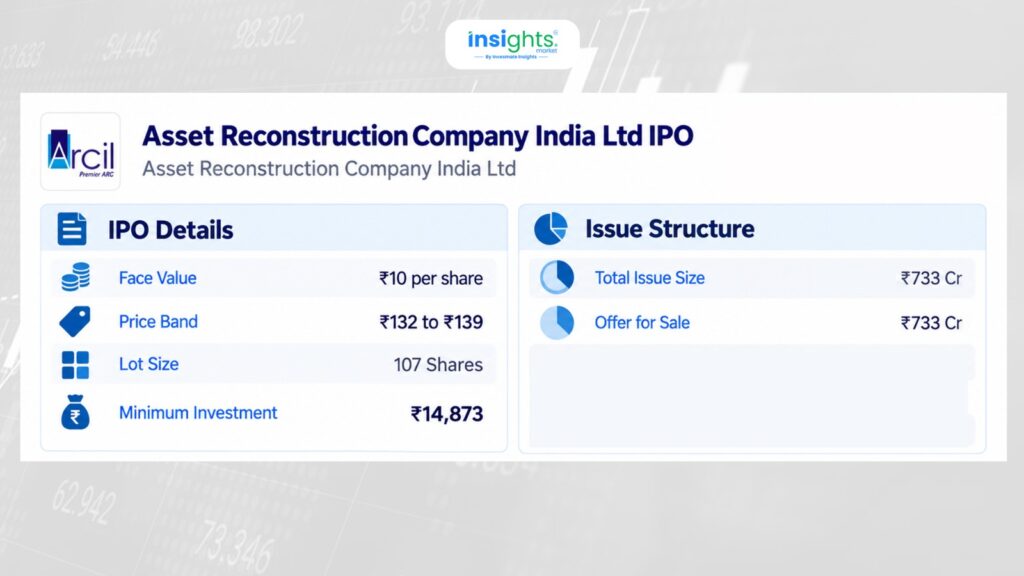
4. Asset Reconstruction Company (India)
Asset Reconstruction Company (India) Limited (ARCIL) acquires stressed assets from banks and financial institutions and seeks to resolve them through restructuring, settlements, enforcement and other recovery mechanisms. It operates across Corporate, SME & Other, and Retail loans.
Strengths
Established track record: ARCIL has been operating in the asset-reconstruction industry for more than two decades, giving it experience in acquiring and resolving stressed assets.
Diversified portfolio: Its assets under management span corporate, SME and retail loans, helping diversify its exposure across borrower categories.
Resolution expertise: ARCIL uses multiple mechanisms for resolving stressed assets and has an experienced recovery network supported by specialised teams and technology.
Weaknesses:The company is heavily dependent on AUM and its ability to acquire stressed assets at appropriate prices. Recovery outcomes can be difficult to predict because they depend on borrower behaviour, collateral values and legal processes. Regulatory requirements also remain important. Corporate-loan and borrower concentration can affect recoveries, while competition for stressed assets may pressure acquisition economics. Importantly, this is an OFS, so the company will not receive proceeds from the IPO.
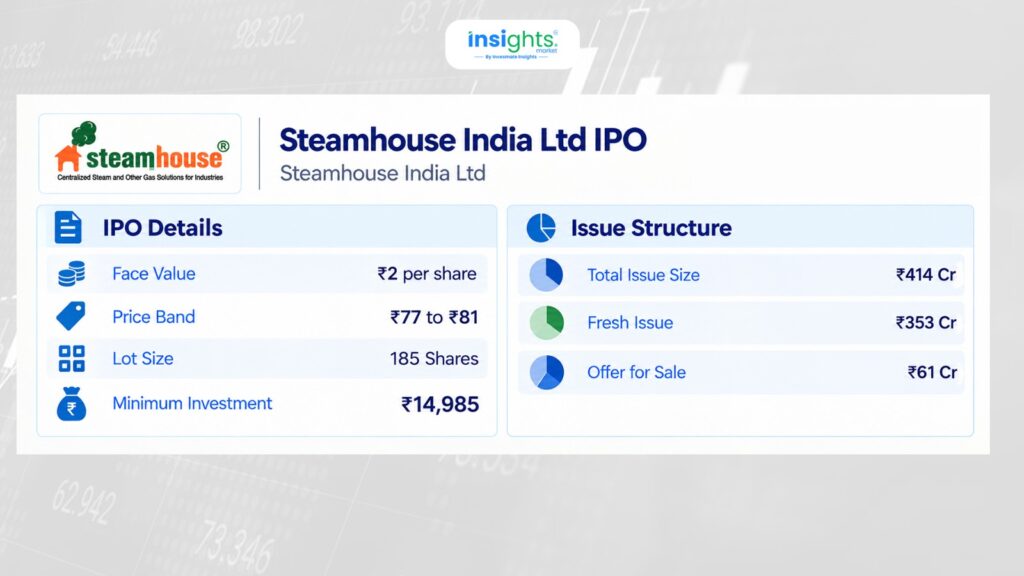
5. Steamhouse India
Steamhouse India Limited generates and distributes industrial gases, primarily steam and nitrogen, through pipeline networks. It operates seven community steam boilers in Gujarat with an aggregate installed steam capacity of 345 TPH, serving industries such as chemicals, pharmaceuticals, textiles and agrochemicals.
Strengths
Established community-boiler model: Steamhouse is positioned as a pioneer in community steam-boiler systems, providing centralised industrial steam to customers.
Repeat customer base: The company has a high contribution from repeat customers, supporting recurring business visibility.
Diversified end-user industries: Its customers operate across more than eight sectors, reducing dependence on one specific industry.
Weaknesses: Operations are geographically concentrated in Gujarat, while the business depends on pipeline connectivity and rights to maintain supply to customers. Customer concentration remains a risk, and fluctuations in coal and other input costs can affect margins. Regulatory and environmental approvals are also important. The company has significant dependence on specific facilities and customers, while outstanding borrowings could add pressure to its financial position.
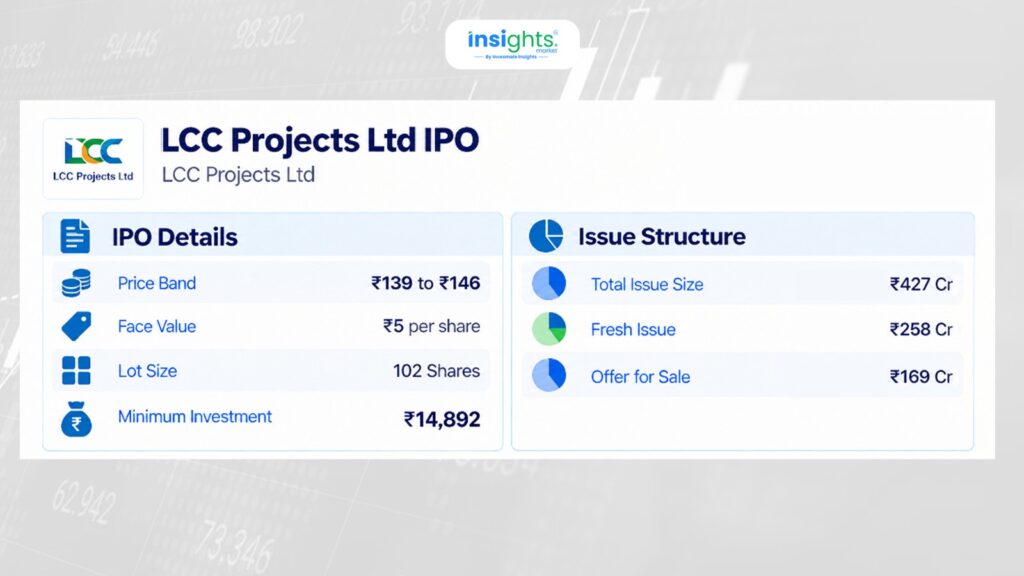
6. LCC Projects
LCC Projects is a multidisciplinary EPC company primarily focused on irrigation and water-supply infrastructure. Its projects include dams, barrages, canals, hydraulic structures, water-supply schemes and related infrastructure across 12 states.
Strengths
Strong project experience: LCC Projects has developed expertise in irrigation and water infrastructure and has executed projects across different geographies and terrains.
Growing order book: Its order book has increased significantly, providing visibility into future revenue potential.
In-house engineering capabilities: The company has a sizeable engineering and technical team supporting design, planning and project execution.
Weaknesses: The business is exposed to government projects and therefore depends on project awards, approvals and execution timelines. Rising receivables and debt can put pressure on cash flows. Customer and geographic concentration, execution delays, dependence on subcontractors and legal proceedings are additional risks that investors need to monitor.
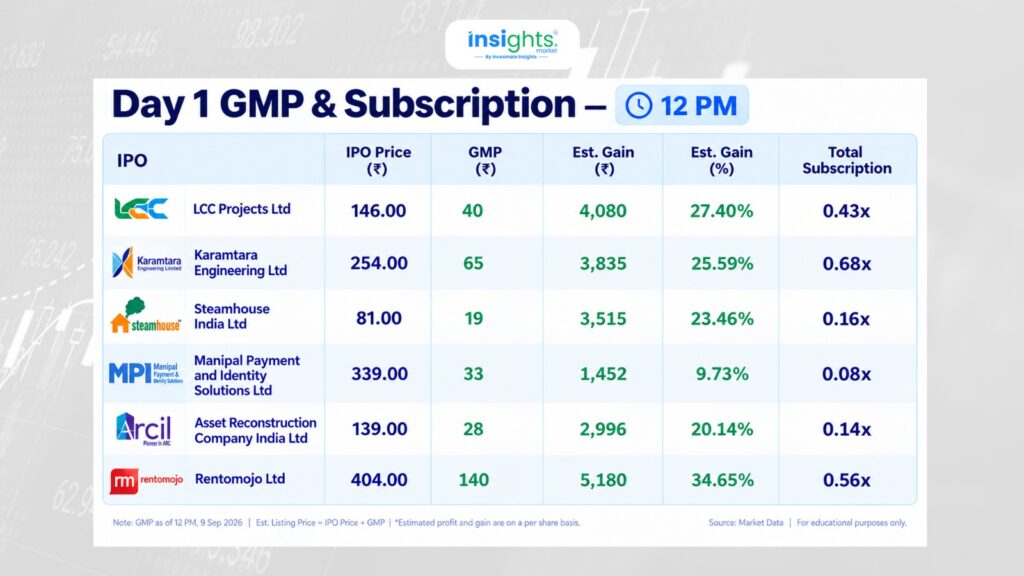
GMP Trend
The Grey Market Premium (GMP) of the six IPOs reflects the level of investor interest ahead of their market debut. The premiums remain mixed across the issues, indicating different expectations around their potential listing performance.
Key Takeaway
These six IPOs offer very different investment stories, so a one-size-fits-all approach may not work. Karamtara brings renewable-energy and transmission exposure, Rentomojo offers a consumer subscription model, Manipal Payment & Identity Solutions targets secure payments and identification, ARCIL focuses on stressed assets, Steamhouse serves industrial utilities, while LCC Projects is positioned around infrastructure spending. Investors should therefore compare business quality, growth visibility, financial performance, debt, execution risks, and valuations before deciding which IPO, if any, fits their investment strategy.
FAQs
Rentomojo is a technology-driven D2C online rental and subscription platform offering furniture, appliances and other household products across multiple Indian cities.
Karamtara Engineering is a backward-integrated manufacturer of renewable energy and transmission products, including solar mounting structures, tracker components, transmission towers and related products.
The company provides payment, identification, secure printing, smart tagging and IoT solutions for banks, fintech companies, NBFCs, governments and other customers.
Asset Reconstruction Company (India) Limited, or ARCIL, acquires stressed assets from banks and financial institutions and focuses on their resolution through restructuring, settlements, enforcement and other recovery mechanisms.
Steamhouse India specialises in the generation and centralised distribution of industrial gases, primarily steam and nitrogen, through pipeline-based community utility systems.
LCC Projects is an EPC company focused mainly on irrigation and water-related infrastructure, including dams, barrages, canals, pipe distribution systems, lift irrigation, and water-supply projects.
Karamtara Engineering is closely linked to renewable energy and power-transmission infrastructure, while LCC Projects focuses on irrigation and water infrastructure.
ARCIL is the IPO among the six that operates in the asset reconstruction and stressed-asset resolution space.
This article is for educational and informational purposes only. It is not investment advice or a stock recommendation. Investors should conduct their own research or consult a qualified financial advisor before making investment decisions.