

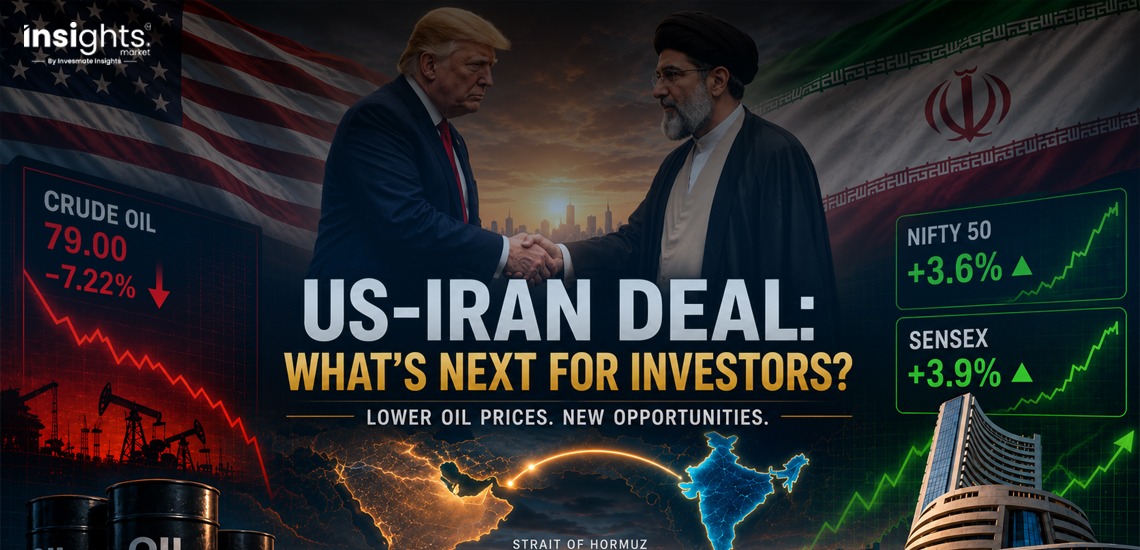

For months, investors were worried about rising oil prices, possible disruptions in the Strait of Hormuz, and the economic impact of growing tensions in the Middle East. Now, reports suggest that a US-Iran peace agreement is close to being finalized, and global markets are feeling relieved. Oil prices have dropped sharply, stock markets have moved higher, and investors are once again talking about lower inflation and stronger economic growth.
For India, this is especially important because the country depends heavily on imported energy. But the agreement could also affect global trade, inflation, and overall market sentiment. In this article, we’ll discuss why the deal matters, which sectors could benefit, the key risks investors should watch, and what it means for Indian markets going forward.
Why The US-Iran Deal Matters So Much
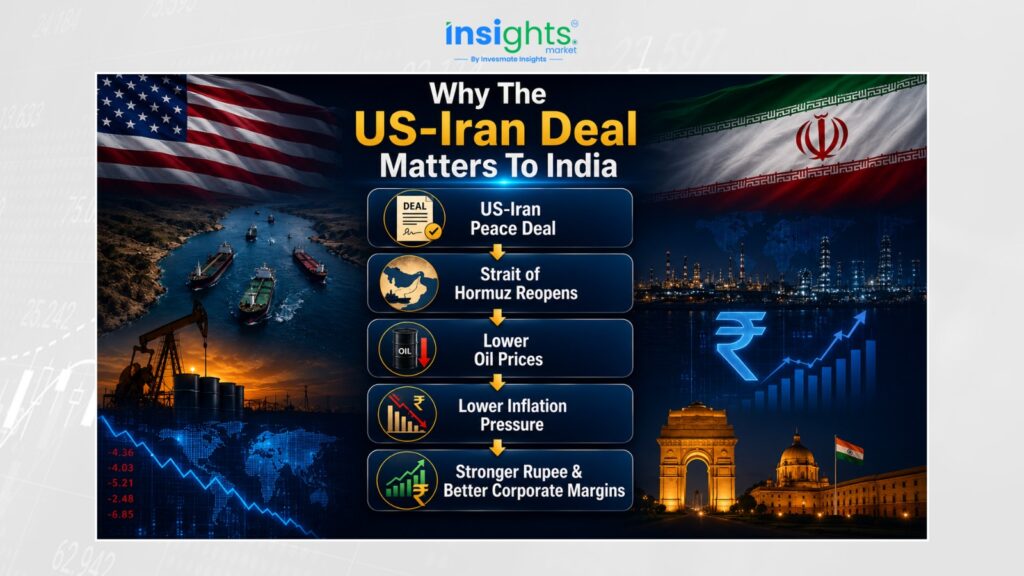
The Strait of Hormuz is one of the world’s busiest oil routes. A large amount of crude oil and natural gas passes through this narrow waterway every day. During the conflict, there were fears that oil supplies could be disrupted. As a result, oil prices rose, and inflation worries increased across many countries. This was a bigger problem for India because the country imports more than 85% of the oil it uses.
When oil prices rise:
- India’s import bill goes up
- The rupee can come under pressure
- Transport and fuel costs increase
- Inflation moves higher
Now that tensions are easing, these worries are starting to reduce. Oil prices have already fallen from recent highs. If peace continues and oil supplies move normally through the Strait of Hormuz, India could benefit from lower fuel costs, lower inflation, and a more stable economy.
How Markets Reacted To The US-Iran Deal
The market response was immediate and broad-based. Crude oil prices fell more than 7% as concerns over supply disruptions eased. At the same time, global equities rallied, with the Nasdaq 100 gaining over 7%, Japan’s Nikkei 225 rising more than 5%, and China’s Shanghai Composite Index advancing around 3%. In India, the Sensex climbed nearly 4% and the Nifty 50 gained over 3.5%, while gold rebounded more than 3% from recent lows. The Indian rupee also strengthened against the US dollar, reflecting improved risk sentiment and expectations of lower imported inflation. Together, these moves suggest investors are beginning to price in a more stable geopolitical and economic environment.

Why Markets Are Reacting Positively
Markets are not happy about the peace deal, only because a conflict may be ending. They are reacting positively because lower oil prices can benefit the entire economy. Lower energy costs can reduce inflation, increase consumers’ spending power, lower costs for businesses, and give central banks more flexibility to support economic growth. For a country like India, which depends heavily on imported energy, these benefits can be very important. This positive sentiment is already visible in global stock markets, while bond yields have started falling as investors become less worried about inflation.
Which Sectors Could Benefit The Most?
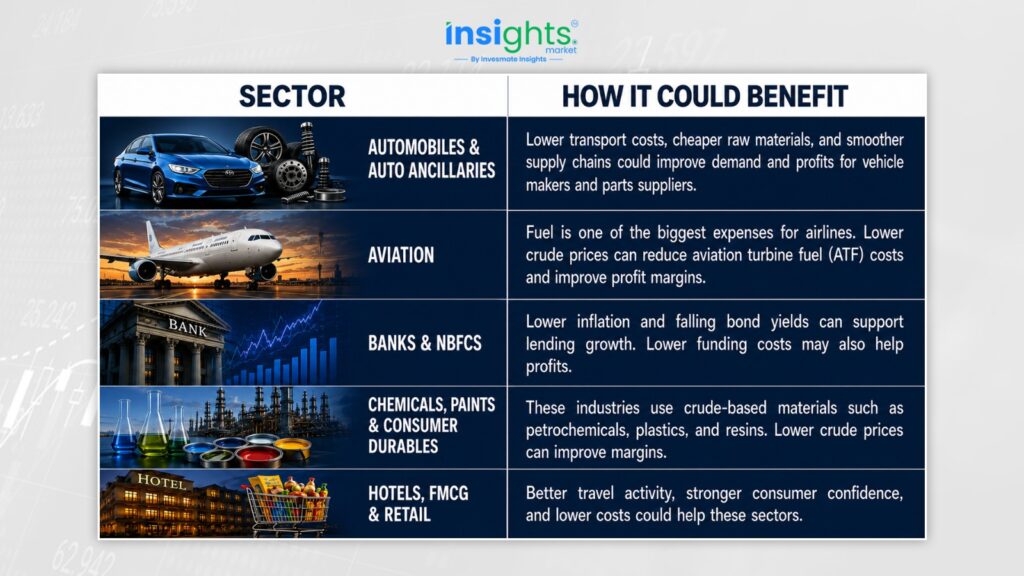
Several sectors stand to gain if oil prices remain lower and trade routes continue normalizing.
But Investors Should Not Ignore The Risks
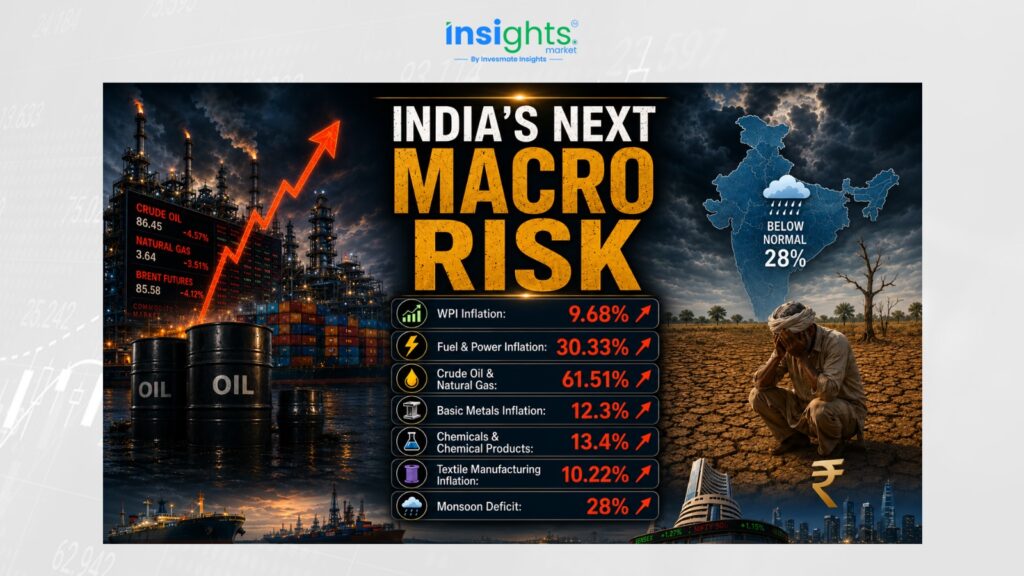
While global conditions are improving, investors should keep an eye on a few important domestic risks that could affect the economy and markets.
Key Risks To Watch
1. Weather & Rural Economy Risks
- Monsoon Deficit: 28%
- Possibility of El Niño conditions later this year
- Risk of lower crop production and weaker rural demand
- Higher food prices could push inflation up again
2. Inflation Risks
- WPI Inflation: 9.68%
- Fuel & Power Inflation: 30.33%
- Crude Oil & Natural Gas Inflation: 61.51%
- Basic Metals Inflation: 12.3%
- Chemicals & Chemical Products Inflation: 13.4%
- Textile Manufacturing Inflation: 10.22%
These numbers show that inflation pressures are not limited to energy alone. Rising costs have also spread to manufacturing sectors such as metals, chemicals, and textiles. Although lower oil prices should gradually ease some of these pressures, inflation remains an important factor for investors to monitor in the coming months.
Why The Benefits May Take Time
Even though oil prices have fallen, the positive impact on the economy may not be seen immediately. After a major conflict, shipping routes, supply chains, insurance systems, and trade networks need time to get back to normal. So, even if the peace deal is signed soon, it may take a few months for trade through the Strait of Hormuz to operate smoothly again. In short, markets may react positively right away, but the full economic benefits could take some time to reach businesses and consumers.
What Should Investors Do Now?
The peace deal is clearly positive for markets, but investors should not ignore larger economic trends. They should continue to focus on companies with strong fundamentals rather than making decisions based solely on geopolitical news. Lower oil prices, easing inflation, and better global trade conditions could create opportunities in many sectors. However, investors should also keep an eye on monsoon trends, inflation data, and rural demand in the coming months.
Final Takeaway
The US-Iran peace deal is good news for markets because it reduces the risk of higher oil prices and disruptions to global trade. For India, lower oil prices can help control inflation, support economic growth, and improve business profitability. However, investors should not assume that all risks have disappeared. Challenges such as inflation, a weak monsoon, and slower rural demand could still affect the economy in the months ahead. The best approach is to stay focused on strong businesses and keep an eye on key economic indicators. While the peace deal removes one major concern, future market performance will depend on how these other factors play out.
FAQs
Investors expect lower oil prices, easing inflation, and reduced geopolitical uncertainty, which are generally positive for economic growth and corporate earnings.
Nearly 20% of global oil and LNG supplies pass through the Strait of Hormuz. Any disruption can significantly impact energy prices worldwide.
India imports most of its crude oil. Lower oil prices can reduce inflation, improve the trade balance, support the rupee, and boost corporate profitability.
Autos, aviation, banks, chemicals, consumer durables, FMCG, hotels, and logistics-related businesses could benefit from lower energy and transportation costs.
Not necessarily. It may take time for lower crude oil prices to flow through supply chains and reflect in retail fuel prices.
No. While lower oil prices help, India is still facing challenges such as elevated wholesale inflation, food-price risks, and monsoon uncertainty.
A weak monsoon can reduce agricultural output, increase food inflation, and weaken rural demand, which affects large parts of the Indian economy.
The key factors to monitor are oil prices, inflation trends, monsoon progress, rural demand, RBI policy decisions, and whether the US-Iran agreement is successfully implemented.
This article is for educational and informational purposes only. It is not investment advice or a stock recommendation. Investors should conduct their own research or consult a qualified financial advisor before making investment decisions.