


SpaceX is preparing for what could become the biggest IPO in financial history. But this IPO is about far more than rockets. It is about AI, passive investing, Elon Musk, and whether investors are buying a real business or simply buying a dream.
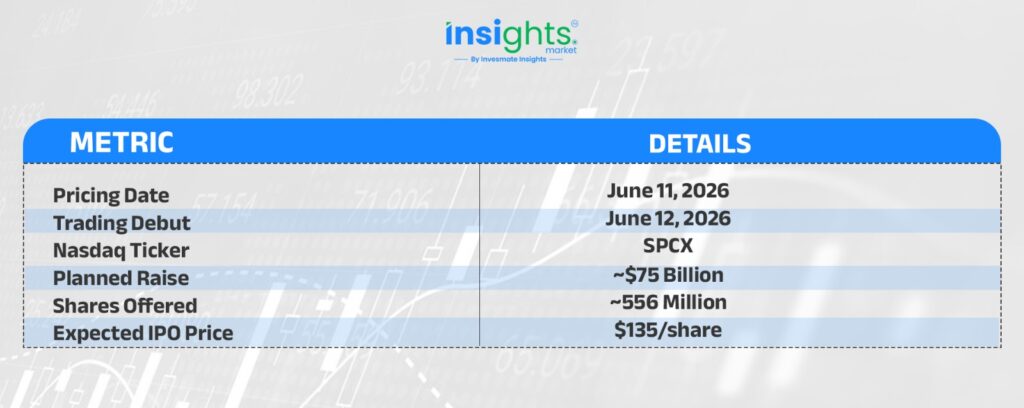
The company is reportedly targeting a $75 billion raise at a valuation between $1.8 – 2 trillion, instantly placing it among the world’s most valuable companies alongside Apple, Microsoft, and Nvidia.
1.Core IPO Details
2. The IPO That Could Change Wall Street Rules
Normally, companies spend years building a public-market track record before major indexes and passive funds begin buying their shares.SpaceX is changing that playbook.
Nasdaq recently modified its rules to allow mega-cap IPOs like SpaceX to potentially enter the Nasdaq-100 within just 15 trading days after listing. That means ETFs and passive funds tracking the index may be forced to buy billions of dollars’ worth of SpaceX shares almost immediately.
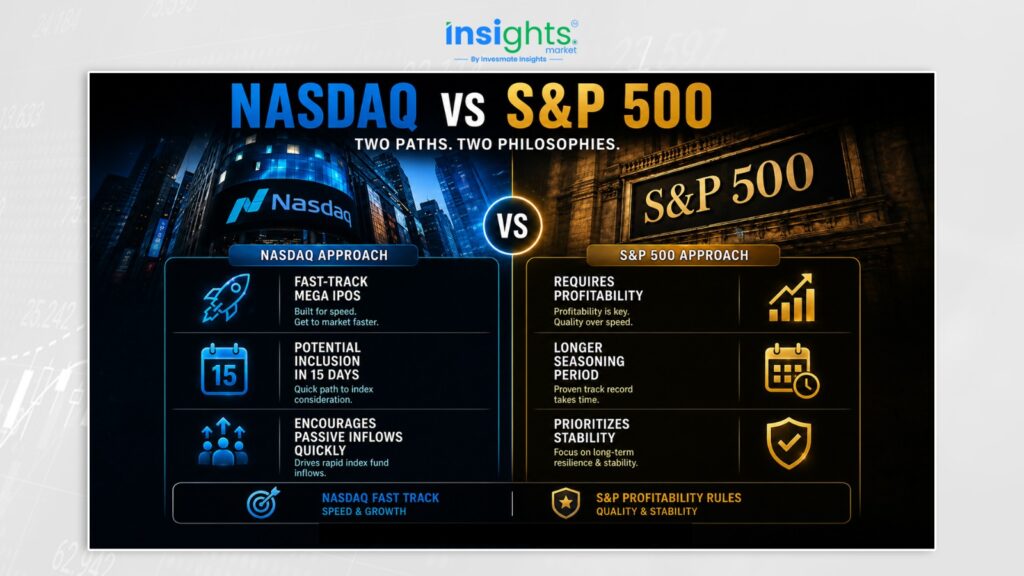
However, the S&P 500 is taking a different approach.SpaceX likely cannot enter the S&P 500 until:
- It becomes consistently profitable
- Remains public for at least 12 months
- Expands public float
This means major S&P-linked passive inflows may not arrive until 2027–2028.
3. Retail Participation Could Drive Volatility
Most IPOs allocate only a small percentage of shares to everyday investors, with institutions typically receiving the majority of allocations. Reports suggest SpaceX could reserve as much as 30% of shares for retail buyers , an unusually high figure for an IPO of this scale. That matters because retail-driven trading often behaves very differently from institutional investing.
Why Retail Participation Matters
- Retail investors tend to trade based on momentum and sentiment
- Social media hype can accelerate buying pressure rapidly
- Elon Musk’s online influence could amplify speculative demand
- A limited public float may intensify price swings
Combined with intense media attention and strong retail enthusiasm, the stock could experience sharp volatility immediately after listing.Passive ETF buying may further increase the pressure. If index funds are forced to purchase shares shortly after the IPO while retail demand surges simultaneously, supply-demand imbalances could create rapid upward moves followed by equally sharp corrections.
4. SpaceX Is No Longer Just A Rocket Company
Most investors still think of SpaceX as a space company. That description is outdated.
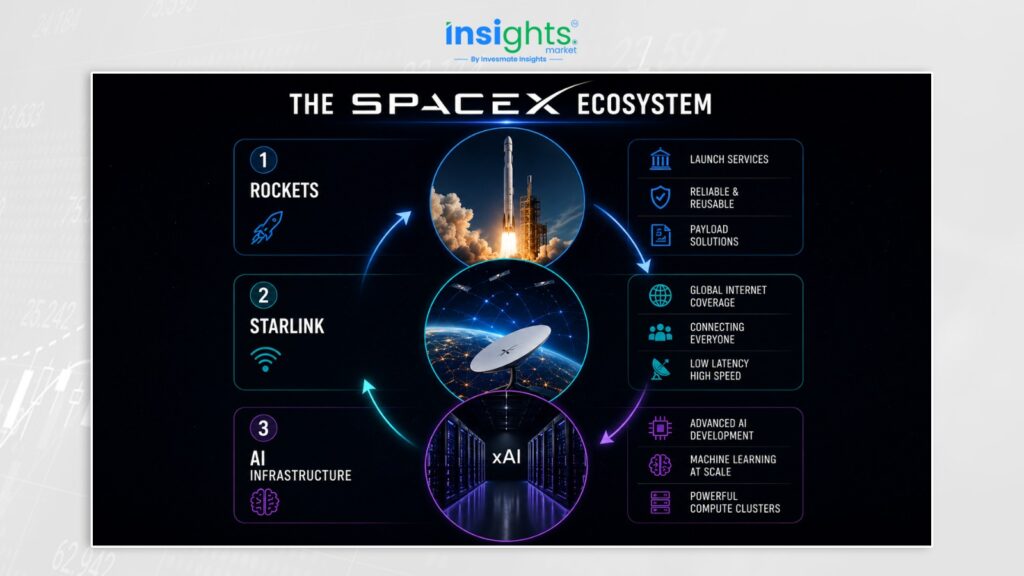
The most important business today may actually be Starlink. Starlink reportedly generated over $11 billion in revenue during 2025 and is becoming the company’s financial engine. Meanwhile, the xAI merger positions SpaceX as an emerging AI infrastructure company. Some reports even suggest future orbital data centers and space-based compute systems.
5. Investors Are Ignoring The Losses
Despite the excitement, SpaceX continues to burn enormous amounts of capital.
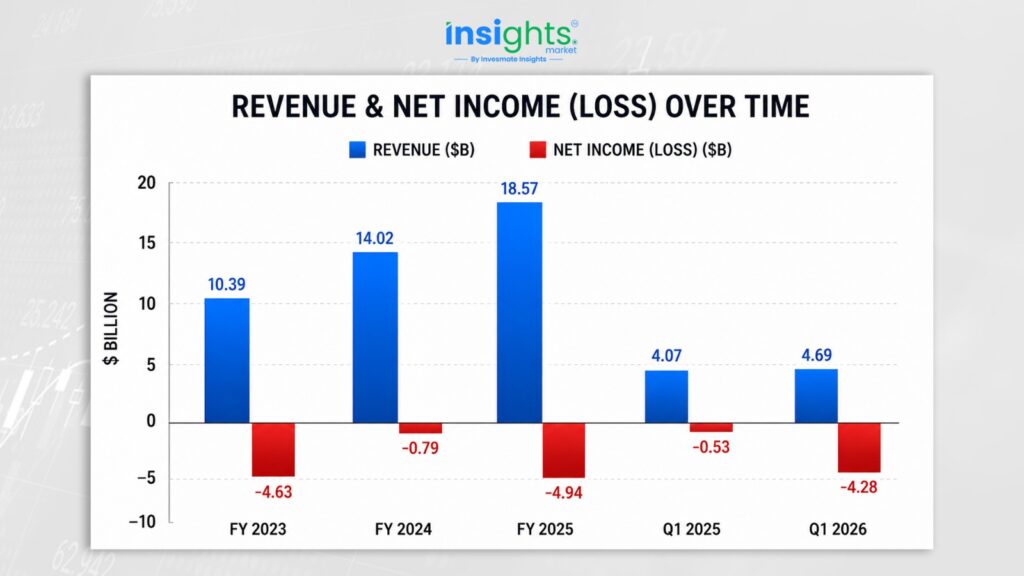
The company reported:
- $18.67 billion in revenue during 2025
- $21.26 billion in total costs and expenses
- Operating losses of approximately $2.6 billion
- Net losses approaching $5 billion
6. Could This Become The Biggest AI Bubble Of The Decade?
At the proposed valuation, SpaceX could trade at roughly 90–100x annual sales. That is significantly higher than many major tech companies. That does not automatically mean SpaceX is overvalued. But it does mean expectations are extremely high.
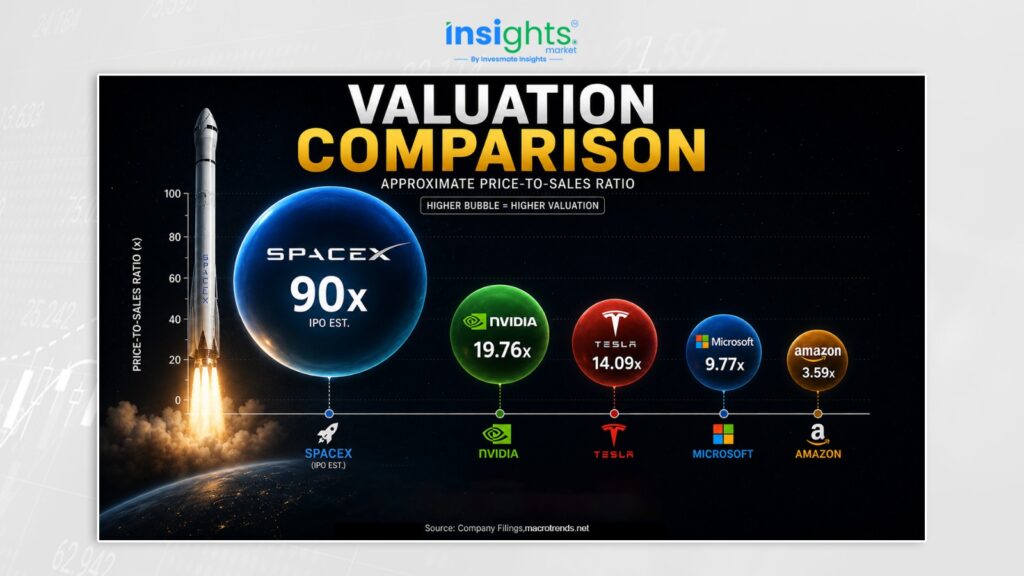
To justify this valuation, SpaceX must execute across:
- Space transportation
- Global internet infrastructure
- AI compute
- Defense technology
- Future space commercialization
The challenge is that current financials still show heavy operational losses despite rapid revenue growth.
7. So What Are Investors Really Buying?
At its core, the SpaceX IPO represents something much bigger than traditional financial metrics. Investors are not simply buying a rocket company or even a fast-growing technology business; they are buying belief in a future that Elon Musk claims SpaceX can build. The market is effectively pricing in the possibility that SpaceX becomes foundational infrastructure for the AI era through Starlink, AI compute expansion, satellite networks, and future space commercialization. Much of the excitement is being driven by AI optimism, passive ETF demand, retail investor enthusiasm, and Musk’s reputation for turning ambitious ideas into real industries. The opportunity could ultimately be enormous, but history also shows that when expectations become too detached from financial reality, even revolutionary companies can become risky investments.
8. Final Takeaway
The SpaceX IPO could become one of the defining market events of the decade. Supporters believe the company has the potential to dominate multiple future-facing industries, including AI infrastructure, satellite internet, defense technology, and commercial space transportation. Critics, however, argue that the valuation is extremely aggressive for a company still reporting heavy losses and burning billions of dollars annually, with much of the excitement driven by hype and future expectations rather than current fundamentals. In reality, both arguments may be valid — which is exactly why the SpaceX IPO has become one of the most debated investment stories in global markets today.
For investors, this IPO is ultimately less about current fundamentals and more about belief in the future.
FAQs
Because this is not a normal IPO. SpaceX could debut at a valuation close to $2 trillion, making it one of the largest public listings in history. Investors also see it as a combination of space technology, satellite internet, defense, and AI infrastructure — all inside one company.
Not consistently. While the company is generating strong revenue growth, especially through Starlink, it also reported multi-billion-dollar losses due to massive spending on AI infrastructure, Starship development, and future expansion projects. Investors are mainly betting on future dominance rather than current profits.
Both Tesla and Amazon looked extremely expensive and unprofitable during their early growth phases, yet later became dominant global companies. Many investors believe SpaceX could follow a similar path if Elon Musk successfully executes his long-term vision.
The biggest risk is valuation. At the proposed IPO price, SpaceX could trade at one of the highest revenue multiples in the market. That means expectations are already extremely high, and even small execution failures could create sharp stock volatility.
Partially, yes. After the xAI merger and expansion into compute infrastructure, SpaceX is increasingly positioning itself as an AI infrastructure and connectivity platform, not just a rocket business. This AI angle is a major reason behind the company’s aggressive valuation.
That depends on risk appetite and investment horizon. Investors who believe in Elon Musk’s long-term vision may see enormous future potential. However, retail investors should also understand that high-hype IPOs can experience extreme volatility, especially when expectations are already near perfection. Understanding both the opportunity and the risks is crucial before investing.
Starlink is currently the company’s strongest commercial business. It generates recurring subscription revenue through satellite internet services across multiple countries. Many analysts believe Starlink could eventually become the financial backbone that funds SpaceX’s larger ambitions like Mars missions, AI infrastructure, and advanced rocket development.
SpaceX operates in extremely capital-intensive industries. Building reusable rockets, launching satellites, developing AI infrastructure, training large AI models, and expanding global internet coverage all require enormous amounts of capital. The IPO gives the company access to long-term public-market funding.
Yes, and that is one of the biggest market discussions right now. Nasdaq recently adjusted rules allowing large IPOs to potentially enter indexes much faster than before. If SpaceX qualifies early, passive funds and ETFs tracking the Nasdaq-100 may automatically buy billions of dollars worth of shares.
That depends entirely on execution. To justify such a massive valuation over the long term, SpaceX would need to continue expanding Starlink globally, successfully commercialize Starship, scale its AI infrastructure profitably, and maintain strong demand across its launch, connectivity, and future AI businesses. In many ways, the market is already pricing in years of future success today, which means investor expectations are extremely high from the very beginning.
This article is for educational and informational purposes only. It is not investment advice or a stock recommendation. Investors should conduct their own research or consult a qualified financial advisor before making investment decisions.