

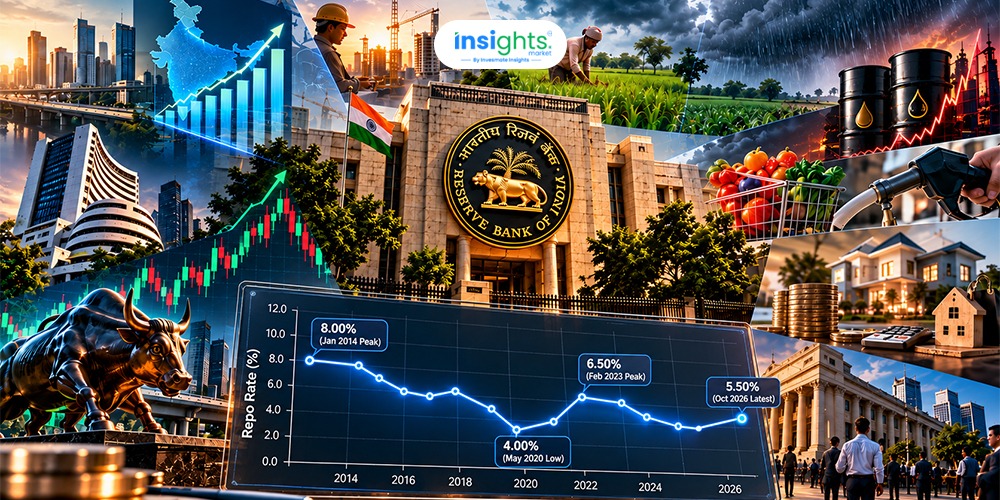

The Reserve Bank of India (RBI) has taken a significant shift in monetary policy by raising the repo rate to 5.50%. The move comes at a time when India’s economic growth remains strong, making the decision particularly important for investors, borrowers and households.
The bigger question is not just what RBI did, but why it chose to raise rates when growth is still healthy. Rising crude oil prices, inflation risks, weather uncertainty and strong bank credit growth are among the factors behind the decision.
What Is the Repo Rate? Understanding RBI and MPC
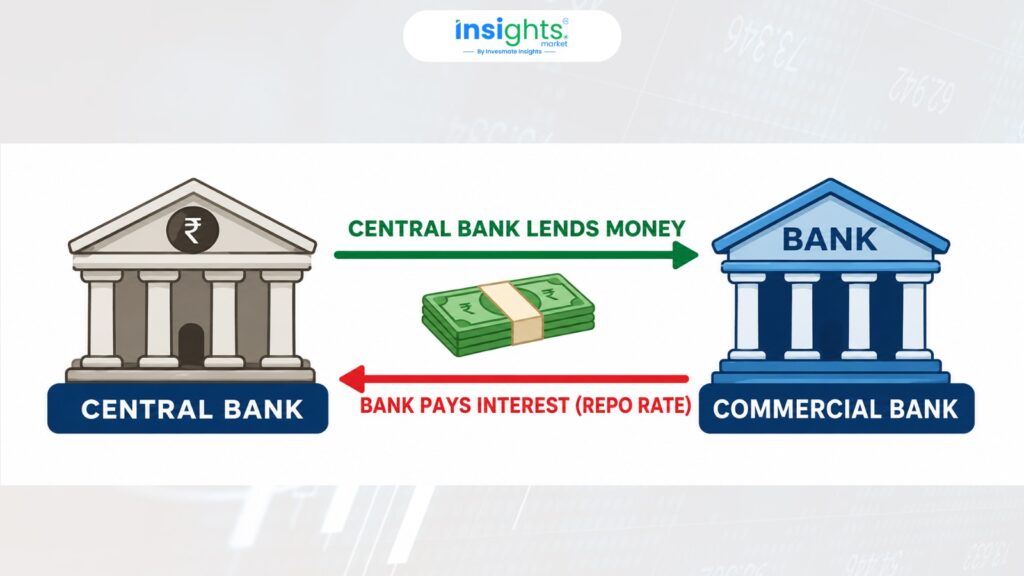
The Repo Rate is the interest rate at which the RBI lends short-term money to commercial banks against eligible securities. When the RBI changes this rate, it influences borrowing and lending conditions across the economy.
The Monetary Policy Committee or MPC is the six-member committee responsible for deciding the policy repo rate. Its main objective is to maintain price stability while keeping growth in mind.
A higher repo rate generally makes borrowing more expensive, which can moderate demand and help control inflation. A lower rate has the opposite effect by making loans cheaper and supporting economic activity.
What Exactly Happened in the Latest RBI Policy?
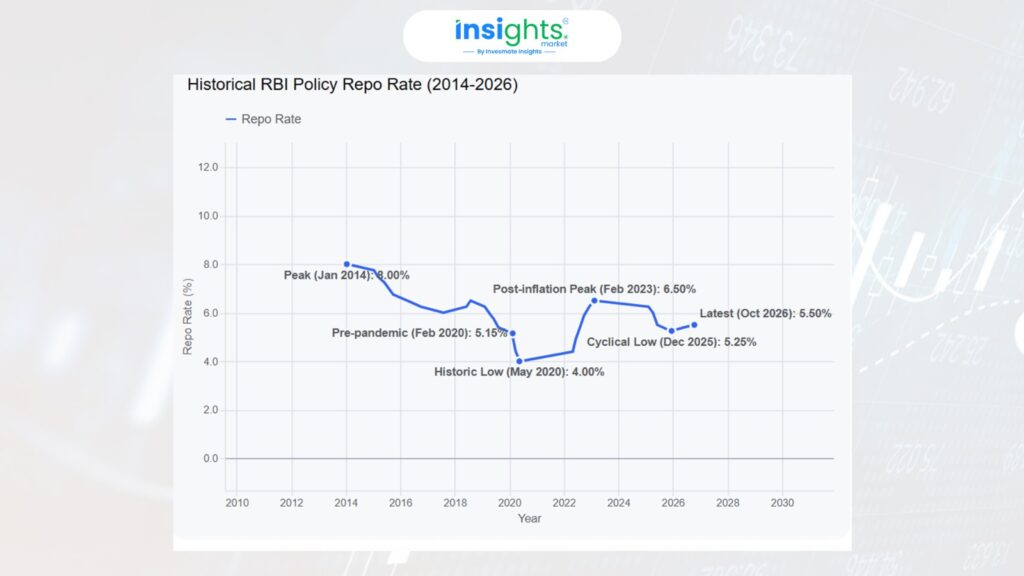
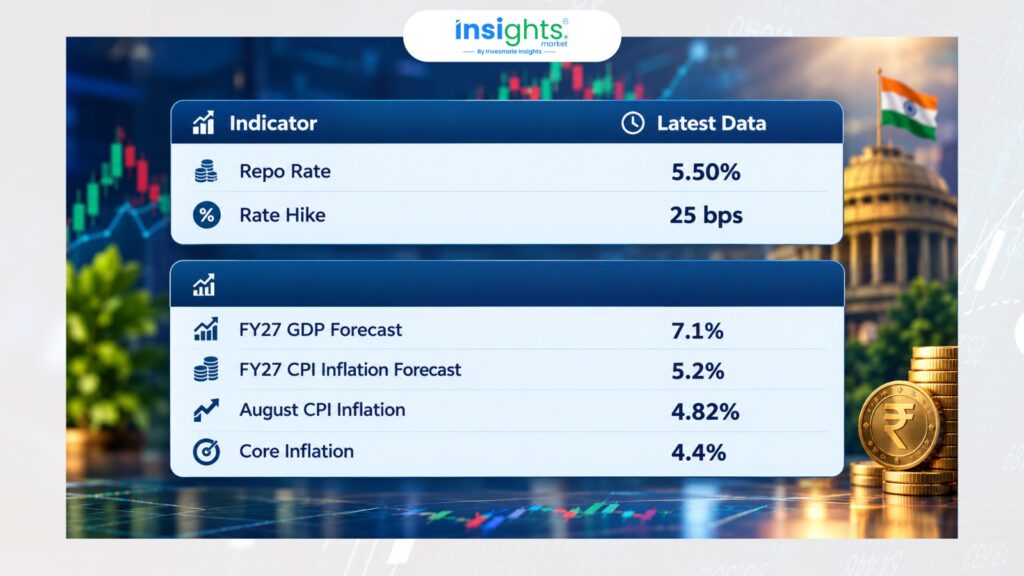
On 7 October 2026, the six-member MPC raised the repo rate by 25 basis points, from 5.25% to 5.50%. This is the first repo-rate hike since February 2023. More importantly, the RBI changed its policy stance from “Neutral” to “Calibrated Tightening.”
What Does “Calibrated Tightening” Mean?
The shift from Neutral to Calibrated Tightening is an important signal.
A Neutral stance means the RBI is not clearly committing to either rate cuts or hikes.
Calibrated Tightening means the RBI is moving towards tighter monetary conditions, but in a measured and data-dependent manner. It does not necessarily mean that another rate hike is guaranteed. Future decisions will depend on inflation, growth, crude prices, liquidity and other economic indicators.
Why Did RBI Hike Rates When Growth Is Strong?
Normally, RBI has two major macroeconomic concerns: growth and inflation. If growth is weak and inflation is low, rate cuts can support the economy.
But India’s current situation is different.The economy is growing strongly, while inflation risks are increasing. Therefore, the RBI is not necessarily raising rates because it believes the economy is overheating. Instead, it appears to be trying to prevent current inflationary pressures from becoming more persistent.
Strong GDP growth also gives the RBI greater room to focus on price stability without immediately putting significant pressure on economic activity.
Crude Oil: The Biggest Immediate Risk for India
Crude oil is particularly important for India because the country depends heavily on imports.
When crude prices rise:
Crude prices ⬆️ → Import bill ⬆️ → Dollar demand ⬆️ → Rupee pressure ⬆️ → Imported inflation⬆️
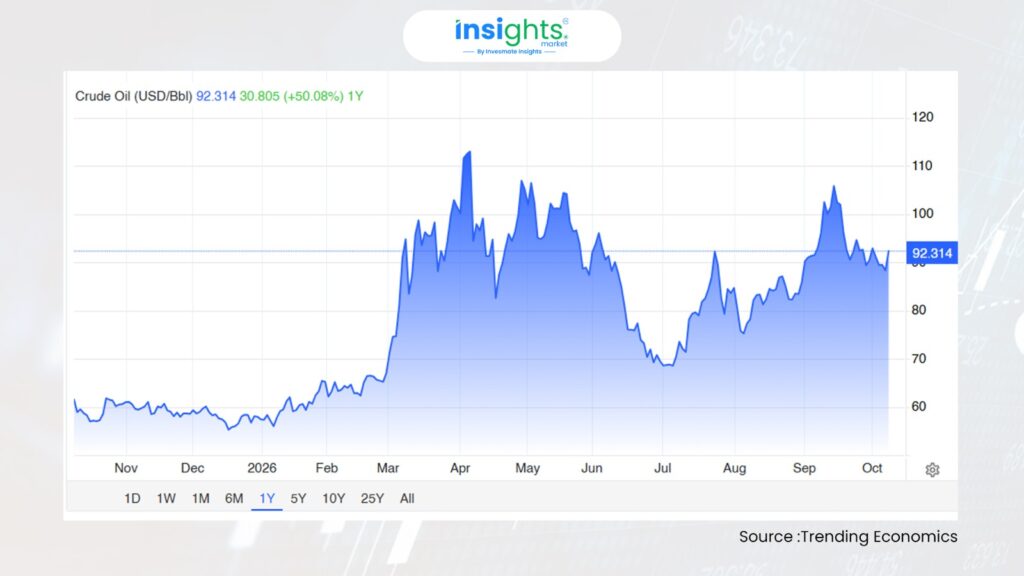
Higher oil prices can also increase transportation and production costs, eventually affecting consumer prices and corporate margins.
With Brent crude moving around $100 per barrel, sustained high oil prices have become one of the biggest immediate risks to India’s inflation outlook.
Weak Monsoon and El Niño Risk: Another Inflation Concern
The second major concern is agriculture.
A weak monsoon or an El Niño-related weather shock can reduce agricultural production and affect the supply of food items such as cereals, pulses, vegetables and oilseeds.
Lower supply can push food prices higher, affecting headline CPI inflation and household purchasing power.
This makes the weather outlook an important factor for RBI’s future policy decisions.
Inflation Has Moved Beyond RBI's Comfort Zone
India’s formal inflation target is 4% CPI inflation, with a tolerance band of 2% to 6%.
August CPI inflation stood at 4.82%, which remains within the statutory tolerance band but is above the RBI’s 4% target.
The important issue is whether inflation remains elevated for an extended period. If higher food and energy prices begin spreading into other parts of the economy, the pressure becomes more difficult to treat as temporary.
Why Core Inflation Is Becoming Important
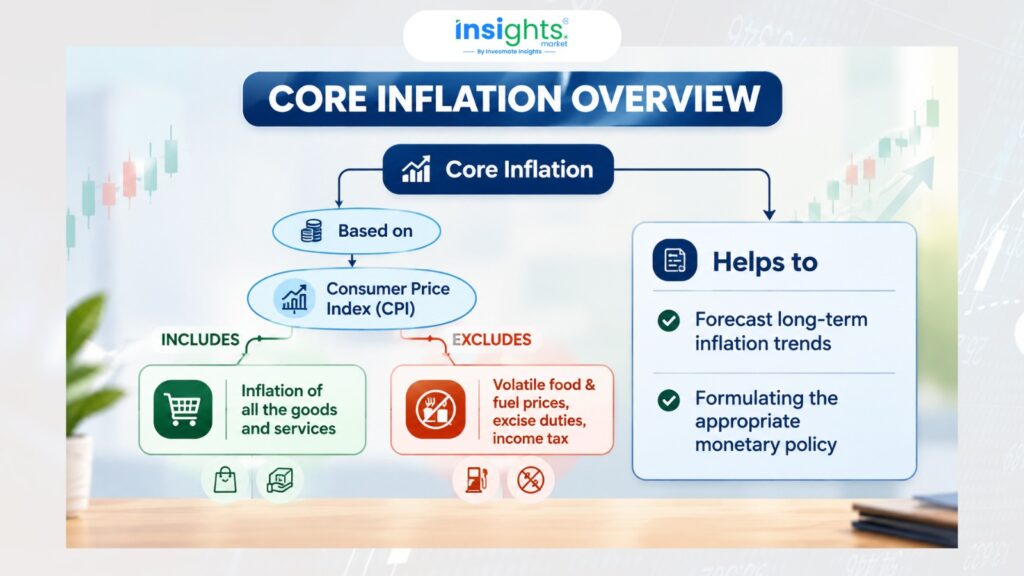
Core inflation generally excludes volatile food and fuel components and is used to understand underlying price pressure.
Core inflation at around 4.4% suggests that inflation concerns are not limited entirely to temporary food or energy movements.
If prices across services, manufactured goods, wages and consumer demand begin rising together, the RBI has greater reason to remain cautious.
Strong Bank Credit Growth: Another Warning Signal
Bank credit growth is around 18.8%, according to the data cited in the source material.
Strong credit growth supports consumption and investment, but excessive expansion can also increase overall demand.
The chain is simple:
Credit growth ⬆️ → Borrowing ⬆️ → Consumption & Investment ⬆️ → Demand ⬆️
If demand remains strong while inflation is also rising, monetary conditions may need to become tighter.
Impact on the Stock Market
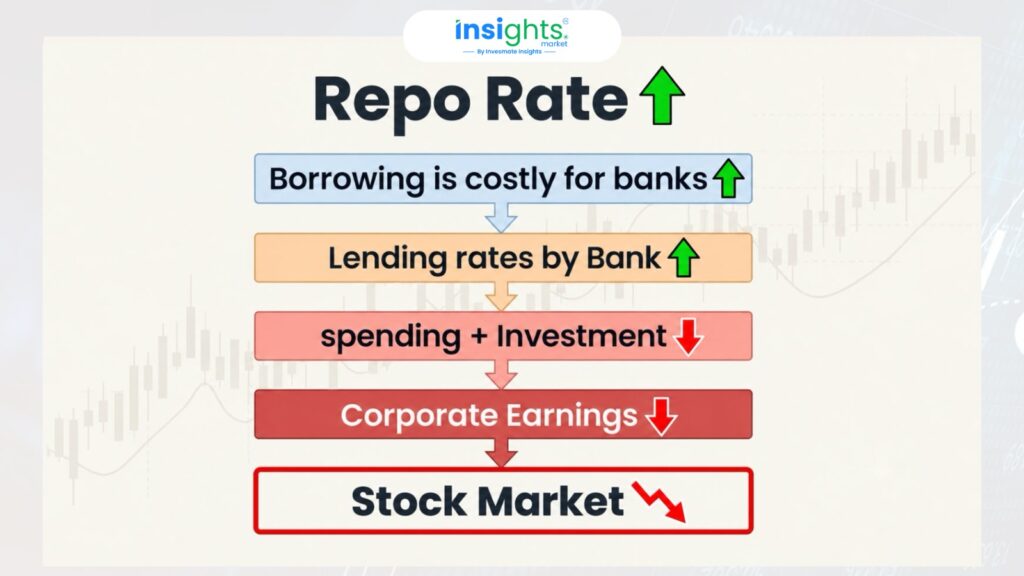
- Repo Rate Hike: Higher borrowing costs can reduce spending and investment, potentially putting pressure on corporate earnings and stock prices.
- Repo Rate Cut: Lower borrowing costs can support liquidity, spending and investment, which can be positive for stock-market sentiment and valuations.
For the current hike to 5.50%, the near-term impact can be more noticeable on interest-rate-sensitive sectors such as banks, NBFCs, real estate and automobiles.
How Does the Repo Rate Hike Affect Ordinary People?
The impact of a repo-rate hike eventually reaches households through borrowing costs.
- Home Loans: Floating-rate borrowers could face higher interest costs, potentially increasing EMIs or extending loan tenure.
- Car Loans: Higher financing costs can make vehicle purchases more expensive.
- Personal Loans: Borrowing costs can increase, particularly for high-interest consumer loans.
- Credit Cards: Higher interest rates can increase the cost of carrying outstanding balances.
- Fixed Deposits: Higher rates can eventually benefit savers as banks adjust deposit rates.
However, the transmission is not always immediate or one-to-one across all banks and products.
Conclusion
The RBI’s decision to raise the repo rate to 5.50% comes at an unusual point for the Indian economy. Growth remains strong, with the FY27 GDP forecast raised to 7.1%, but inflation risks are becoming more important. Crude oil, weather uncertainty, inflation above the 4% target, core inflation and strong bank credit growth have increased the need for caution.
The shift to “Calibrated Tightening” suggests that RBI is now giving greater weight to inflation risks while keeping future decisions dependent on incoming economic data.
FAQs
The RBI has raised the Repo Rate to 5.50%, following a 25 basis point hike.
The RBI raised rates mainly to address rising inflation risks while economic growth remains resilient. Strong growth gives the central bank more room to focus on price stability.
The RBI has raised its FY27 GDP growth forecast to 7.1% from 6.7%.
The RBI has increased its FY27 CPI inflation forecast to 5.2% from 5.0%, reflecting growing concerns around inflation.
India depends heavily on imported crude oil. Higher oil prices can increase the import bill, put pressure on the rupee and raise transportation and production costs, adding to inflationary pressure.
A weak monsoon can reduce agricultural output and push food prices higher. El Niño risk can add further uncertainty to rainfall and food supply.
Core inflation generally excludes food and fuel prices. It helps indicate underlying price pressure in the economy. Rising core inflation can make inflation more persistent and therefore more important for monetary policy.
It means the RBI is moving towards tighter monetary conditions in a measured and data-dependent manner. It does not necessarily mean that another rate hike is guaranteed.
Higher policy rates can eventually increase borrowing costs for floating-rate loans. Depending on the bank and loan structure, borrowers may see higher EMIs or a longer repayment period.
Yes. If banks increase deposit rates following the policy change, FD and other deposit returns can improve, although the transmission may take time.
This article is for educational and informational purposes only. It is not investment advice or a stock recommendation. Investors should conduct their own research or consult a qualified financial advisor before making investment decisions.