



From Ganesh Chaturthi to Durga Puja and Diwali, India’s festive season creates a powerful wave of consumer spending. Retail stores attract more shoppers, e-commerce platforms process millions of orders, automobile dealerships prepare for higher deliveries, and jewellers anticipate seasonal demand. Rising purchases can support business activity and influence corporate earnings. For stock-market investors, the key question is which sectors could benefit most and whether stronger festive demand can translate into sustainable earnings growth.
India’s Festive Economy: More Than Celebrations
Festivals encourage households to spend on clothing, electronics, home appliances, vehicles, jewellery, gifts and travel. Both online platforms and traditional retailers benefit from this seasonal demand. The scale of online consumption is already visible. According to a Redseer estimate reported on October 12, 2026, e-commerce platforms generated around 24,000 crore rupees in sales during the first two days of festive sales. Mobile phones accounted for approximately 38–40% of the total, while consumer electronics contributed 25–27% and fashion 15–18%. Fashion sales grew 22–25% year-on-year. The impact extends beyond large companies. Local retailers, artisans, transport providers, delivery partners, and small businesses also benefit from increased activity, supporting employment and income across urban and rural markets.

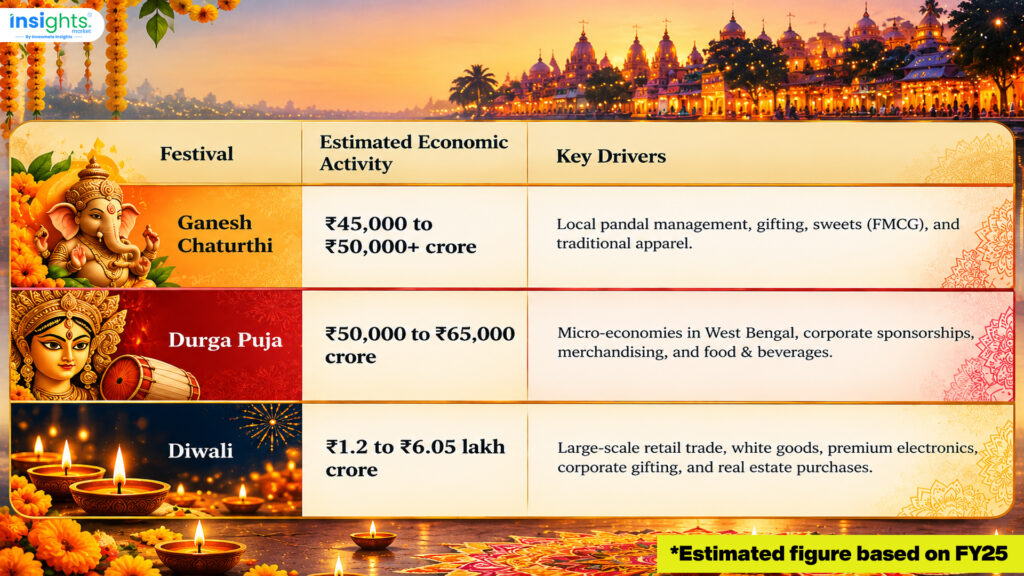
Economic Impact by Festival: Where Does the Money Go?
India’s festive economy builds momentum across different stages of the celebration season. While Ganesh Chaturthi supports local businesses and traditional industries, Durga Puja generates substantial economic activity across West Bengal, and Diwali drives large-scale retail and consumer spending. The estimated economic impact and key demand drivers vary across these festivals.
Retail and E-Commerce: Smaller Cities Drive the Next Wave of Growth
Festive shopping is expanding beyond metros, with Tier-III cities contributing 46% of festive demand, compared with Tier-I cities at 35% and Tier-II cities at 19%. Retail and online sales typically rise 25–40%, while e-commerce sales are projected to exceed 90,000 crore rupees. Platforms like Flipkart’s Big Billion Days and Amazon’s Great Indian Festival are driving this growth. For listed retailers and consumer-facing companies, this expansion creates opportunities to increase customer reach and sales volumes. However, investors should also monitor discounting, logistics expenses, inventory turnover, and operating margins. Strong demand matters more when companies can convert higher sales into sustainable earnings.
Automobiles: Festive Purchases Could Support Earnings
Festive occasions often encourage households to purchase cars, two-wheelers, and SUVs. The pre-owned vehicle market also benefits as first-time buyers seek more affordable options. The used-car sales could grow 12–15% year-on-year during the October–December festive quarter. Organized players were expected to record growth of 25–30% or more, supported by rural demand and first-time buyers. Vehicle sales numbers or volume and rural demand will help determine whether this seasonal momentum translates into sustained earnings growth.
Consumer Durables: Replacement Demand and Premium Products
Televisions, refrigerators, air conditioners, and washing machines are among the major festive purchases. Appliance manufacturers expected double-digit festive sales growth in 2026 despite price increases of around 5–8% in air conditioners and other appliances. Listed consumer-durable companies could benefit from higher sales volumes and a shift towards premium products. However, rising input costs and pressure on affordability could affect profit margins. Investors should assess both revenue growth and operating profitability.
Jewellery: Festive Demand Meets Higher Gold Prices
Dhanteras, Diwali and the wedding season can support jewellery retailers. However, higher gold prices may change buying behaviour, with consumers opting for lighter jewellery or smaller purchases. For listed jewellery companies, sales value alone may not provide the complete picture. Sales volumes, same-store sales growth, inventory costs and margins are important for understanding the actual impact on earnings.
Banking and NBFCs: More Financing Activity
Festive offers and EMI schemes can increase demand for vehicle loans, consumer durable financing and credit cards. Banks and Non-Banking Financial Companies may benefit from higher lending activity during this period. However, stronger credit demand must be assessed alongside borrowing costs, asset quality and credit costs. Sustainable loan growth and disciplined lending are important for long-term profitability.
FMCG, Travel and Hospitality: Benefits Beyond Shopping
Festive celebrations can increase demand for packaged foods, sweets, personal care products, hotels, restaurants and travel services. These businesses may benefit from higher consumption, family gatherings and holiday-related spending. The effect on listed companies will vary depending on demand growth, pricing power, operating costs and the contribution of festive sales to overall annual revenue.
Media and Entertainment: Festive Advertising and Content Growth
India’s Media and Entertainment sector could see improved growth during the festive quarter as brands increase advertising budgets and consumers spend more time on digital platforms, television and cinema. According to reports, festive advertising expenditure is projected to reach 60,000–62,000 crore rupees in 2026, growing 13–17% year-on-year. Digital media is expected to account for 67.8% of festive ad spending. Improvement in festive spending and a stronger film release pipeline to support sector growth in Q3 FY27. Higher advertising revenue, cinema engagement, and digital subscriptions could benefit media companies
How Festive Demand Impacts the Stock Market
Festive spending can influence the earnings expectations of companies across several sectors. Higher sales may support revenue growth, but stock prices depend on profitability, valuations, and whether actual demand exceeds market expectations.
Why Strong Festive Sales May Not Always Lift Stock Prices
A strong festive season does not automatically guarantee positive stock-market performance. Share prices respond to actual earnings relative to expectations, current valuations, and broader market conditions. Higher crude oil prices, inflation, weak rural incomes and rising input costs can limit the benefits of stronger sales. Companies may also face margin pressure if they rely heavily on discounts to attract customers. Investors should therefore distinguish between higher festive sales, stronger earnings and stock-price gains. The three are connected, but they do not always move together.
Conclusion
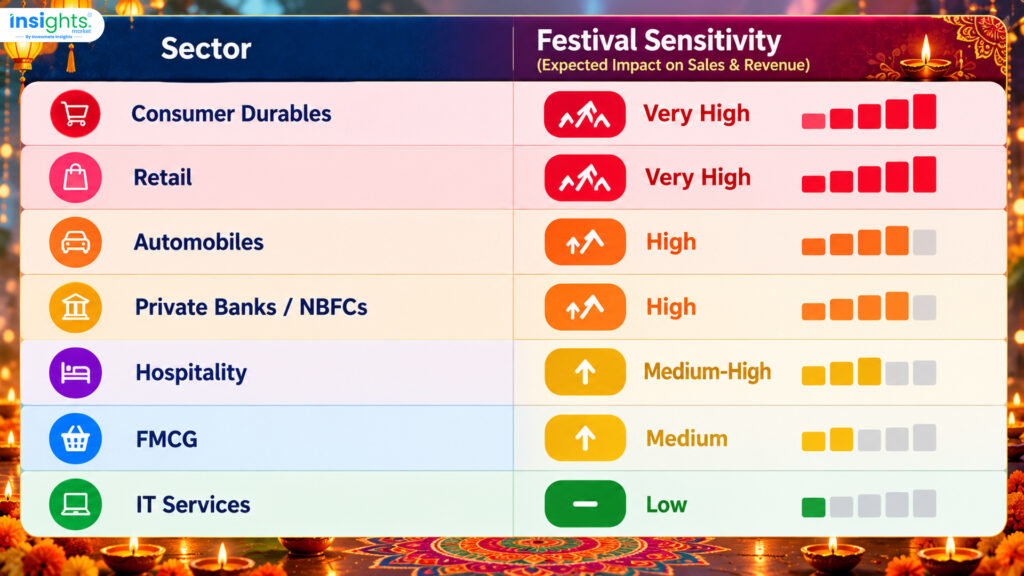
From Ganesh Chaturthi to Durga Puja and Diwali, India’s festive economy creates opportunities across retail, e-commerce, automobiles, consumer durables, jewellery and financial services. For investors, consumer durables and retail stand out for their high sensitivity to festive demand, followed by automobiles and financial services. However, the eventual winners will depend on company fundamentals, profit margins, valuations, and the strength of consumer spending. Festive sales can provide a useful indication of demand, but they should be one part of a broader investment analysis rather than the sole reason to select a stock.
FAQs
Retail, e-commerce and consumer durables have very high festive sensitivity, followed by automobiles and banks/NBFCs. Jewellery, FMCG, travel and hospitality can also benefit from increased seasonal spending.
Stronger festive demand can improve sales and earnings expectations for consumer-facing companies. However, stock prices also depend on valuations, profit margins, broader market conditions and whether actual demand exceeds expectations.
Smaller cities are increasingly important demand centres due to wider internet access, digital payments and improved delivery networks. The data cited in the blog shows Tier-III cities contributing 46% of festive demand.
Festive purchases can support sales of cars, two-wheelers and SUVs. Vehicle financing and demand from first-time buyers can also benefit the broader automobile ecosystem.
No. Higher sales may not translate into stronger profits if companies face rising costs, heavy discounts or margin pressure. Stock prices also reflect valuations and market expectations.
Investors should monitor sales volumes, revenue growth, profit margins, inventory levels, rural demand, financing trends and company management commentary.
Higher inflation can reduce consumers’ purchasing power and increase business costs. This may affect demand, profit margins and earnings expectations across several sectors.
No. Festive demand is only one factor to consider. Investors should also evaluate company fundamentals, earnings growth, valuations, financial strength and long-term business prospects.
This article is for educational and informational purposes only. It is not investment advice or a stock recommendation. Investors should conduct their own research or consult a qualified financial advisor before making investment decisions.