



The Indian rupee has staged a strong recovery against the US dollar in November 2026, reaching its highest level in around eight months and recovering its losses for FY27. After facing considerable pressure earlier in the year, the domestic currency has gained support from strong foreign investment inflows, falling crude oil prices and improved dollar liquidity.
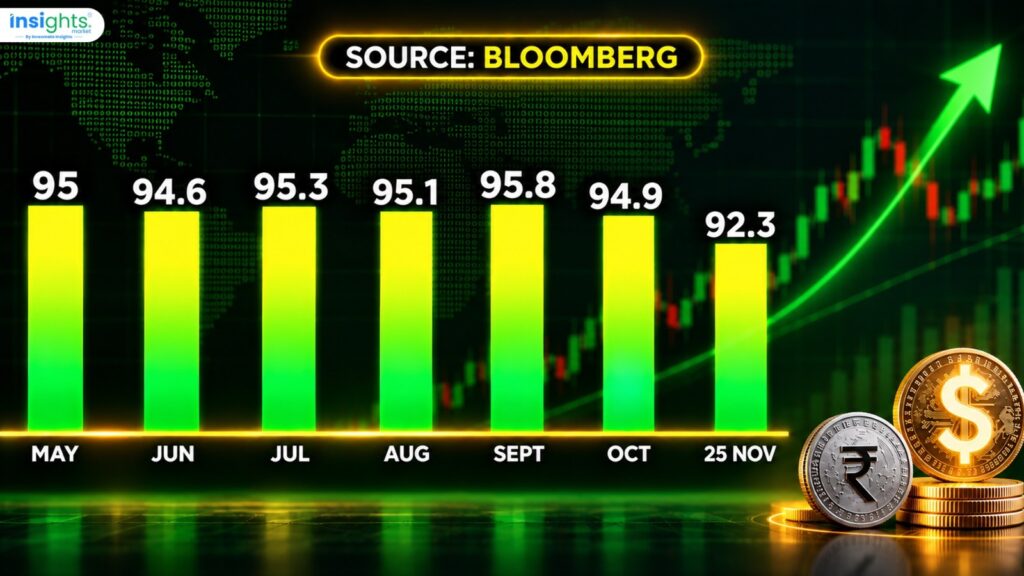
On November 25, the rupee appreciated by around 40 paise to close near 92.24 against the US dollar, compared with its previous close of 92.64. During the session, it touched an intraday high of 92.1850, its strongest level since March 2026. The currency has gained more than 2% during November, marking a significant turnaround after approaching its record low of 96.97 in May 2026.
Why Is the Indian Rupee Strengthening Against the US Dollar?
The latest recovery is supported by four major factors that have improved the demand-supply balance in India’s foreign exchange market.
Strong FPI Inflows Into Indian Equities
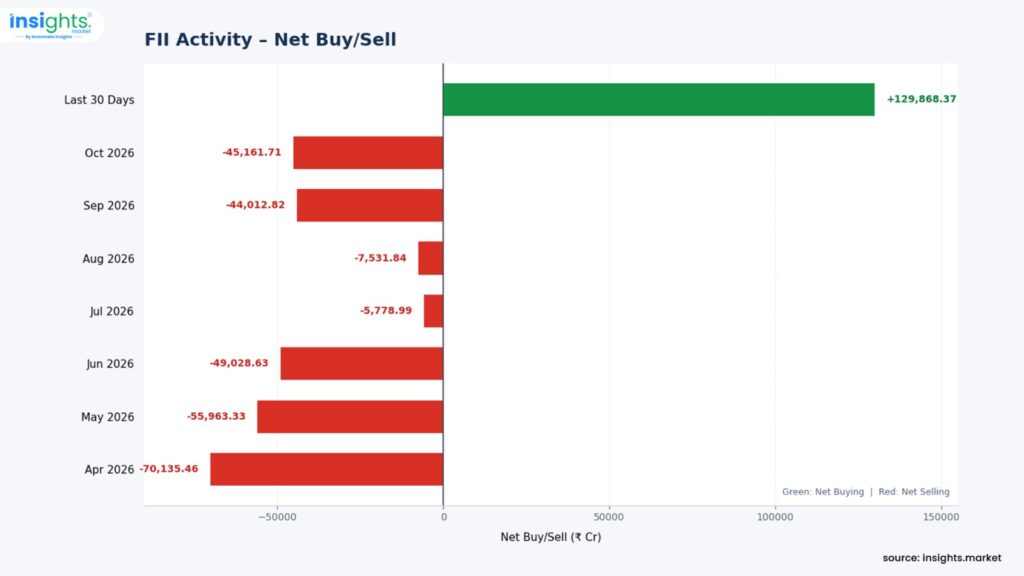
One of the biggest reasons behind the rupee’s appreciation is the return of foreign portfolio investors (FPIs) to Indian equity markets. After remaining under pressure for a prolonged period, foreign investors have significantly increased their exposure to domestic equities in November. According to the reports, foreign investors have brought in more than $14 billion into Indian equities during the month, marking a record monthly inflow. These investments increase the supply of US dollars in the domestic market because foreign investors convert dollars into rupees to purchase Indian stocks. Higher dollar availability helps reduce pressure on the rupee and supports its appreciation against the US currency. The improvement in global investor sentiment and diversification away from technology-heavy markets have also contributed to renewed interest in Indian equities.
Declining Crude Oil Prices
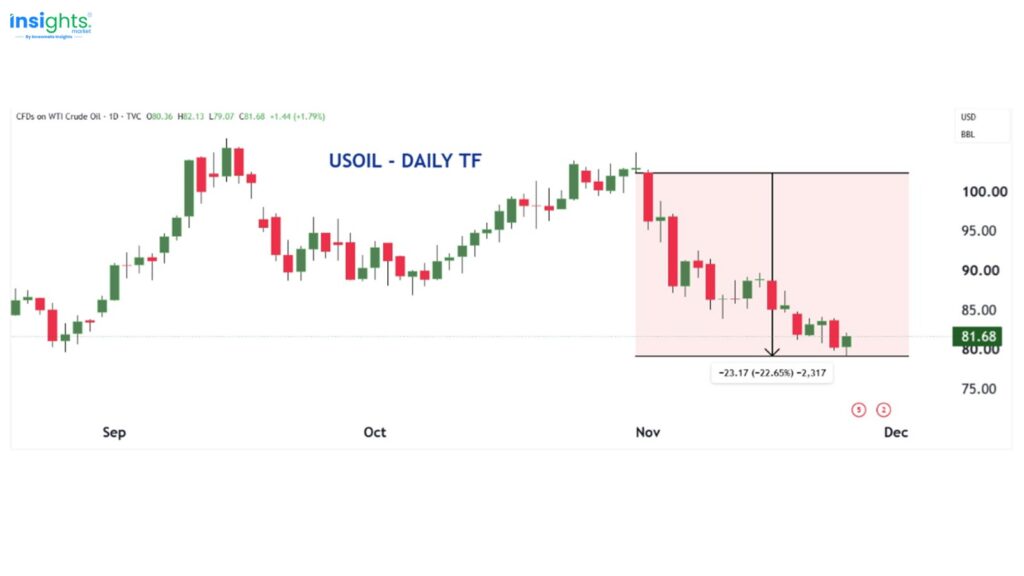
Lower crude oil prices have provided another important support to the Indian currency. India imports a significant portion of its crude oil requirements, making the country sensitive to changes in international oil prices. When crude prices rise, India’s import bill increases, creating higher demand for US dollars from oil companies. This can put pressure on the rupee. However, Brent crude prices have recently declined towards $88–90 per barrel, reducing concerns over India’s import bill and foreign exchange requirements. The improvement in global oil supply has contributed to this decline. According to the reports, global oil production increased by 2.3 million barrels per day in October to 105.4 million barrels per day. The restart of Libya’s Sharara pipeline and an estimated global supply surplus have also supported the decline in crude prices. Lower oil prices can therefore help reduce dollar demand and improve India’s external balance.
Unwinding of Bearish Positions Against the Rupee
The rupee has also benefited from the unwinding of bearish positions taken by overseas hedge funds and other market participants. Earlier, several investors had positioned themselves for further weakness in the Indian currency. However, as foreign inflows improved and crude oil prices declined, the outlook for the rupee became more favourable. This encouraged investors to reduce their bets against the domestic currency. Such short-position unwinding can accelerate the rupee’s recovery as market participants adjust their currency positions and demand for dollars moderates. The recent correction after the rupee’s strong rally was also viewed by market participants as a normal consolidation rather than a major deterioration in the currency’s outlook.
RBI Measures and Improved Dollar Liquidity
The Reserve Bank of India (RBI) has also taken measures to ease pressure in the foreign exchange market. These measures include restrictions on banks’ forward dollar positions and the introduction of a special dollar window for oil marketing companies. The steps were aimed at reducing speculative dollar demand and shifting part of the oil companies’ foreign exchange requirements away from the spot market. Improved dollar availability has helped stabilise market conditions and supported the rupee’s recovery. However, possible dollar purchases by the RBI to rebuild foreign exchange reserves and manage its forward position could limit further appreciation.
What Could Reverse the Rupee's Rally?
Despite the recent improvement, the rupee’s recovery is not free from risks. A sharp increase in crude oil prices could raise India’s import bill and increase demand for dollars. Similarly, a reversal in foreign portfolio investment flows could reduce dollar supply in the domestic market. Global monetary policy will also remain important. Expectations of further interest rate hikes by the US Federal Reserve could strengthen the US dollar and put pressure on emerging-market currencies, including the rupee. Additionally, potential US tariffs on India and other countries over alleged industrial subsidies and excess manufacturing capacity could create uncertainty for Indian exporters and affect currency sentiment. According to Amit Pabari of CR Forex Advisors, the USD/INR pair has strong support around the 92.00–92.50 range. However, he indicated that the pair could recover towards 93.50–93.80 in the coming days, depending on market conditions.
Conclusion
The Indian rupee’s recovery in November 2026 has been supported by a combination of strong foreign investment inflows, lower crude oil prices, unwinding of bearish currency positions and RBI measures to improve dollar liquidity. While these factors have helped the currency recover its FY27 losses, the sustainability of the rally will depend on global oil prices, foreign investor activity, US Federal Reserve policy and RBI intervention. For investors, a stronger rupee can help reduce the cost of imported commodities and ease pressure on companies with significant foreign currency expenses. However, it may also affect exporters that earn a substantial portion of their revenue in US dollars. Therefore, the rupee’s movement remains an important indicator to monitor for the Indian economy and stock market.
FAQs
The rupee has strengthened due to strong foreign portfolio investment (FPI) inflows, declining crude oil prices, unwinding of bearish currency positions and RBI measures to improve dollar liquidity.
Strong foreign investment in Indian equities, lower crude oil prices and improved dollar availability have supported the rupee, helping it reach its strongest level since March 2026.
When foreign investors invest in Indian equities, they convert US dollars into Indian rupees. This increases dollar supply in the domestic market and supports the rupee’s appreciation.
Lower crude oil prices reduce India’s import bill and the demand for US dollars from oil companies. This helps ease pressure on the domestic currency.
The RBI manages foreign exchange market conditions through measures such as restrictions on banks’ forward dollar positions and special dollar facilities for oil marketing companies. These steps can help reduce excessive dollar demand and improve liquidity.
A stronger rupee can improve foreign investor sentiment and reduce currency-related risks. It can also benefit companies dependent on imported raw materials, although the impact varies across sectors.
Sectors such as oil and gas, aviation, paints, chemicals and companies dependent on imported raw materials may benefit from lower import costs. However, the actual impact depends on their foreign currency exposure and hedging practices.
A sharp rise in crude oil prices, renewed FPI outflows, a stronger US dollar, higher US interest rates and trade-related uncertainties could put pressure on the rupee.
This article is for educational and informational purposes only. It is not investment advice or a stock recommendation. Investors should conduct their own research or consult a qualified financial advisor before making investment decisions.