


The 2026 US Midterm Elections have brought a significant shift in the global political landscape. The Democratic Party’s reported victory in both the House of Representatives and the Senate has changed the balance of power in Washington, creating fresh challenges for President Donald Trump’s administration. For India, the developments could have implications beyond US domestic politics. From the ongoing India–US Trade Deal and H-1B visa restrictions to Russian oil sanctions and the US–Iran conflict, several important issues could influence India’s economy and financial markets.
But before analyzing the potential impact, it is important to understand how the US Congress works and why control of these two chambers matters. In this blog, we will analyze how the shift in US congressional power could influence Trump’s economic and foreign policies, the future of the US–Iran conflict, global crude oil prices, the India–US Trade Deal, H-1B visa restrictions, and, most importantly, the Indian economy and stock market.
Understanding the US Congress and Its Powers
The US Congress is the legislative branch of the federal government. It consists of two chambers:
- House of Representatives: It has 435 voting members, with representation allocated among states broadly according to population. Members serve two-year terms. The House has the exclusive power to initiate impeachment proceedings and is responsible for introducing revenue-raising bills. It also plays an important role in approving government spending, taxation, and federal legislation.
- Senate: It has 100 members, with two senators representing each state. Senators serve six-year terms, with approximately one-third of the seats going up for election every two years. The Senate approves international treaties, confirms important presidential appointments such as judges and Cabinet officials, and conducts impeachment trials. It also reviews and votes on legislation passed by the House.
Congress plays an important role in shaping US economic and foreign policy. Congress can also influence foreign policy through legislation, funding decisions, and oversight of sanctions and overseas operations. Therefore, while the US President leads the executive branch, control of Congress can significantly influence how easily the administration implements its policies.
Why Do the 2026 Midterm Election Results Matter?
Midterm Elections take place halfway through a US President’s four-year term. Unlike Presidential Elections, voters do not elect a new President. Instead, they elect members of Congress. According to the election coverage in some recent reports, Democrats have secured control of both the House and the Senate, creating a major political setback for Trump’s Republican Party. This means Trump’s remaining presidential term could involve greater congressional scrutiny, particularly around controversial policies involving tariffs, immigration, and foreign relations. However, the President retains executive powers. A change in congressional control does not automatically reverse existing policies or end ongoing geopolitical conflicts.
US–Iran Conflict: Could Crude Oil Prices Decline Further?
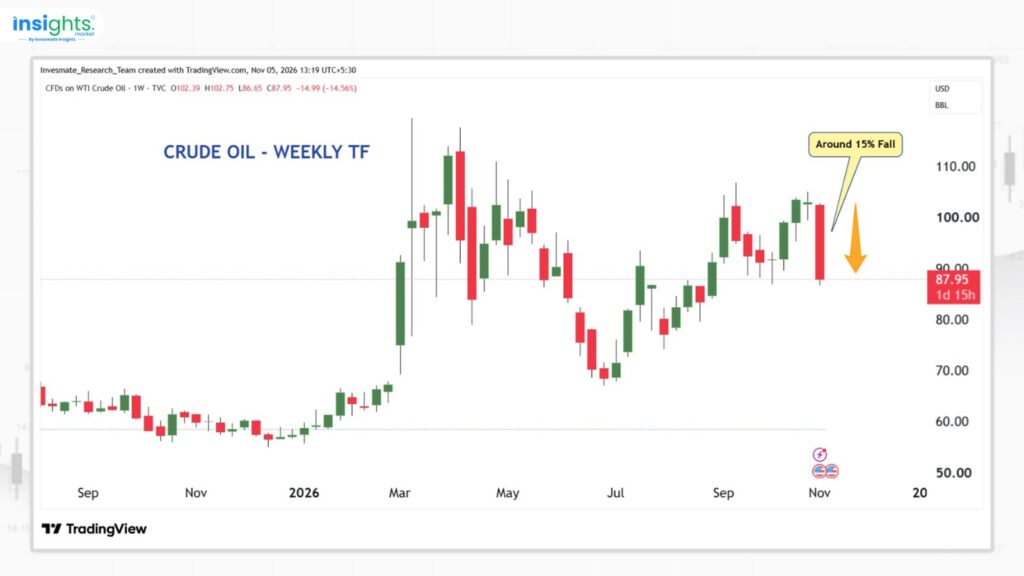
One of the most important developments for India is the potential impact on the US–Iran conflict and global crude oil supply. The election outcome could increase political pressure on the Trump administration to reconsider its approach towards Iran. A divided political environment may also encourage diplomatic discussions and negotiations. The possibility of easing Middle East tensions is particularly important because of the Strait of Hormuz, a critical route for global oil transportation. Any improvement in the situation could reduce supply-related concerns and geopolitical risk premiums in crude oil prices. On November 5, WTI Crude Oil was traded around $86.80 per barrel. In the last week, the price had a decline of approximately 15.68%. However, this movement should not be attributed entirely to the election result. Global supply expectations, geopolitical developments, and market positioning can also influence crude prices. For India, a sustained decline in crude oil prices could be beneficial because the country depends heavily on imported energy. Lower oil prices can reduce the import bill, ease inflationary pressure, and support the Indian rupee.
Russian Oil Sanctions: Potential Relief for Indian Refiners
Another important area is the US administration’s policy towards countries purchasing Russian crude oil. The threat of secondary sanctions has created uncertainty for countries such as India, which has been purchasing Russian oil as part of its energy procurement strategy. According to expert views reported in some recent articles, increased congressional resistance to policies that could push global energy prices higher may encourage more flexible enforcement or exemptions. Greater flexibility could improve India’s energy security and provide operational benefits to domestic refiners.
Companies such as Reliance Industries, Indian Oil, BPCL, and HPCL could remain important stocks to monitor. However, the actual benefit would depend on crude procurement costs, refining margins, and the final policy decisions.
India–US Trade Deal: Faster Progress or Tougher Negotiations?
The change in congressional control could also influence the ongoing India–US Trade Deal. Some experts believe Trump may seek a visible foreign-policy or trade achievement following the domestic political setback. This could encourage faster negotiations with India. However, faster negotiations do not necessarily mean easier terms. Washington may continue demanding greater access to Indian markets, particularly in sensitive sectors such as agriculture and dairy, while maintaining protective tariffs on Indian exports.
For India, the challenge will be to balance trade opportunities with domestic industry protection and agricultural interests. The final agreement will depend on negotiations between both governments and the relevant legal and policy processes.
H-1B Visa Policy: A Key Development for Indian IT Companies
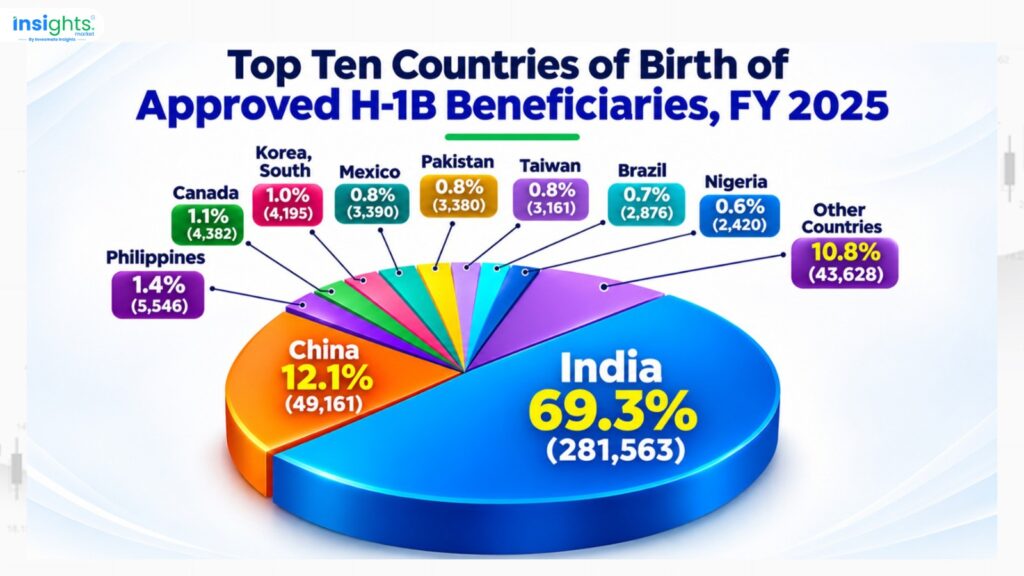
The H-1B visa issue is another important area for Indian businesses. Recent restrictions and higher filing fees have increased concerns among Indian professionals and IT companies that depend on skilled employees working in the US. Experts quoted in the supplied report believe stronger Democratic oversight could limit further restrictive measures on skilled immigration. If visa-related pressure eases, it could provide some relief to Indian IT companies. However, changes to existing restrictions or fees should not be assumed until officially announced.
Impact on the Indian Stock Market, Rupee and Gold
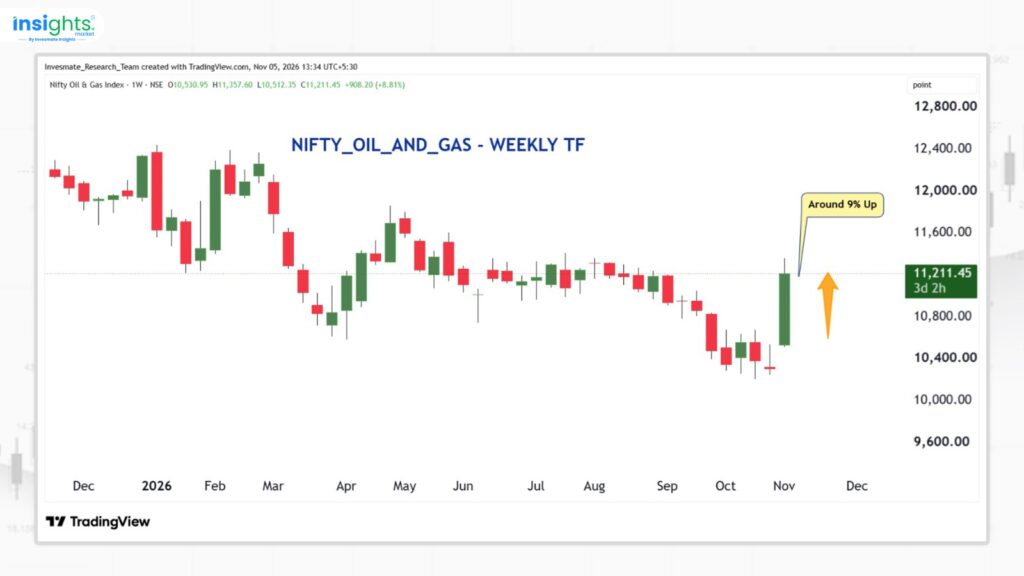
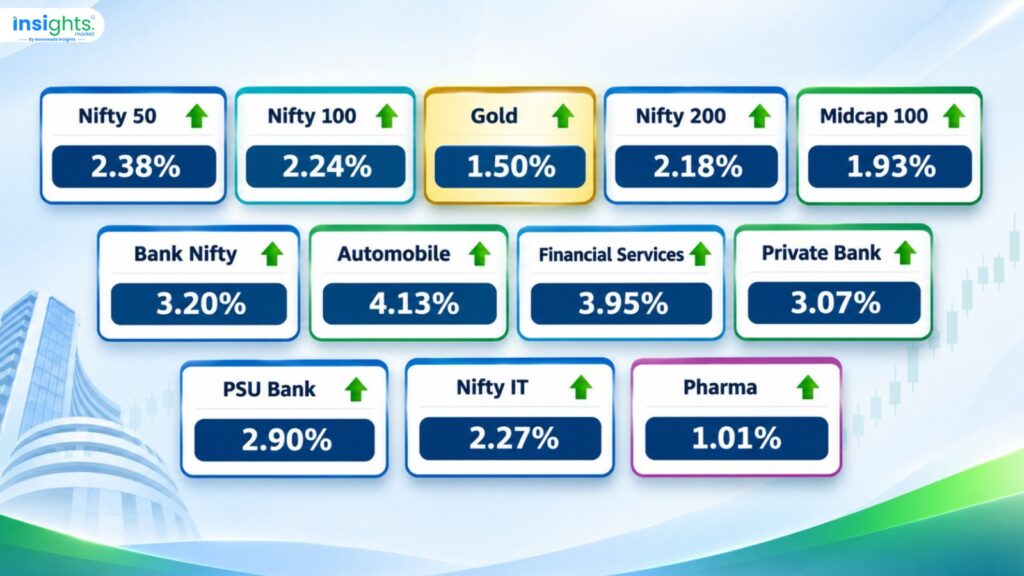
The election outcome could influence global investment flows through movements in the US Dollar, Treasury yields and geopolitical risk premiums. A weaker US Dollar and declining Treasury yields could improve the relative attractiveness of emerging markets, potentially supporting FII inflows into India. The November 5 market showed positive movement across major Indian indices:
The Indian rupee also reportedly opened at 94.35 against the US Dollar, compared with its previous close of 94.64. Meanwhile, international gold prices rose nearly 3% to $4,042.20 per ounce. A weaker Dollar and lower Treasury yields were cited as possible supporting factors. These market movements represent an initial reaction and do not establish a sustained trend.
What Should Indian Investors Watch Next?
The US Midterm Elections have created a new political environment, but their long-term economic impact will depend on actual policy decisions. Indian investors should closely monitor crude oil prices, developments around the Strait of Hormuz, Russian oil sanctions, India–US trade negotiations, H-1B visa policy, US Treasury yields, and FII activity.
Conclusion
The 2026 US Midterm Elections could have implications far beyond American politics, particularly for India’s trade relations, energy security and financial markets. Potential changes in US policies towards Iran, Russian oil sanctions, H-1B visas and trade negotiations may create both opportunities and challenges for the Indian economy. While the initial market reaction has been positive, investors should avoid drawing long-term conclusions from short-term movements. The real impact will depend on how the Trump administration responds to the new balance of power and how these policy developments translate into actual economic and corporate earnings outcomes.
FAQs
US Midterm Elections take place halfway through a President’s four-year term. During these elections, voters elect all 435 voting members of the House of Representatives and approximately one-third of the Senate. These elections determine the balance of power in Congress but do not directly elect a new President.
The election outcome could influence US policies on trade, immigration, Russian oil sanctions and the US–Iran conflict. These developments may affect India’s crude oil import costs, IT sector, foreign investment flows, currency and stock market sentiment.
With Democrats reportedly controlling both chambers of Congress, Trump’s administration could face greater legislative scrutiny and resistance. This may make it more challenging to advance certain policies involving tariffs, immigration and foreign relations. However, the President retains executive powers.
The election outcome could increase political pressure for a diplomatic resolution to the US–Iran conflict. If geopolitical tensions ease and concerns about global oil supply reduce, crude oil prices could come under pressure. However, actual prices will also depend on global demand, production and supply disruptions.
The political shift could encourage the Trump administration to pursue faster trade negotiations. However, the US may continue demanding greater access to Indian markets, particularly in agriculture and dairy. Therefore, negotiations could involve both opportunities and challenges for Indian industries.
Stronger congressional scrutiny of restrictive immigration measures could potentially limit further restrictions on skilled immigration. This may provide some relief to Indian IT companies that depend on Indian professionals working in the US. However, no relaxation should be assumed until officially announced.
A weaker US Dollar and lower US Treasury yields could make emerging markets like India relatively more attractive to foreign investors. This may support FII inflows, but actual investment decisions will also depend on Indian market valuations, corporate earnings, currency movements and global economic conditions.
Indian Oil & Gas companies could be influenced by crude oil prices and Russian oil policies. IT companies may be affected by H-1B visa regulations, while exporters and domestic industries could face changes in trade negotiations. Banking, financial services, Auto and other sectors may also respond to changes in FII flows, currency movements and overall market sentiment.
This article is for educational and informational purposes only. It is not investment advice or a stock recommendation. Investors should conduct their own research or consult a qualified financial advisor before making investment decisions.