

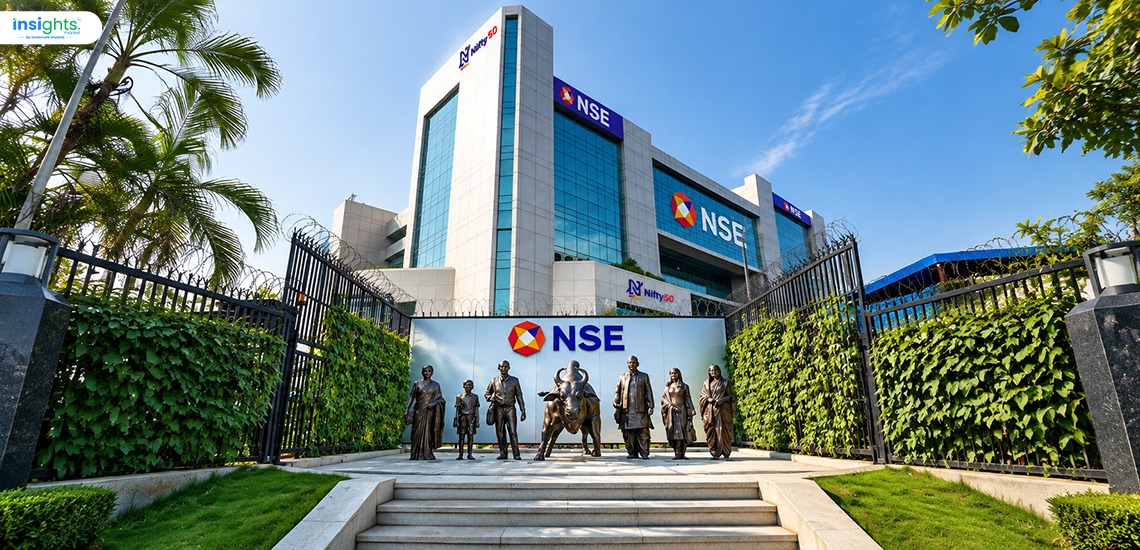

After nearly a decade of delays, the much-awaited IPO of the National Stock Exchange of India (NSE) is finally moving closer to the secondary market. As India’s leading stock exchange, NSE plays a central role in equity trading, derivatives, market data and the broader capital-market ecosystem. Its proposed IPO has attracted significant attention because of the exchange’s strong market position, large investor base, and potential valuation of over ₹4 lakh crore. However, the key question for investors is whether its market dominance and earnings strength justify the IPO valuation amid changing trading volumes, regulatory developments and evolving market trends. In this blog, we are going to discuss NSE’s business overview, industry opportunity, key performance metrics, and market trends.
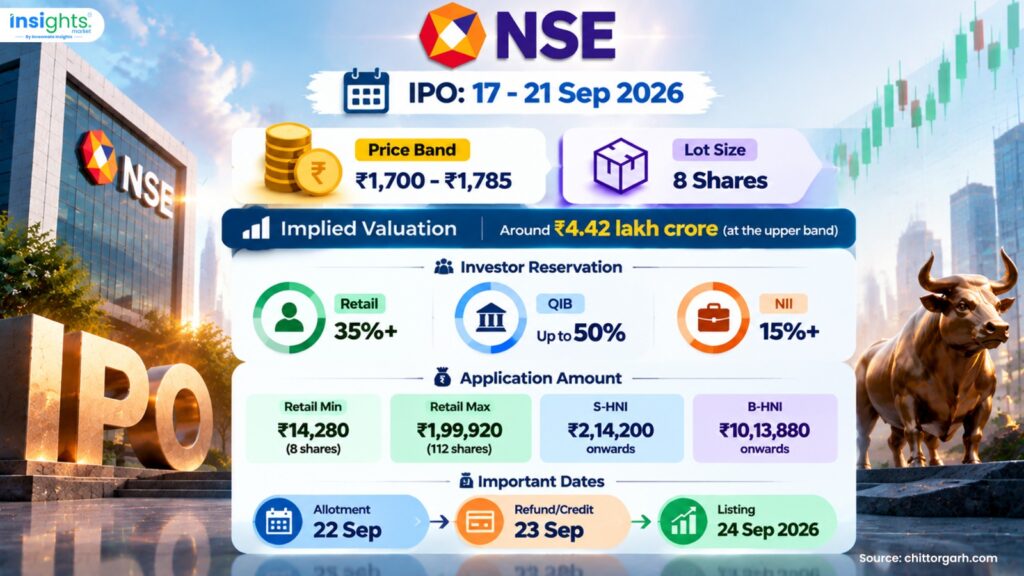
IPO Snapshot
NSE IPO is a book-built issue worth ₹22,561.57 crore and is entirely an offer for sale of 12.64 crore equity shares.
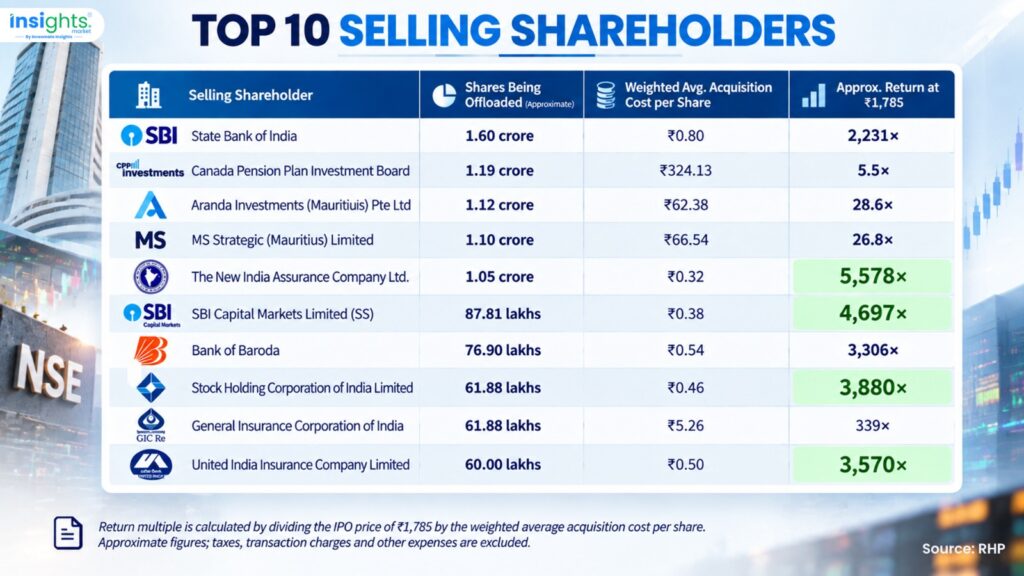
Which Shareholders Are Selling, and How Much Are They Gaining?
Since the IPO is structured entirely as an Offer for Sale (OFS), NSE will not receive any funds from the issue. Instead, the proceeds will go to existing institutional shareholders who are selling part of their holdings. Several of these investors acquired NSE shares many years ago at extremely low prices, in some cases just a few paise per share. At the upper price band of ₹1,785, selling even a portion of these holdings could generate exceptionally high returns for the selling shareholders.
NSE’s Dominance Across Global and Indian Markets
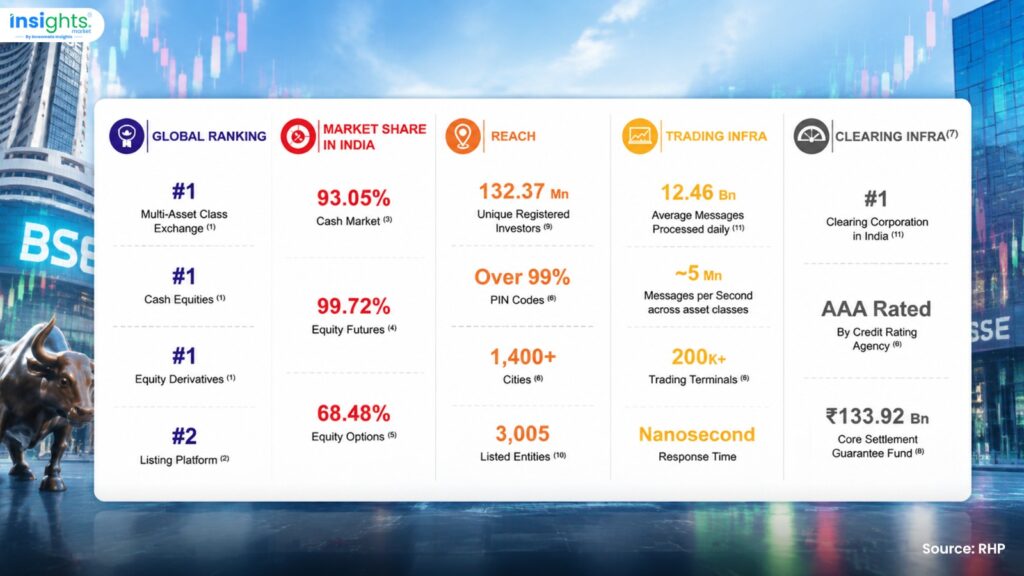
In India’s duopolistic equity-exchange industry, NSE has remained the largest stock exchange by total turnover in the cash market and equity derivatives, based on notional turnover for equity options, since FY01. In FY26, it held approximately 11.4% of global cash-equity trades and 51.2% of equity-derivatives contracts. In CY2025, NSE ranked #1 globally in derivatives contracts traded, with around 3,467 Cr contracts, while FY26 volumes included 3,469 Cr equity-index options contracts and 825 Cr cash-equity trades. It also facilitated approximately USD 20.1 billion in IPO capital raised through 219 new listings in FY26, highlighting its strong liquidity, market reach, and competitive advantages. These figures underline NSE’s deep liquidity, strong derivatives franchise, extensive market reach, and significant competitive barriers.
Business Overview: NSE’s Revenue Model
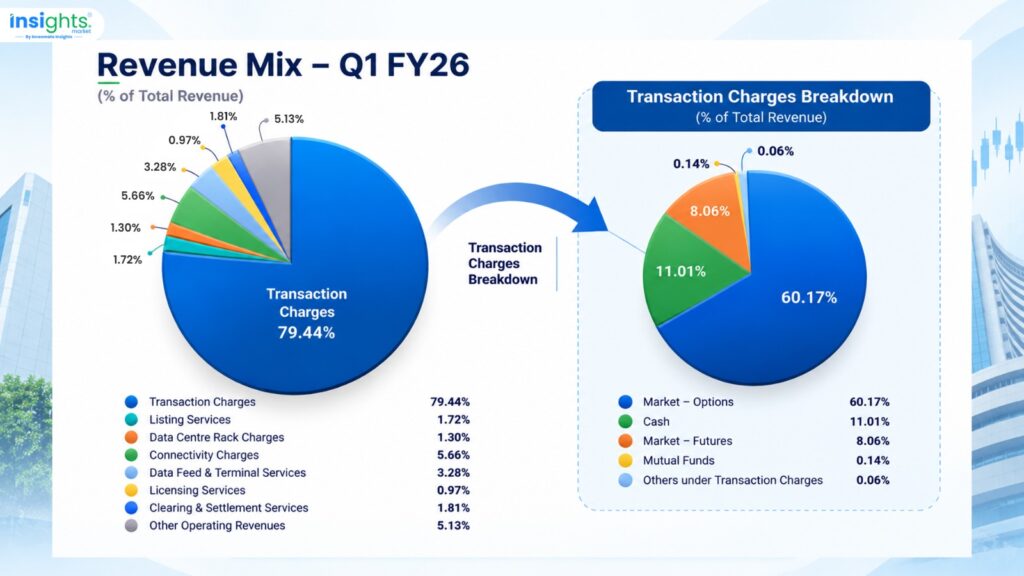
NSE earns revenue primarily from transaction charges on trades executed across its cash market, futures and options, currency derivatives, commodity derivatives, mutual-fund platform, wholesale debt market, and interest-rate futures. It also generates income from listing fees, data-feed and terminal services, data-centre-related services, index licensing and other ancillary activities. Transaction charges are mainly driven by trading volumes, while listing revenue depends on the number and quality of new listings and the participation of trading members and investors. The company has a significant dependence on transaction-based income. In the three months ended June 30, 2026, transaction charges contributed 79.44% of revenue from operations, with the options business accounting for 60.17% and the futures business contributing 8.06%. This highlights the importance of the derivatives segment to NSE’s overall business.
Operating Strength & Financial Performance
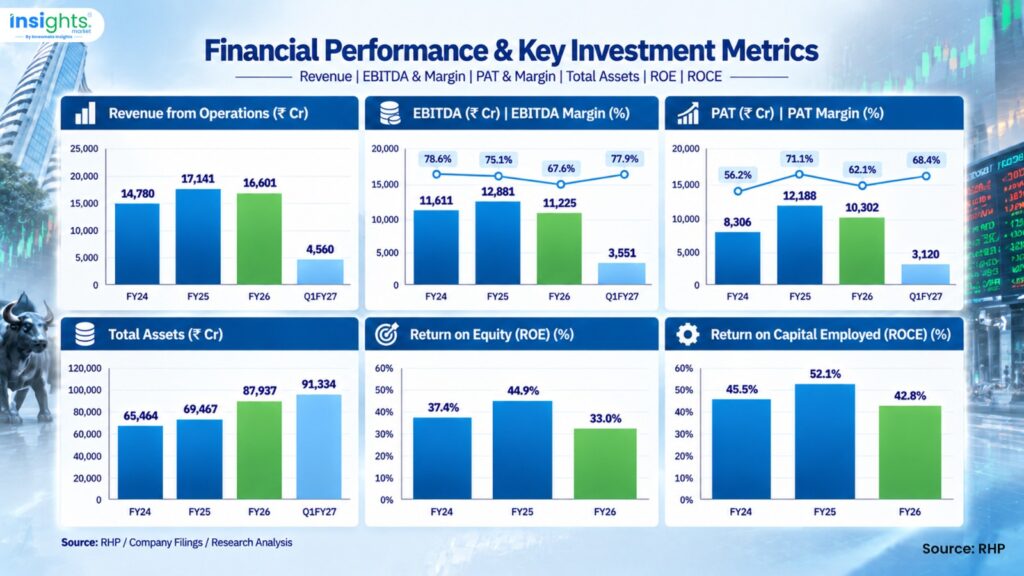
NSE continues to strengthen its position in India’s capital-market ecosystem, supported by rising investor participation, a growing listed-company base and expanding market infrastructure. Registered investors increased from 91.8 million in FY24 to 129.1 million in FY26, while listed entities rose to 2,978 and market capitalization reached ₹411.3 trillion. Passive fund AUM linked to Nifty indices increased to ₹8.1 trillion, supported by higher colocation capacity and a wider index portfolio. Trading activity remained robust, with FY26 ADTV of ₹1,05,517 Cr in the cash market, ₹1,59,443 Cr in equity futures and ₹57,662 Cr in equity options premium. NSE also recorded 108 mainboard IPOs, 111 SME IPOs and total fund mobilisation of ₹20.3 trillion in FY26. Financially, revenue from operations stood at ₹16,601 Cr, EBITDA at ₹11,225 Cr and PAT at ₹10,302 Cr in FY26, while the company maintained strong profitability with 67.6% EBITDA margin, 62.1% PAT margin, 33.0% ROE and 42.8% ROCE. Its risk-management framework remains well-supported by a ₹4,805 Cr risk reserve and a ₹13,079 Cr Core Settlement Guarantee Fund.
Key Risk Factors
Heavy Dependence on Transaction-Based Revenue: Transaction charges contributed 78.65% of FY26 revenue from operations, with options alone accounting for 60.22%, exposing NSE to trading-volume and derivatives-regulation risks.
IT & Cybersecurity Risk: NSE depends heavily on technology, so cyberattacks or system failures could disrupt trading and cause financial and reputational losses. Apart from the May 2025 DDoS attack, no major incidents were reported during FY24–FY26.
Regulatory Scrutiny and Enforcement Risk: Ongoing SEBI and IFSCA oversight, including notices, warnings, enforcement actions, and penalties, could affect NSE’s reputation, operations, and financial performance.
- Counterparty & Systemic Risks: A clearing member’s insolvency, liquidity issues, or operational failure could lead to settlement defaults and significant financial losses for NSE.
- Risk Management System Failure: Any shortfall in the mandatory Settlement Guarantee Fund could affect trade settlement and attract regulatory action.
- Macroeconomic Impact on Trading Volumes: Adverse macroeconomic conditions may reduce investor confidence and market participation, lowering NSE’s average daily turnover and revenue.
Conclusion
NSE remains India’s leading exchange franchise, supported by more than 90% market share in most key segments, a diversified product portfolio, and strong global positioning. Its growing investor base, expanding capital markets, technology-led scalability, and international initiatives through NSEIX provide meaningful long-term growth opportunities. The company’s data, connectivity, colocation, and index-licensing services also support revenue diversification, with data-based offerings contributing around 12% of FY26 revenue. However, regulatory changes, trading-volume sensitivity, and past one-time regulatory provisions remain key factors to monitor.
FAQs
The National Stock Exchange of India Ltd. (NSE), incorporated in 1992, is India’s largest stock exchange and one of the world’s leading multi-asset exchange platforms. It provides trading, clearing, listing, market-data and licensing services.
NSE operates through three major segments: Trading Services, Clearing Services and Others. Trading Services includes cash equities, futures, options, currency and commodity derivatives, while the Others segment includes data services, index licensing and strategic investments
As of June 2026, NSE held approximately 93.1% market share in the cash market, 99.7% in equity futures and 68.5% in equity options based on premium turnover.
NSE’s growth may be supported by rising financialisation of savings, increasing retail and institutional participation, digital penetration, deeper market liquidity, new product launches, global investor participation and expansion of its data and index-licensing businesses.
NSE’s technology infrastructure enables high-speed trading, clearing, surveillance and investor services. Its systems can process billions of messages, while its data, connectivity and colocation services provide additional revenue opportunities and operating scalability.
NSE International Exchange, or NSEIX, operates from GIFT City and supports NSE’s global expansion. It offers international investment and derivatives products and helps connect Indian and overseas investors with global capital markets.
Key risks include dependence on trading volumes, regulatory changes in derivatives, concentration among major trading members, higher taxation, regulatory scrutiny, rising funding costs for intermediaries and possible changes in investor preferences.
NSE has a strong business franchise, but its IPO valuation, regulatory risks and dependence on trading activity should be carefully evaluated. Investors should consider their own risk appetite, investment horizon and financial objectives before making any investment decision.
This article is for educational and informational purposes only. It is not investment advice or a stock recommendation. Investors should conduct their own research or consult a qualified financial advisor before making investment decisions.