



Nvidia has entered one of the most challenging phases in its history after co-founder Jensen Huang stepped down as CEO following a 33-year association with the company. The sudden leadership change, amid controversy surrounding his personal relationships and questions about corporate governance and national security, has created uncertainty around the world’s most valuable AI chipmaker. In this blog, we will discuss why Huang resigned, who will lead Nvidia next, how the controversy has affected its shares, and what investors should watch in the global AI industry.
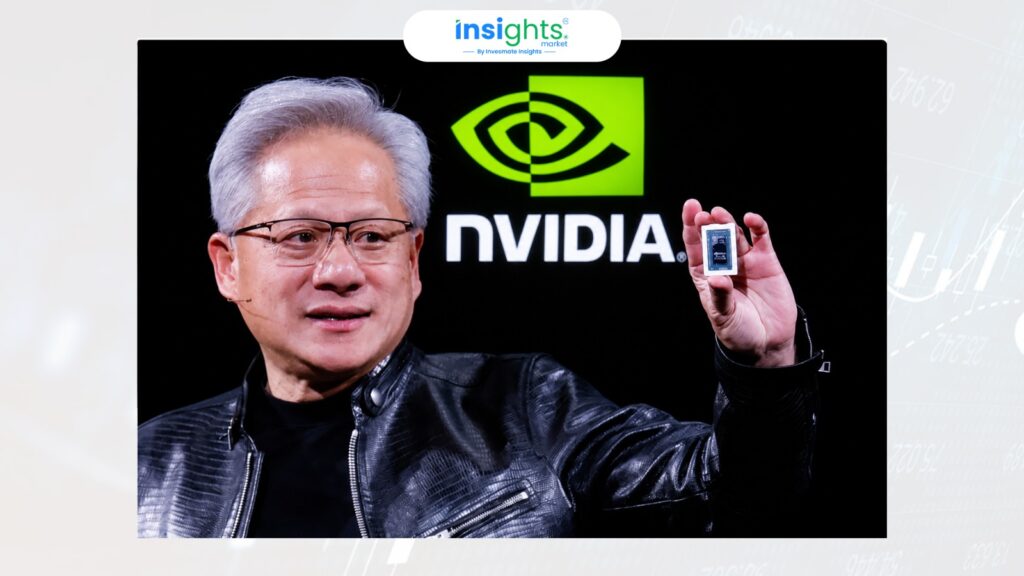
Why Did Jensen Huang Resign as Nvidia CEO?
Jensen Huang’s departure follows reports concerning two alleged extramarital relationships, including one involving a woman reportedly suspected by US intelligence officials of having links to Chinese intelligence. The allegations have raised questions about corporate governance, national security, and the potential exposure of sensitive business information.
Nvidia’s board announced Huang’s resignation with immediate effect. However, it is important to note that the reported allegations and investigations should not be treated as established facts. US authorities have been examining the matter, while Nvidia has also initiated an internal investigation. Huang’s exit marks the end of a remarkable 33-year leadership journey. He helped transform Nvidia from a graphics-chip manufacturer into a central player in artificial intelligence, powering advanced computing systems used by companies developing AI models.
Alice Huang and Kimberly Powell: The Two Women at the Centre of the Controversy
Reports have brought two women, Alice Huang and Kimberly Powell, into the spotlight. Alice Huang, also known as Huang Le, is a Chinese businesswoman and is not related to Jensen Huang. She previously worked in Chinese television before moving into finance, with roles at Shanghai Hexi Investment Management, HSBC’s private bank in Hong Kong and CITIC Securities. In March 2023, she became the controlling shareholder of Singapore-based Megaspeed International. According to reports, Megaspeed and its Malaysian sister company purchased approximately $4.8 billion worth of Nvidia chips over two years. US authorities reportedly suspected Alice Huang of having links to Chinese intelligence and investigated whether the network helped move around 240,000 Nvidia H100, H200 and A100 chips into China, with the reported value of shipments reaching $7.5 billion. Beijing has denied that Alice Huang was a spy, and these allegations should not be treated as proven facts.
The second woman, Kimberly Powell, is Nvidia’s vice president of healthcare. She joined the company in 2008 and has played an important role in its healthcare and medical AI business. A report by The New York Times, citing current and former Nvidia employees, alleged that Powell and Jensen Huang had an extramarital relationship. Powell reportedly reported directly to Huang. These reports have brought additional attention to corporate governance and internal leadership at Nvidia.

Who Will Lead Nvidia After Jensen Huang?
Following Huang’s resignation, Nvidia CFO Colette Kress has taken charge as interim CEO while the board searches for a permanent successor. Kress joined Nvidia in 2013 and has extensive experience in finance and technology, including nearly 25 years at Cisco and Microsoft. The company has also appointed Harvey C. Jones as its first-ever chairman of the board. Jones previously served as CEO and executive chairman of Synopsys and has been associated with Nvidia since its early years. The board has indicated confidence in the existing leadership team. However, finding a successor capable of maintaining Nvidia’s technological direction, customer relationships, and strategic partnerships will be a major challenge.

Nvidia Shares Fall Sharply After the Announcement
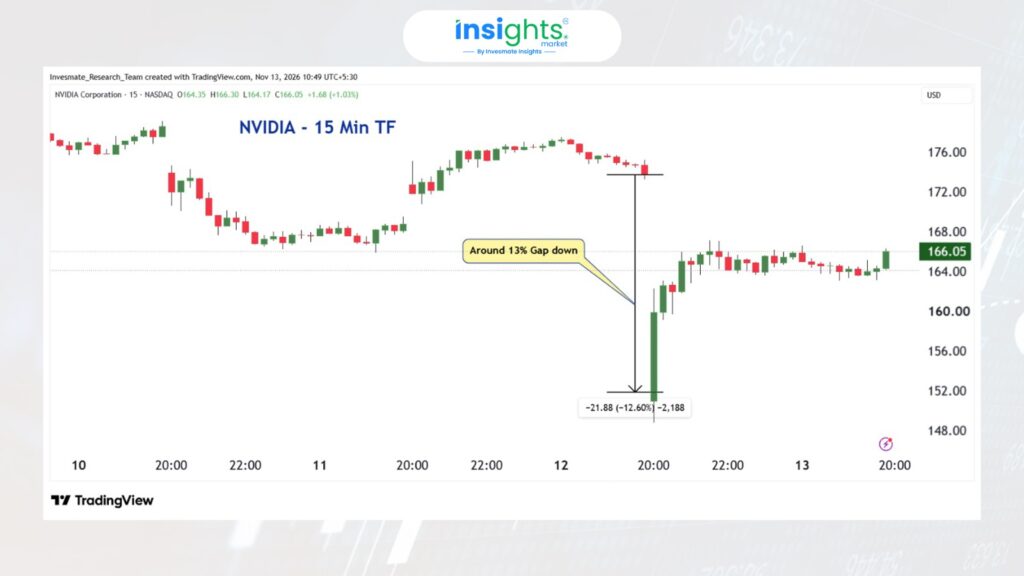
The resignation triggered a sharp reaction in the stock market. Nvidia shares fell as much as 13% during early trading on November 12, briefly wiping out nearly $600 billion in market value and taking its market capitalisation below $4 trillion.However, the stock recovered some losses during the trading session and was reported at around $165.45. The decline came after an already difficult period for the company, with its shares having lost significant value from their October peak.Investor concerns are not limited to the leadership change. Questions surrounding corporate governance, potential regulatory investigations and the future of Nvidia’s strategic relationships have added pressure to its valuation.Despite the sell-off, some investors remain optimistic about Nvidia’s long-term business prospects, arguing that demand for AI infrastructure remains strong.
AI Growth Story Remains Intact, but Leadership Is a Concern
Nvidia continues to occupy a critical position in the global AI ecosystem. Its GPUs are widely used by technology companies to train and operate advanced AI models. The company’s business relationships extend beyond chip sales. Nvidia has also made investments and entered partnerships with major AI companies, helping finance and support the broader AI infrastructure ecosystem. However, Huang played a particularly important role in building these relationships. His departure raises questions about whether the company can maintain the same strategic momentum under new leadership. Investors will therefore be watching whether Nvidia can continue executing its growth strategy without depending heavily on its former CEO’s personal influence.
The $500 Billion AI Financing Plan Faces Challenges
Another major concern involves Nvidia’s proposed $500 billion AI financing partnership with six major Wall Street institutions, including Apollo, BlackRock, Blackstone, Brookfield, Goldman Sachs, and KKR. The initiative was designed to support financing for AI infrastructure, including expensive processors required by companies developing advanced AI systems. However, the proposed arrangements have faced difficulties, with no completed deals reported in the supplied article.One key issue is Nvidia’s proposed residual value support covering up to 25% of certain financing deals. This guarantee is intended to reduce lenders’ risk if customers fail to meet lease payments. However, differences between Nvidia’s proposed support and more generous arrangements offered by competitors such as Broadcom have complicated negotiations. The departure of Huang adds another layer of uncertainty. Investors and financial partners may now seek greater clarity about who will take responsibility for these strategic commitments.
Conclusion
Jensen Huang’s resignation is a major leadership development for Nvidia, but it does not automatically signal the end of the global AI growth story. The company’s strong position in AI infrastructure remains an important advantage. However, maintaining investor confidence will require transparent governance, effective leadership, and successful execution of its business strategy. For investors, the key is to distinguish short-term uncertainty from long-term business fundamentals. Nvidia’s next phase will depend not only on demand for AI chips but also on how effectively the company manages its leadership transition and strategic partnerships.
FAQs
Jensen Huang’s resignation followed reports involving alleged personal relationships, corporate governance concerns and questions surrounding possible links to the diversion of restricted Nvidia AI chips to China. The reported allegations and investigations have not been established as proven facts.
Alice Huang, also known as Huang Le, is a Chinese businesswoman who reportedly became the controlling shareholder of Singapore-based Megaspeed International in March 2023. US authorities reportedly investigated the company over suspicions of involvement in moving restricted Nvidia AI chips to China.
Kimberly Powell is Nvidia’s vice president of healthcare. She joined the company in 2008 and has contributed to its healthcare and medical AI business. The New York Times reported an alleged personal relationship between Powell and Jensen Huang, citing current and former Nvidia employees.
Nvidia CFO Colette Kress has taken charge as interim CEO following Huang’s departure. The company’s board is expected to search for a permanent successor. Harvey C. Jones has also been appointed as Nvidia’s first-ever chairman of the board.
Reports alleged that a network associated with Alice Huang and Megaspeed International was involved in moving around 240,000 Nvidia H100, H200 and A100 chips into China. The reported shipment value was approximately $7.5 billion. These allegations remain subject to investigation, and Beijing has denied that Alice Huang was a spy.
Nvidia proposed a $500 billion AI financing initiative involving six major financial institutions, including Apollo, BlackRock, Blackstone, Brookfield, Goldman Sachs and KKR. The plan aims to support investment in AI infrastructure and computing capacity, although the supplied report indicates that the proposed arrangements have faced difficulties.
Huang played a major role in developing Nvidia’s technology strategy and building relationships across the AI ecosystem. His departure may create short-term uncertainty, but the long-term impact will depend on the company’s ability to maintain its technological leadership, customer relationships and business execution.
A sharp price decline does not automatically make a stock attractive. Investors should evaluate Nvidia’s earnings growth, AI chip demand, valuation, leadership transition, corporate governance and financing commitments before making an investment decision. The future performance of the stock will depend on both business fundamentals and market sentiment.
This article is for educational and informational purposes only. It is not investment advice or a stock recommendation. Investors should conduct their own research or consult a qualified financial advisor before making investment decisions.